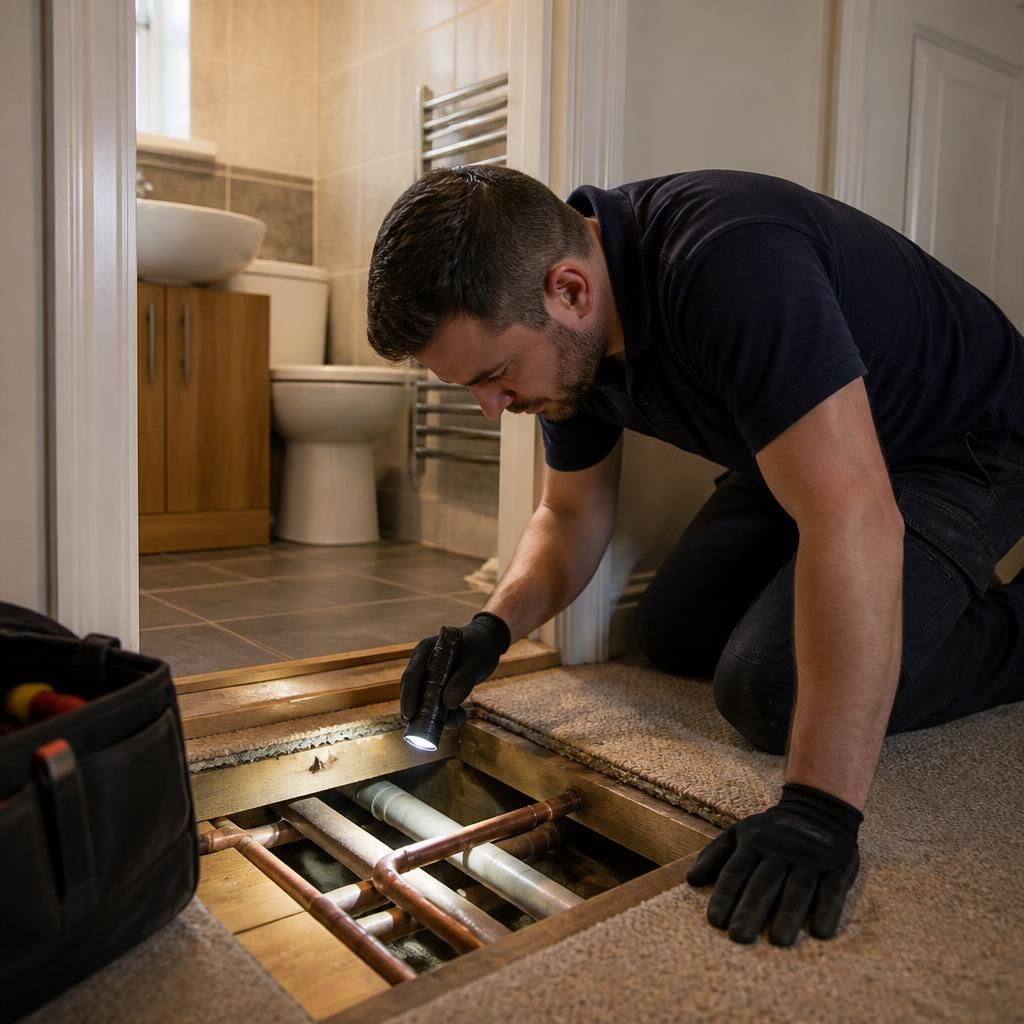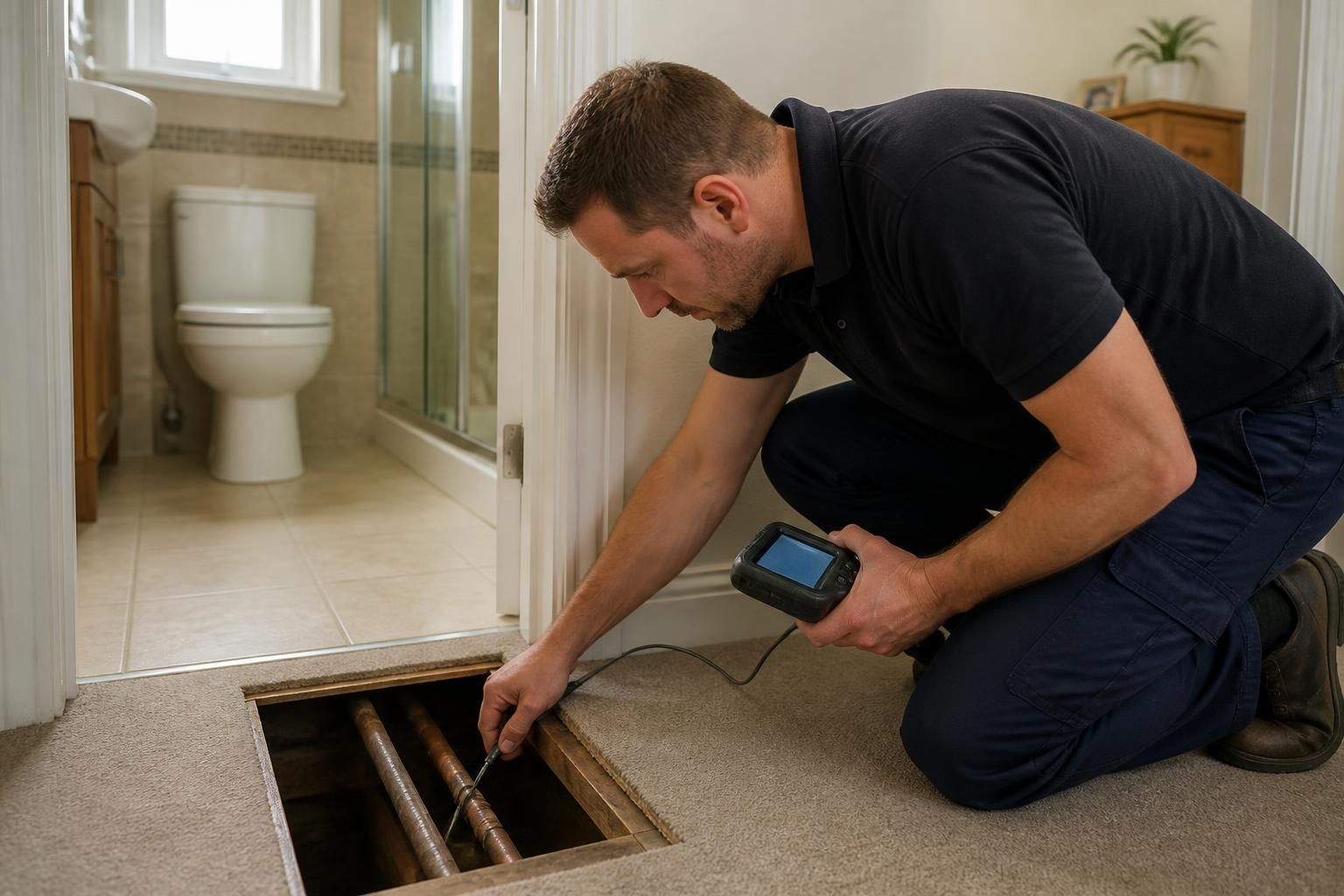
Access to adjoining rooms is not always required for bathroom leak detection, but it may be necessary when the suspected pipework, waste route or water damage cannot be examined from the bathroom itself. The amount of access depends on the bathroom layout, the location of visible moisture and whether the leak can be traced using inspection equipment.
A leak may become visible some distance from its source. Water can travel through building materials before appearing as a stain, damp patch, mould growth or damaged decoration in another room. For this reason, a plumber may need to inspect:
- the room directly below the bathroom, where a bath, shower or toilet leak may affect the ceiling;
- a bedroom, hallway or cupboard on the other side of a shared wall;
- access panels, boxing or service cupboards containing pipe connections; and
- flooring, skirting boards or ceilings showing signs of moisture away from the bathroom.
Inspection normally starts in the bathroom, checking fittings, seals, visible pipework and areas around the bath or shower. The adjoining room is then assessed only where its condition can help distinguish the source from the route taken by the water. Moisture readings, visual checks and controlled tests may help narrow down the location before any opening-up work is considered.
In some properties, access can be limited by fitted units, tiled walls, built-in furniture or a sealed ceiling. If the source cannot be confirmed from accessible areas, removing a panel or a small section of finish may be discussed. This should be explained before work takes place, because finding the leak and repairing the surface afterwards are separate considerations.
If access to an adjoining room is unavailable, detection may still be possible, but the findings can be less conclusive. It may be harder to identify whether the bathroom, a neighbouring plumbing system or a concealed connection is responsible. Avoiding access altogether can also mean that a plumber has to make a more cautious assessment or recommend further investigation.
Before the appointment, clear items from around the bathroom and any nearby access points. If another room is occupied by a tenant, managed by a landlord or shared with another household, arrange permission for the relevant areas to be inspected. Tell the plumber about any previous repairs, recurring damp marks or occasions when the leak is most noticeable. This information can help focus the inspection and reduce unnecessary disruption.
Ideal Plumbing Services can assess bathroom leaks for homeowners, landlords and tenants, explaining which areas need to be inspected and why. Where access beyond the bathroom is needed, the inspection should remain focused on tracing the source rather than opening adjoining rooms unnecessarily.