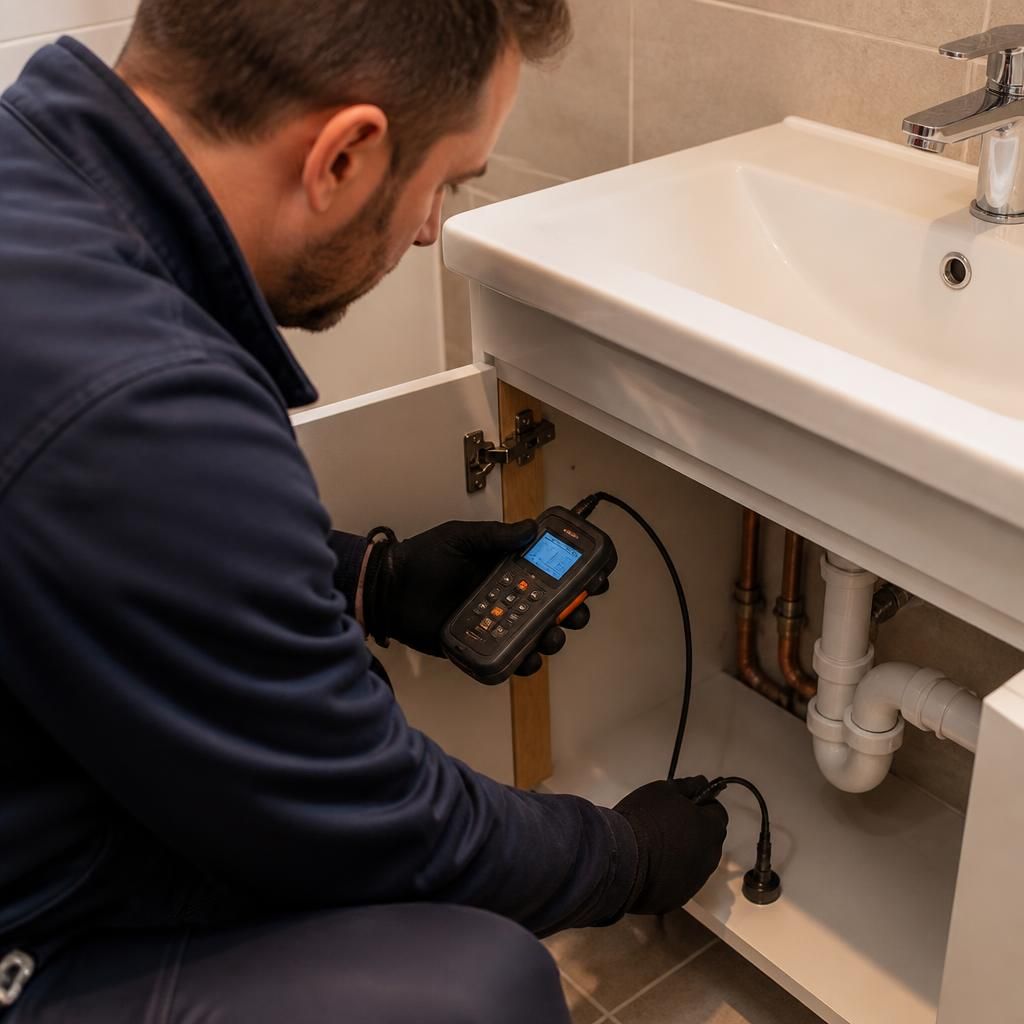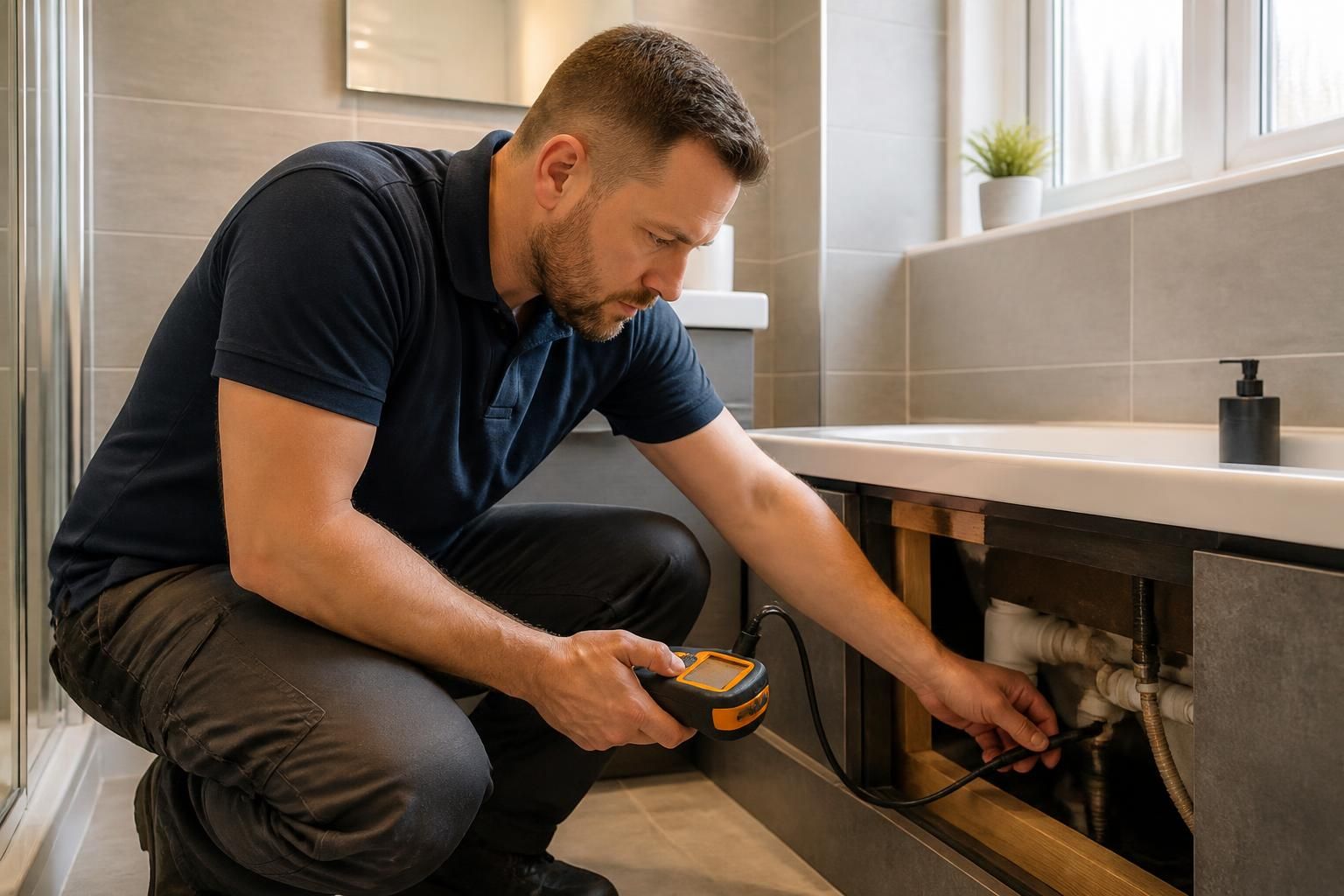
Bathroom leak detection is generally less disruptive than repairing the leak itself. The inspection is designed to identify the source before unnecessary tiles, flooring or fittings are disturbed, although the level of disruption depends on the leak’s location, the bathroom layout and whether the plumbing is accessible.
What the appointment may involve
- Moving toiletries, freestanding storage and other loose items so the floor, walls and sanitaryware can be examined properly.
- Checking visible connections around the toilet, basin, bath, shower, radiator and pipework.
- Running selected taps, flushing the toilet or operating the shower to observe how the plumbing behaves under normal use.
- Comparing moisture readings in nearby surfaces to establish whether dampness is localised or spreading from another point.
- Testing sections of the plumbing system separately where this helps distinguish a supply-pipe leak from a waste or shower-related leak.
These checks can usually be carried out without removing bathroom fittings. A technician may need the room to remain unused during particular tests, and water supplies may need to be isolated briefly if this is necessary for safe or accurate investigation. This is normally a temporary inconvenience rather than a major interruption to the property.
The greatest disruption occurs when the suspected source is behind a fixed panel, beneath a fitted bath, below flooring or within a wall. In that situation, the technician should identify the most useful access point rather than opening several areas without purpose. The smallest practical opening may allow the pipework or connection to be examined, but any opening or removal of fixed materials should be explained before work proceeds.
Leak detection and leak repair are separate stages. Finding the source may involve little physical disturbance, while putting the problem right could require a replacement connection, resealing, removal of a fitting or access to concealed pipework. If damage to plaster, flooring, sealant or cabinetry is already present, its condition may also affect how disruptive the subsequent repair becomes.
After the source has been identified, the affected area should be checked again to confirm that the suspected route has been correctly understood. Surfaces can remain damp after a leak is stopped, so moisture may not disappear immediately. Ventilation and drying requirements depend on the materials involved and the extent of water penetration.
To keep the process controlled, clear the bathroom of movable items beforehand, make the route to the room accessible and note when the dampness appears or what activity seems to trigger it. Tell the plumber about previous repairs, unusual smells, staining, changes in water pressure or damage in adjacent areas. This information can reduce unnecessary investigation and help determine whether adjoining spaces need to be considered.
A professional inspection should therefore be planned around preserving usable fixtures and limiting any opening to areas that provide useful evidence. Ask what testing is proposed, whether water will need to be isolated and whether any access panel or covering may need to be removed before the inspection begins.