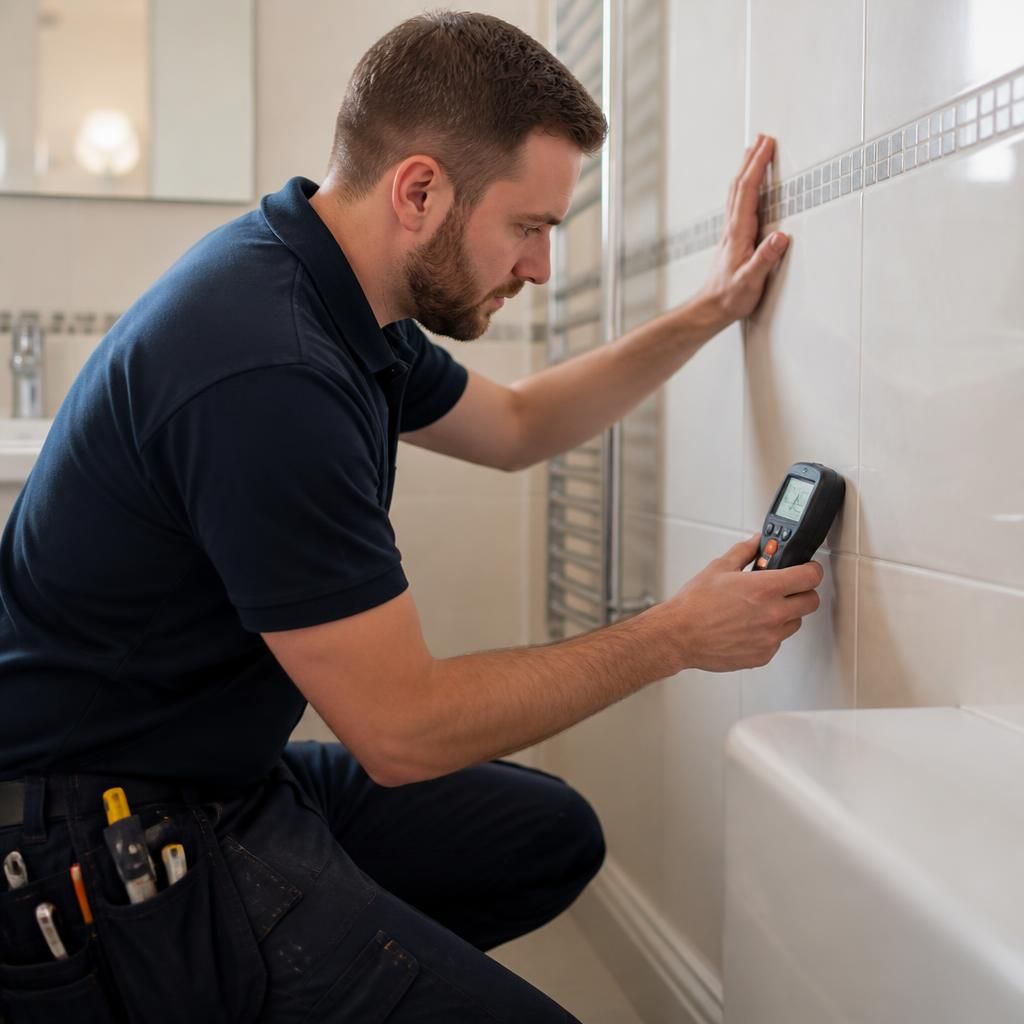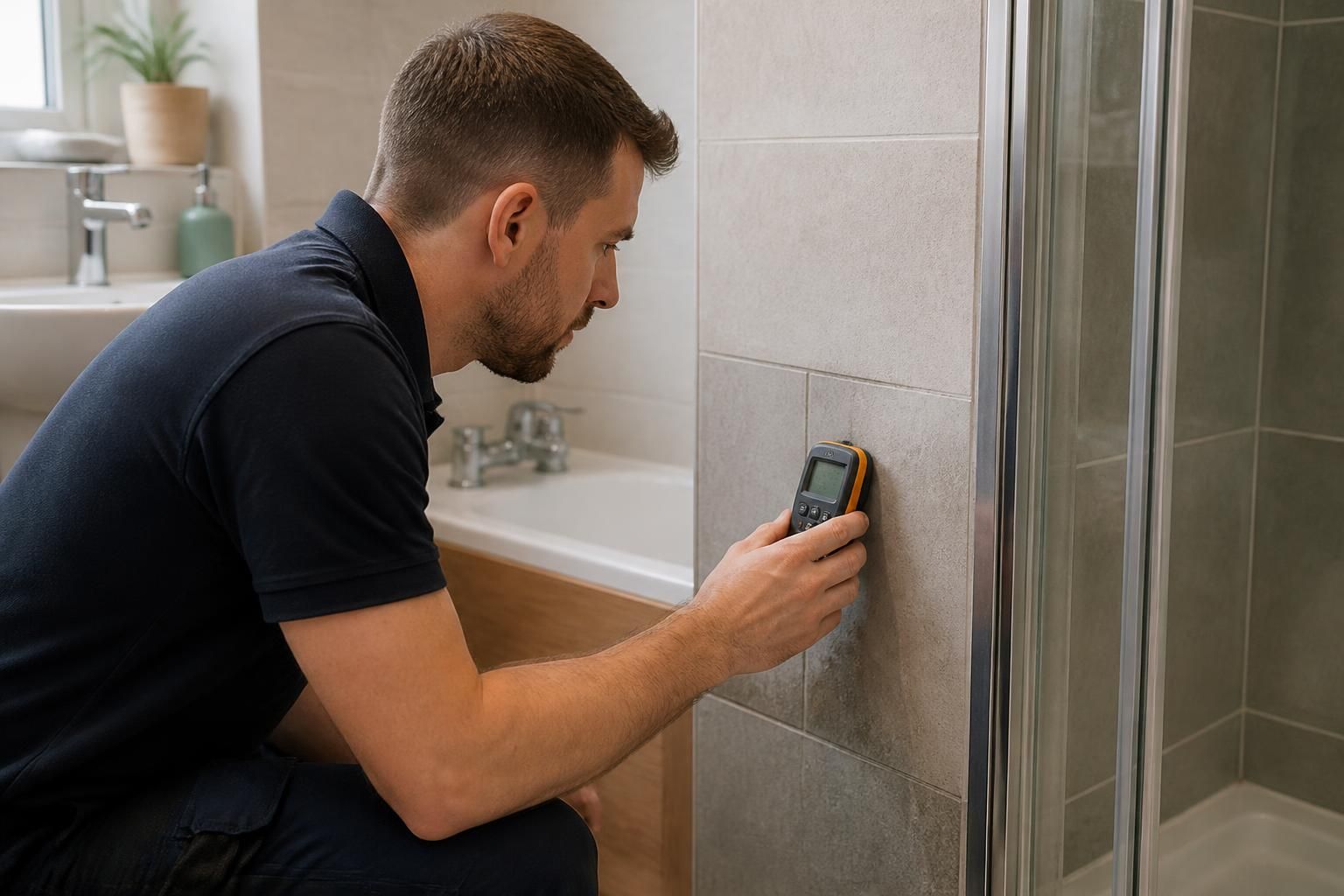
Bathroom leak detection is usually priced as an inspection or diagnostic service, with the final cost depending on the work needed to confirm the source of the water. The inspection charge may be separate from the cost of putting the leak right, so these should be treated as two distinct parts of the quotation.
What may be included in the detection cost
- A discussion of the symptoms, such as damp, staining, mould, loose tiles or unexplained water usage.
- A visual inspection of bathroom fittings, pipework, seals, joints and surrounding surfaces.
- Targeted testing to establish whether the water is coming from a supply pipe, waste pipe, shower, bath, basin, toilet or heating-related connection.
- Specialist diagnostic equipment where a concealed leak cannot be confirmed through visible checks alone.
- An explanation of the findings and recommendations for the next stage.
The cost can increase where the suspected leak is concealed behind tiled walls, beneath flooring or within boxed-in pipework. Access may need to be created to inspect or repair the affected section, and reinstatement of tiles, flooring, plaster or decoration is normally considered separately unless specifically included in the quotation.
Why prices differ between bathrooms
- Type of leak: A dripping tap or visibly failed seal may be straightforward to identify, while intermittent damp can require more testing.
- Position of the pipework: Leaks in exposed areas are generally easier to investigate than those hidden within walls, floors or ceilings.
- Extent of the inspection: A localised check may involve less work than an investigation covering several fittings or adjoining areas.
- Required equipment: Moisture measurement, acoustic testing or thermal inspection may be considered where standard visual checks cannot locate the source.
- Follow-on work: The cost of replacing a fitting, joint, valve or section of pipe is separate from identifying the fault unless the quotation states otherwise.
Warning signs that justify arranging an inspection include persistent damp smells, mould that keeps returning, discoloured grout, peeling paint, swollen flooring, a ceiling mark below the bathroom or water that appears after using a particular fitting. A leak does not always leave visible water; concealed moisture can travel away from the original fault before becoming noticeable.
Before agreeing to the work, ask whether the quoted amount covers the inspection only, whether diagnostic equipment is included, whether any access or opening-up work is additional, and how repair costs will be presented. It is also sensible to clarify whether the quotation includes making good surfaces after a pipe or fitting has been exposed. A clear quote should distinguish inspection, repair, replacement parts and reinstatement rather than combining unrelated costs.
For a rented property, the tenant should normally report suspected leaks to the landlord or managing agent before authorising non-urgent work, unless immediate action is needed to limit damage. Homeowners should check whether their buildings or contents insurance has particular requirements for leak investigations and records.
Ideal Plumbing Services provides bathroom leak detection and repair advice for residential customers in Birmingham and across the West Midlands. The company offers clear recommendations before repair work proceeds, with no hidden charges and a satisfaction guarantee.