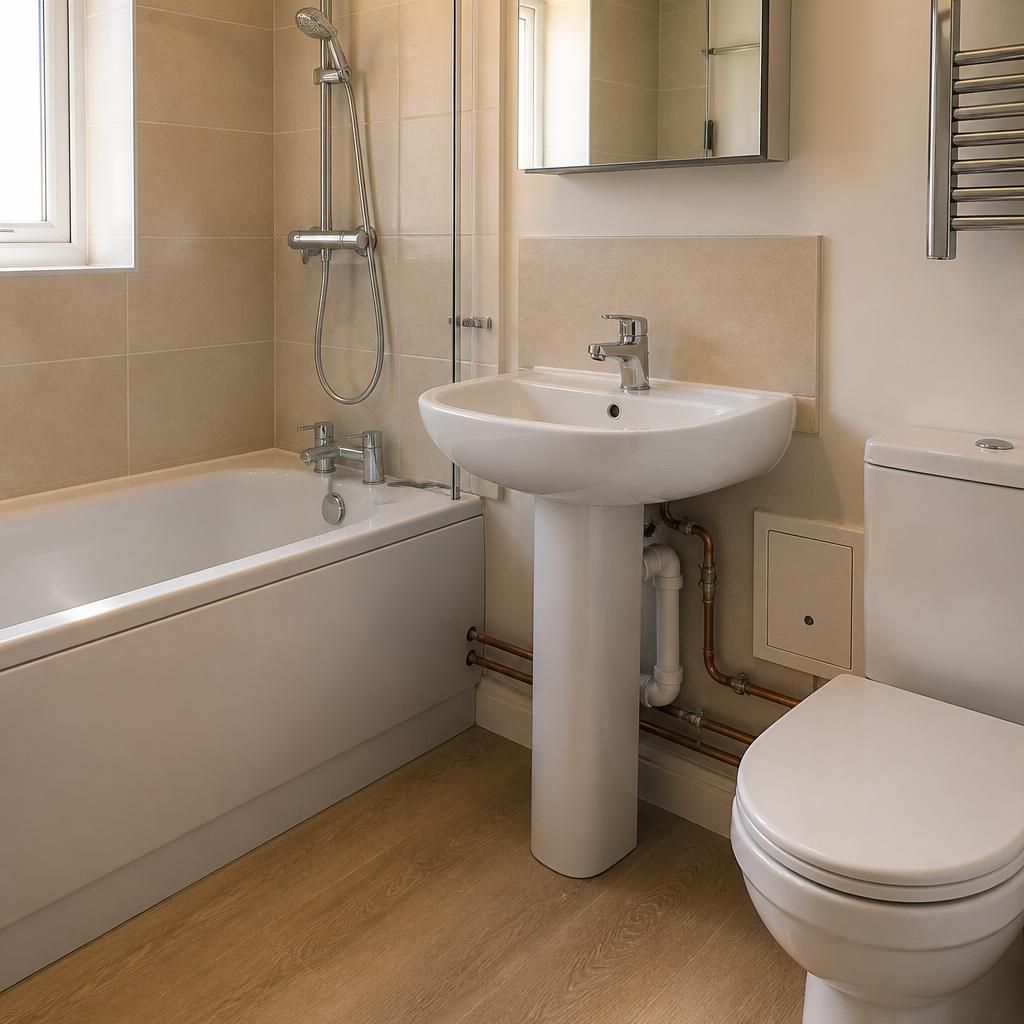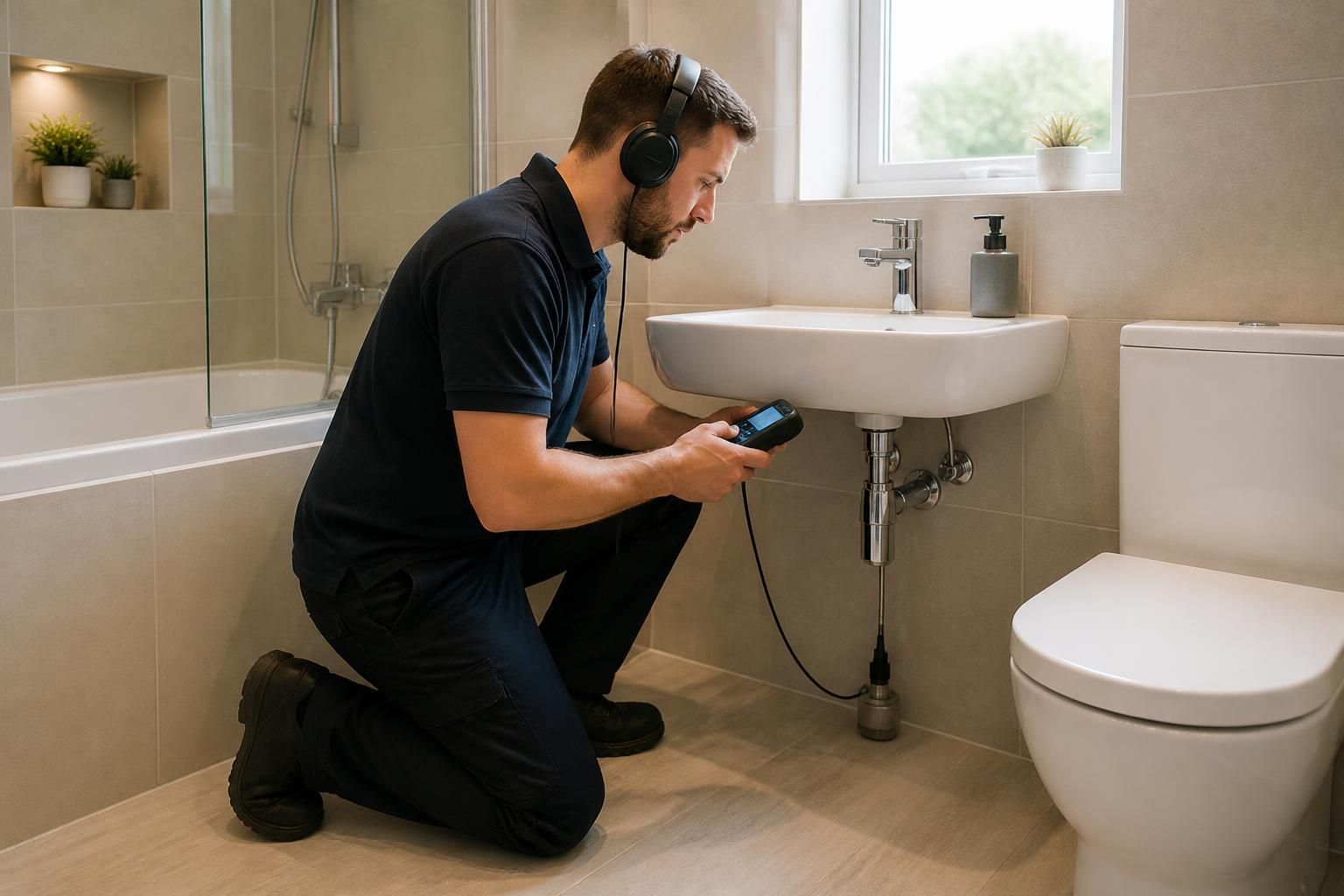
Preparing a bathroom for professional leak detection mainly involves making the plumbing system safe to inspect, preserving evidence of the fault and ensuring the plumber can reach relevant services without unnecessary removal of fixtures. Good preparation can help distinguish an active leak from residual moisture and reduce the risk of accidental damage during the investigation.
Before the inspection, consider the following steps:
- Stop using the suspected fixture if practical. If the leak appears when the bath, shower, basin or toilet is used, avoid using that fitting until it has been assessed. This can prevent additional water entering the structure and may help the plumber identify whether the problem is linked to supply pipes, waste connections, seals or the fixture itself.
- Turn off the local isolation valve if there is an active leak. Many bathroom fittings have an isolation valve on the supply pipe. Closing it can stop water to that individual fitting while leaving the rest of the property in use. If water is escaping from a concealed pipe, the stop tap may be needed instead. Do not force a stiff valve, and seek professional advice if you are unsure which valve controls the affected pipework.
- Record the conditions surrounding the leak. Note whether the issue occurs during flushing, running water, draining, bathing or periods when no bathroom fitting is being used. Also record whether staining, dripping or dampness changes after the water supply is isolated. These observations can be more useful than attempting to diagnose the cause yourself.
- Keep any relevant records available. Photographs of staining, damaged sealant, swollen flooring or previous repairs can show how the problem has developed. If the bathroom has recently been refurbished or a fitting has been replaced, details of the work may help the investigation.
- Provide access to controls and services. Make sure the stop tap, isolation valves, boiler or cylinder controls, inspection hatches and removable access panels can be reached. If a panel is secured or a service is located in a cupboard, identify it before the visit rather than trying to remove it yourself.
- Protect belongings and electrical items. Move towels, toiletries and personal possessions away from areas that may become damp during testing. Keep electrical appliances away from standing water. If water has reached a socket, light fitting or other electrical equipment, avoid contact with it and arrange for the relevant electrical safety issue to be assessed.
- Do not apply fresh sealant or carry out temporary repairs immediately beforehand. New silicone, filler or patching can conceal the route of water and make it harder to establish whether the leak is from a joint, seal or concealed pipe. Temporary measures may also alter the symptoms that need to be tested.
- Arrange permission where required. Tenants should check whether the landlord or managing agent needs to authorise inspection or access. Landlords should confirm that the affected property and any connected areas can be entered lawfully. The person arranging the visit should also explain any restrictions, such as vulnerable occupants, pets or limited access.
Leak detection may involve visual inspection, moisture measurement, water-flow checks or controlled tests of individual fittings and pipework. The precise method depends on whether the suspected source is a visible connection, a concealed supply pipe, a waste pipe, a shower enclosure or a failure in waterproofing. Preparation should therefore focus on providing safe access and preserving the original symptoms rather than opening walls, lifting flooring or dismantling bathroom fittings.
If there is substantial water loss, rapidly spreading dampness, a ceiling stain below the bathroom or water near electrics, treat the situation as urgent. Isolate the water supply if it can be done safely, keep people away from the affected area and explain the conditions clearly when arranging professional assistance. A plumber can then decide whether further investigation is appropriate before any repair work begins.