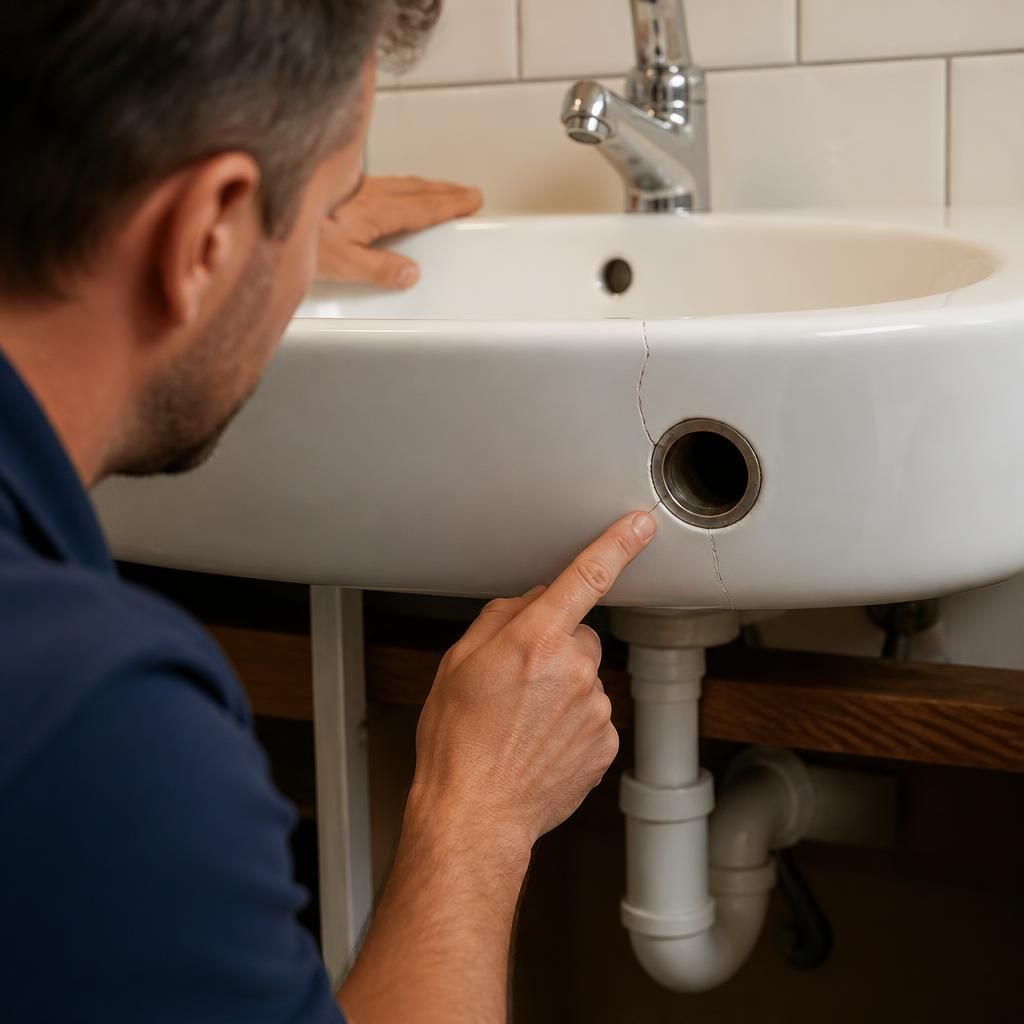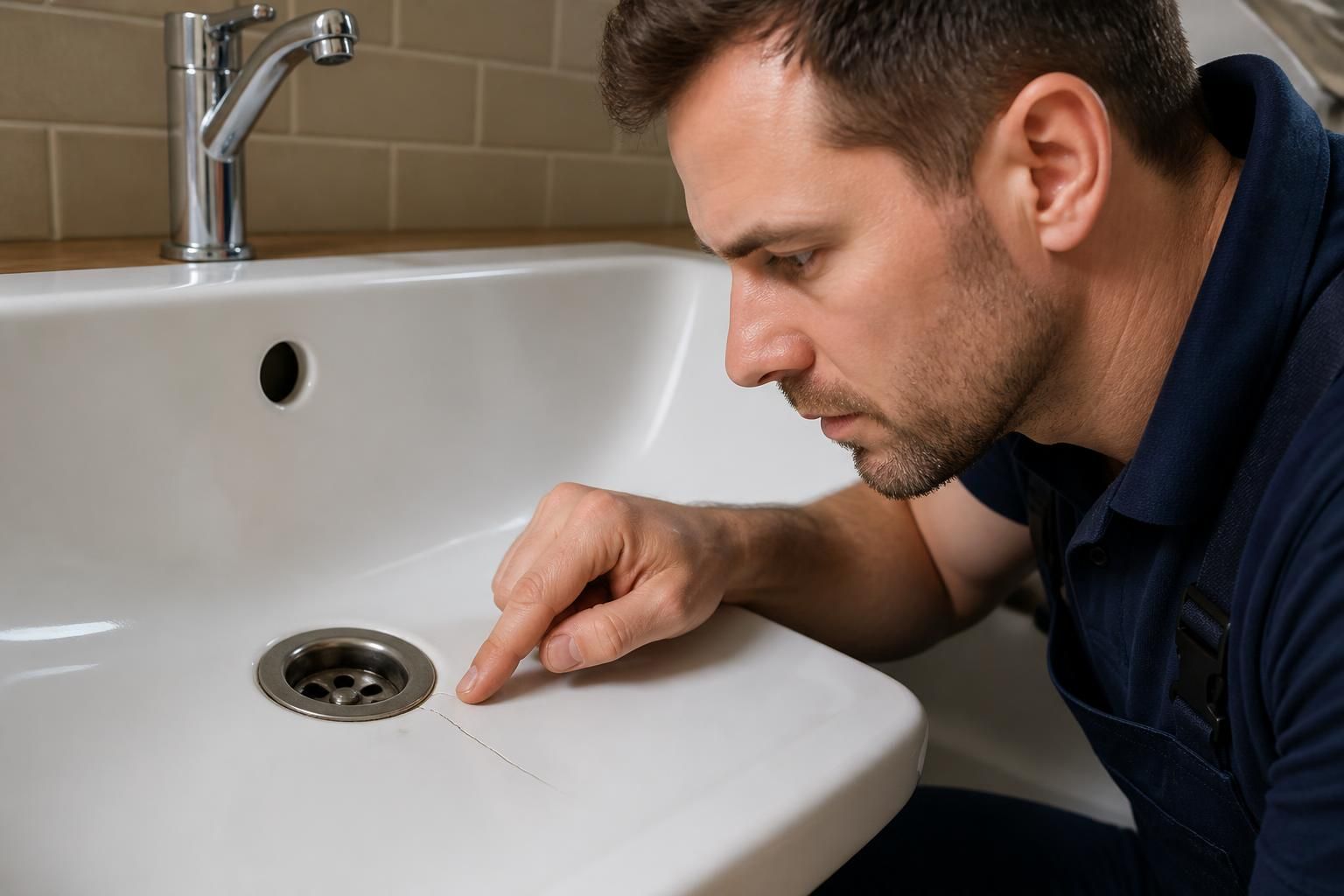
Repairing a cracked ceramic sink is possible, but the result depends on the crack’s position, depth and effect on the basin’s surface. A professional assessment helps determine whether a resin or epoxy repair is suitable, or whether replacement is the more dependable option.
What affects whether repair is suitable?
- Location: A crack on a flat, lightly used area may be easier to repair than one around the waste outlet, tap hole, overflow or fixing points. These areas experience movement, water exposure and pressure from connected fittings.
- Depth: A surface craze may only affect the glaze, whereas a crack through the ceramic can allow water into the material or beneath the basin.
- Movement: If the basin flexes, rocks or has become detached from its supports, a filler alone is unlikely to provide a lasting result. The underlying support must be checked first.
- Water damage: Staining, dampness inside the cabinet or marks on the wall below can indicate that water has travelled through the damaged area.
- Cleanliness and dryness: Repair compounds need a sound, grease-free surface. Soap residue, limescale and moisture can prevent proper adhesion.
How a ceramic sink repair is carried out
The damaged area is normally cleaned, dried and inspected to establish how far the crack extends. Loose glaze or unstable fragments may need to be removed carefully. A suitable ceramic repair compound is then worked into the damaged section, allowed to cure and finished so that the surface is as smooth as possible. The waste, overflow and surrounding seal are checked as part of the work, because a leak may come from a fitting rather than the ceramic itself.
Some repairs are intended mainly to restore appearance, while others are designed to close a small path for water. These should not be treated as equivalent. A filled crack can look neat but may still be unsuitable if the basin is under structural stress. The repaired area may also remain visible, particularly on a coloured or patterned sink.
Can you repair it yourself?
Small cosmetic damage can sometimes be treated with a ceramic repair kit, provided the product is intended for the sink’s material and the surface can be prepared correctly. Follow the manufacturer’s curing instructions and keep the area dry for the stated period. Avoid using the basin until the compound has fully hardened.
DIY repair is less appropriate where the crack is near a waste or tap fitting, continues beneath the rim, has sharp edges, or is accompanied by movement or leakage. Abrasive cleaners can also damage the surrounding glaze and make colour matching more difficult. Do not rely on sealant around the visible surface as a substitute for repairing a fractured basin.
When replacement is usually more appropriate
Replacement is generally considered when the ceramic has broken into separate pieces, the crack is spreading, the basin leaks after drying, or the damage affects a mounting or connection point. It may also be preferable where the repair would be highly visible or where the sink is subject to frequent heavy use. A replacement assessment includes checking the basin’s dimensions, tap-hole arrangement, waste position and method of support so that the new sink is compatible with the existing worktop or unit.
If the sink is rented, photograph the damage and report it to the landlord or managing agent before arranging permanent work. Further use may increase water damage, while an unauthorised replacement may create an avoidable dispute about responsibility.
What to do before an inspection
- Stop using the affected bowl if water is escaping or the ceramic is moving.
- Remove standing water and dry the visible surfaces.
- Place a container or towel beneath the waste area if there is seepage.
- Do not enlarge the crack, drill into the ceramic or apply a product that has not been specified for the surface.
- Note when the damage was first noticed and whether it changes when the tap or waste is used.
A plumber can distinguish a damaged basin from a failed waste seal, loose fitting or problem with the supporting unit. Ideal Plumbing Services provides residential plumbing advice and repair work in Birmingham and across the West Midlands, helping homeowners, landlords and tenants choose between a suitable repair and replacement based on the condition of the sink and the surrounding plumbing.