A plumber can carry out kitchen sink repairs in a rented property, but the correct process depends on the tenancy agreement, the cause of the fault and whether the work is routine maintenance or the result of damage. In most cases, the tenant should notify the landlord or letting agent before arranging non-urgent work, while the landlord decides how the repair will be authorised and paid for.
Who is normally responsible?
- The landlord: The landlord will generally deal with faults arising from normal wear and tear, defective plumbing components, ageing pipework or problems with the property’s fixed installations. This can include a leaking waste connection, a failed isolation valve or a sink fitting that has deteriorated through ordinary use.
- The tenant: A tenant is usually expected to use the sink properly, report problems promptly and take reasonable steps to prevent avoidable damage. If a blockage or breakage was caused by misuse, neglect or accidental damage, the tenancy agreement may make the tenant responsible for the associated cost.
- The letting agent: Where an agent manages the property, they may record the issue, obtain the landlord’s instructions and appoint a contractor. The tenant should follow the reporting procedure specified in the tenancy agreement rather than assuming that any plumber can be used.
Responsibility is not always obvious from the visible fault. For example, water under a sink may come from the tap, trap, waste pipe, supply hose, dishwasher connection or the cabinet surface itself. A plumber can identify the source and distinguish a failed component from damage caused by an impact, an unsuitable installation or prolonged inaction.
What should a tenant do before arranging a repair?
- Report the problem in writing to the landlord or letting agent, including when it was noticed and whether water is actively escaping.
- Send clear photographs or a short video if this helps show the location and severity of the fault.
- Protect the surrounding cupboard, flooring and stored items from further water exposure, provided it is safe to do so.
- Avoid dismantling pipework or attempting a permanent repair unless the landlord has given permission and the tenant is suitably competent.
- Ask whether the landlord has an approved plumber and confirm who will meet the cost before booking work.
If the sink cannot be used safely, water is reaching electrical equipment, or a leak is causing continuing property damage, the tenant should make the situation clear when reporting it. Turning off the relevant isolation valve can limit water loss if the valve is accessible and operates normally. Where there is no suitable local valve, the property’s main stopcock may need to be used, but it should not be forced.
Can a tenant appoint a plumber without permission?
For a minor, non-urgent fault, arranging a contractor without the landlord’s agreement can create a dispute over payment and responsibility. Even where a tenant believes the landlord should pay, reimbursement is not automatic if the contractor was not authorised or if the work exceeded what was necessary. Written approval should state the agreed scope, any spending limit and who will pay the plumber.
In an urgent situation, the priority is to limit damage and make the installation safe. The tenant should still notify the landlord or agent as soon as possible and keep records of calls, messages, photographs, invoices and the plumber’s findings. A contractor may be able to complete a necessary temporary measure first and explain whether a further repair or replacement needs approval.
What happens during the inspection?
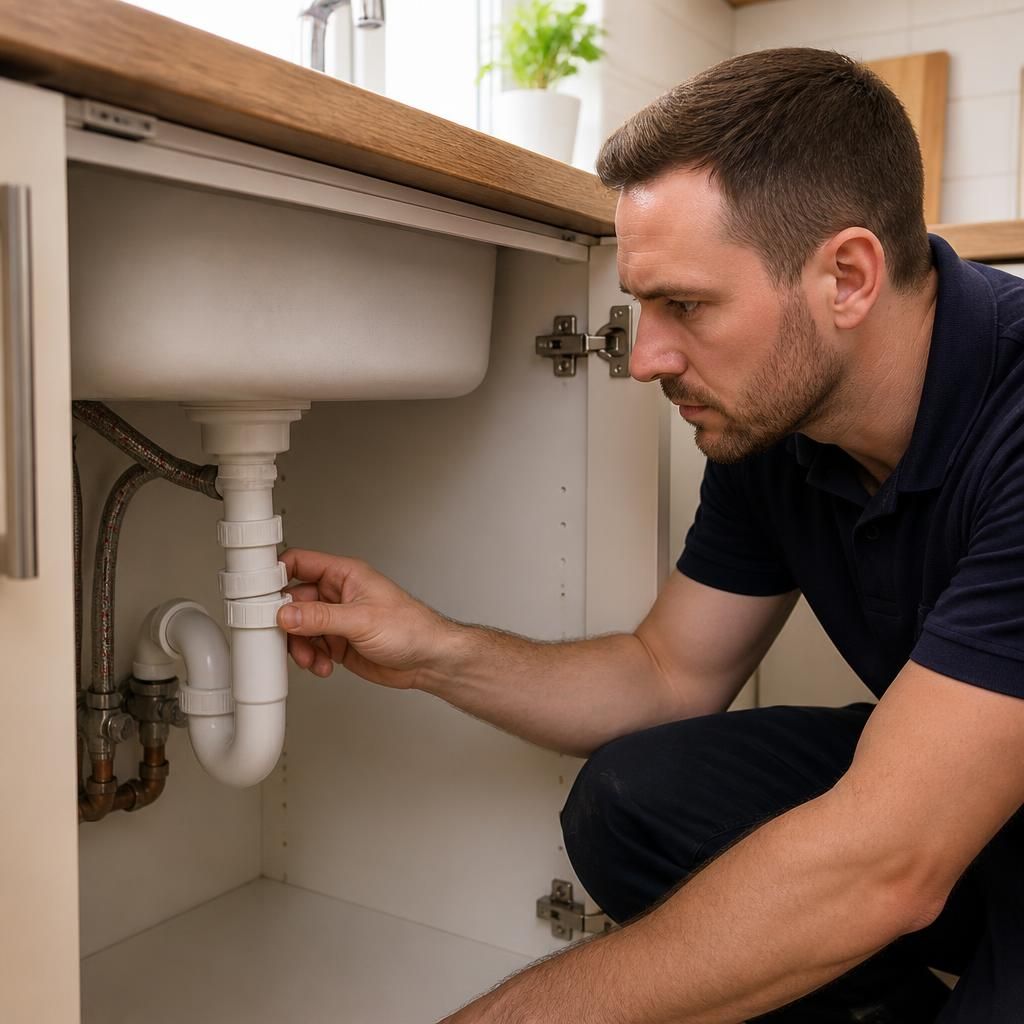
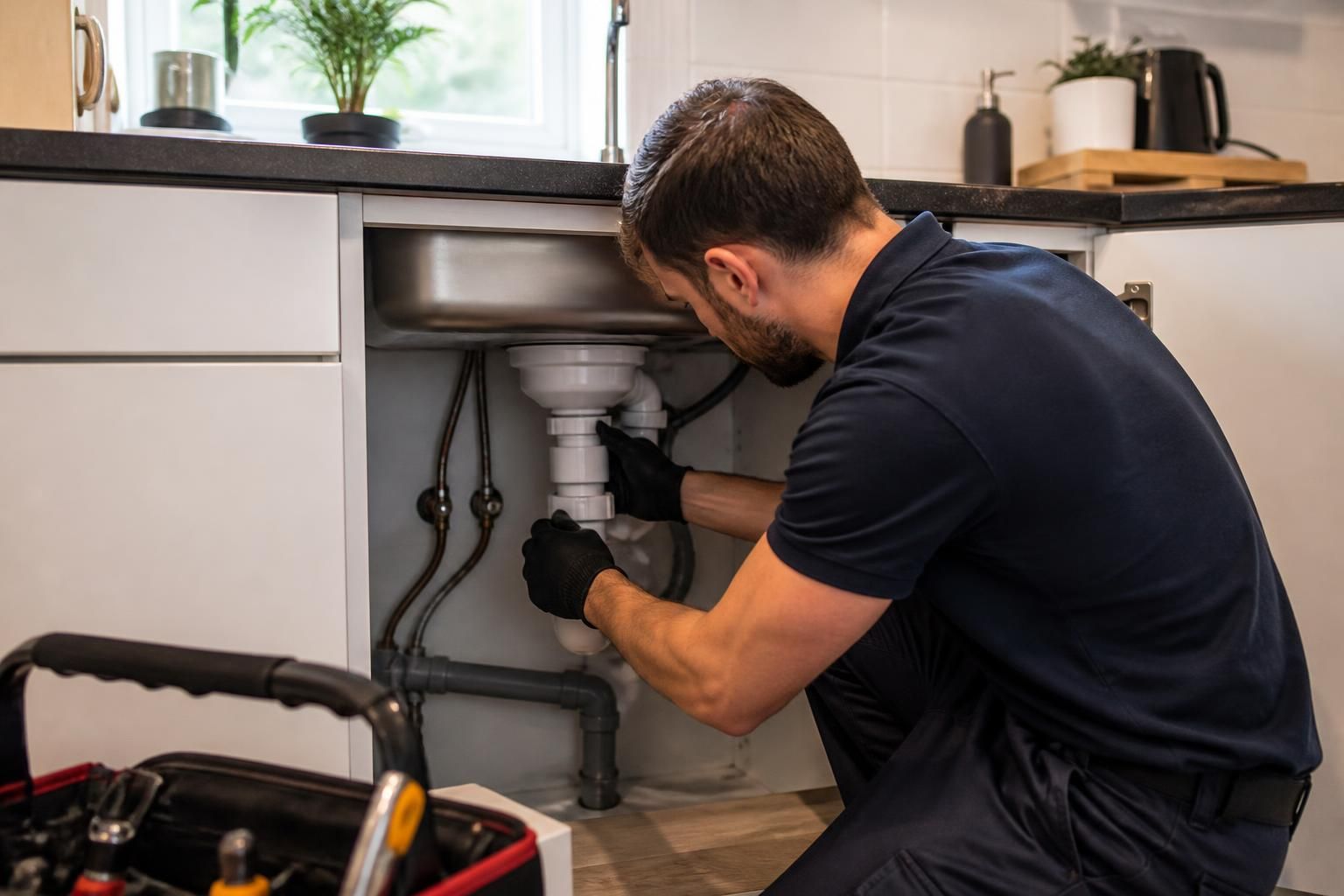
The plumber will normally inspect the sink, tap, waste assembly, supply connections and the pipework inside the cupboard. They may run the taps, check joints for movement or seepage, examine seals and test whether the waste drains correctly. The repair could involve replacing a seal, tightening or renewing a connection, clearing an accessible obstruction, replacing a trap or fitting a new component. If the sink, worktop or cabinet has been damaged, the plumbing repair may not include associated joinery or cosmetic reinstatement unless this is agreed separately.
The plumber should explain the cause, the recommended work and any limitations before carrying out chargeable additional work. If access is restricted by stored items or fixed cabinetry, this can affect what can be inspected and whether a complete repair is possible on the first visit. Tenants should ask for a written description of the work and retain any paperwork for the landlord or agent.
What if the tenant caused the damage?
A tenant may be liable where the evidence points to misuse or accidental damage, such as forcing a tap, damaging a trap, putting unsuitable materials down the sink or failing to report a small leak until surrounding units are affected. Liability should be assessed from the cause rather than assumed from the fact that the problem is in the tenant’s kitchen. A professional inspection can provide useful evidence for both parties.
For rented homes in Birmingham and the wider West Midlands, Ideal Plumbing Services can assess kitchen sink plumbing faults and explain the practical repair options to the relevant customer. Landlords and agents can arrange work with the tenant’s access requirements in mind, while tenants can provide the written approval or contact details needed to clarify responsibility before work proceeds.