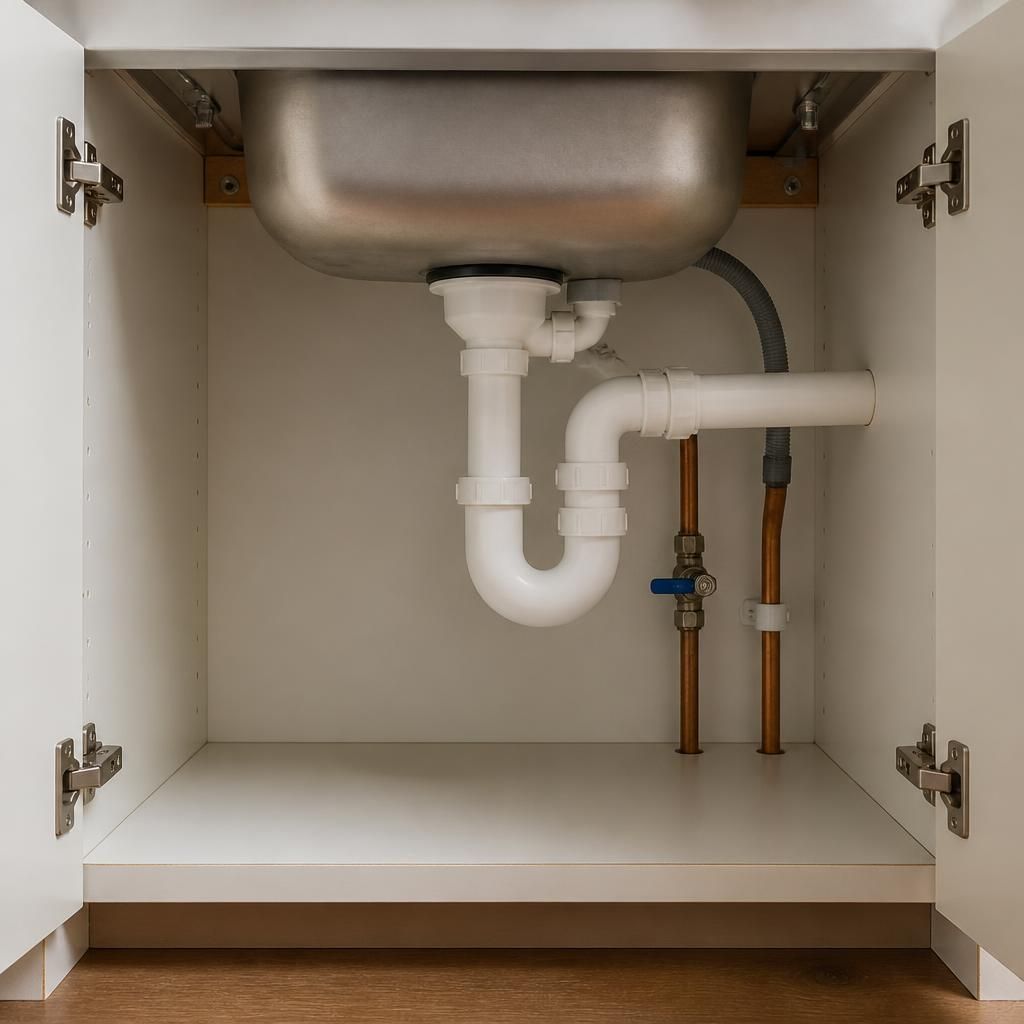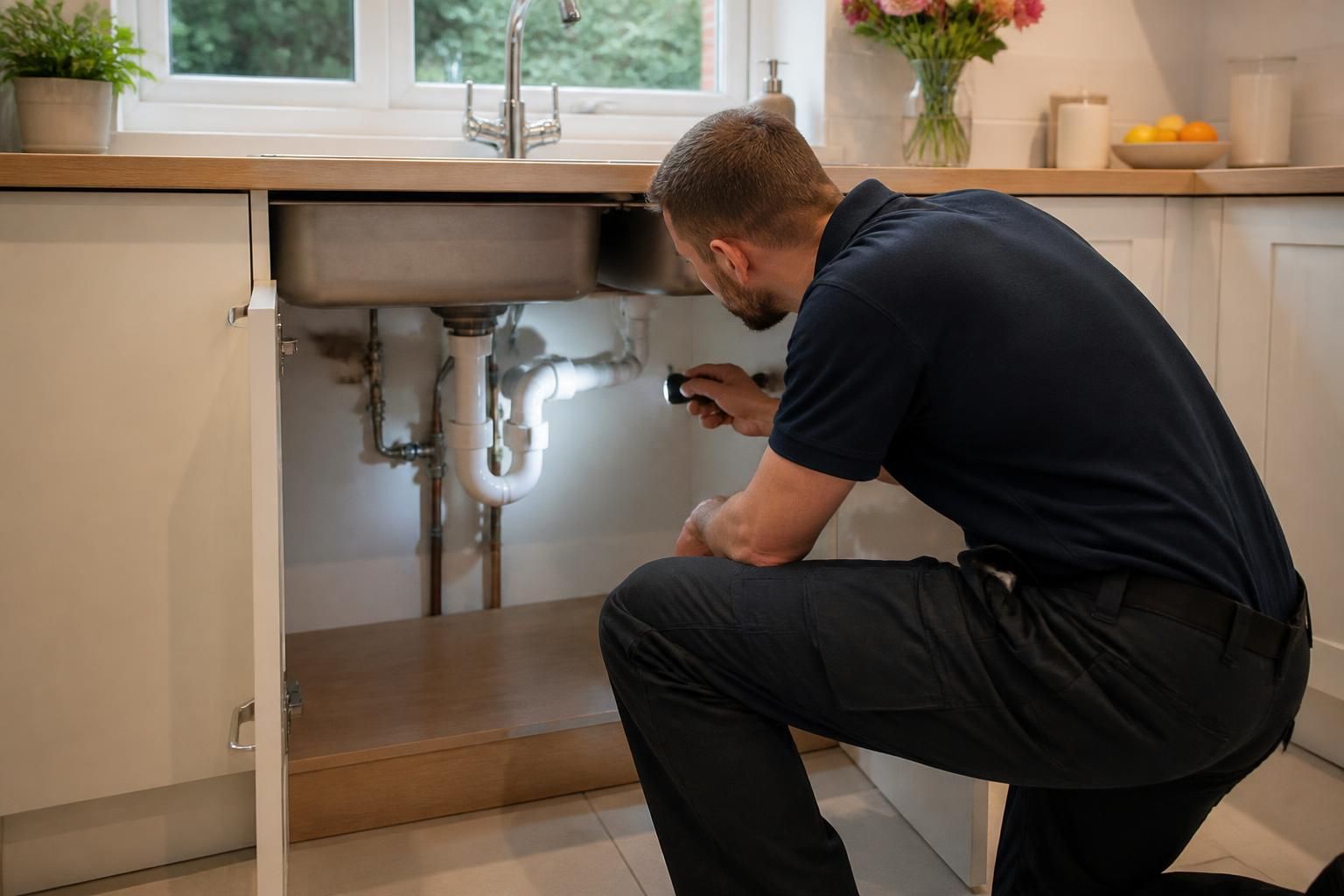
Before a kitchen sink plumbing appointment, prepare safe access to the sink’s water supply and drainage connections, record the symptoms, and gather any relevant information about previous repairs or alterations. This helps the plumber identify whether the issue involves the tap, isolation valve, waste trap, supply pipework or connection to the drainage system.
Make the surrounding access route usable. Remove obstacles between the entrance and the kitchen, particularly items that could prevent equipment being carried in safely. If the property has a stopcock, water meter or other isolation point in a utility cupboard or under-stairs area, make sure it can be reached. The plumber may need to isolate the supply while examining or repairing the sink plumbing.
Note what has happened. Before the appointment, write down:
- Which fitting is affected, such as the tap, waste, trap or supply pipe
- Whether the problem is a leak, blockage, low pressure, unusual noise or persistent dripping
- When you first noticed it and whether it is constant or occurs only when the tap or dishwasher is used
- Any odour, staining, dampness, mould or damage to nearby materials
- Whether the problem changes when another appliance or tap is running
Photographs can also be useful if water has stopped leaking before the appointment or if a stain, puddle or connection is difficult to identify. Keep any photographs available to show the plumber rather than relying on memory.
Do not dismantle the plumbing beforehand. Removing a trap, tightening connections or taking apart the tap can alter the evidence of the fault and may create an additional leak. Avoid applying chemical drain cleaner before an inspection. If it has already been used, tell the plumber what was applied, because residue may remain in the pipework and create a handling risk.
If the sink is leaking and you know which isolation valve controls the affected supply, it may be appropriate to close it until the appointment, provided it operates normally and can be reached safely. Do not force a stiff valve or attempt to repair a pressurised connection. If the leak cannot be isolated, contain drips with a suitable container and keep electrical appliances away from water.
Have useful product and property details available. The approximate age of the tap or sink, the make and model if known, and details of any recent kitchen installation can help establish whether a repair or replacement part may be needed. Tell the plumber about previous plumbing work, recurring blockages, earlier leaks and any materials or sealants used.
For a rented property, check whether the landlord or managing agent needs to authorise the work and keep their contact details available. It is also sensible to secure pets and keep children away from the work area while the plumbing is being inspected. These steps do not replace the plumber’s assessment, but they can make diagnosis and repair more straightforward.