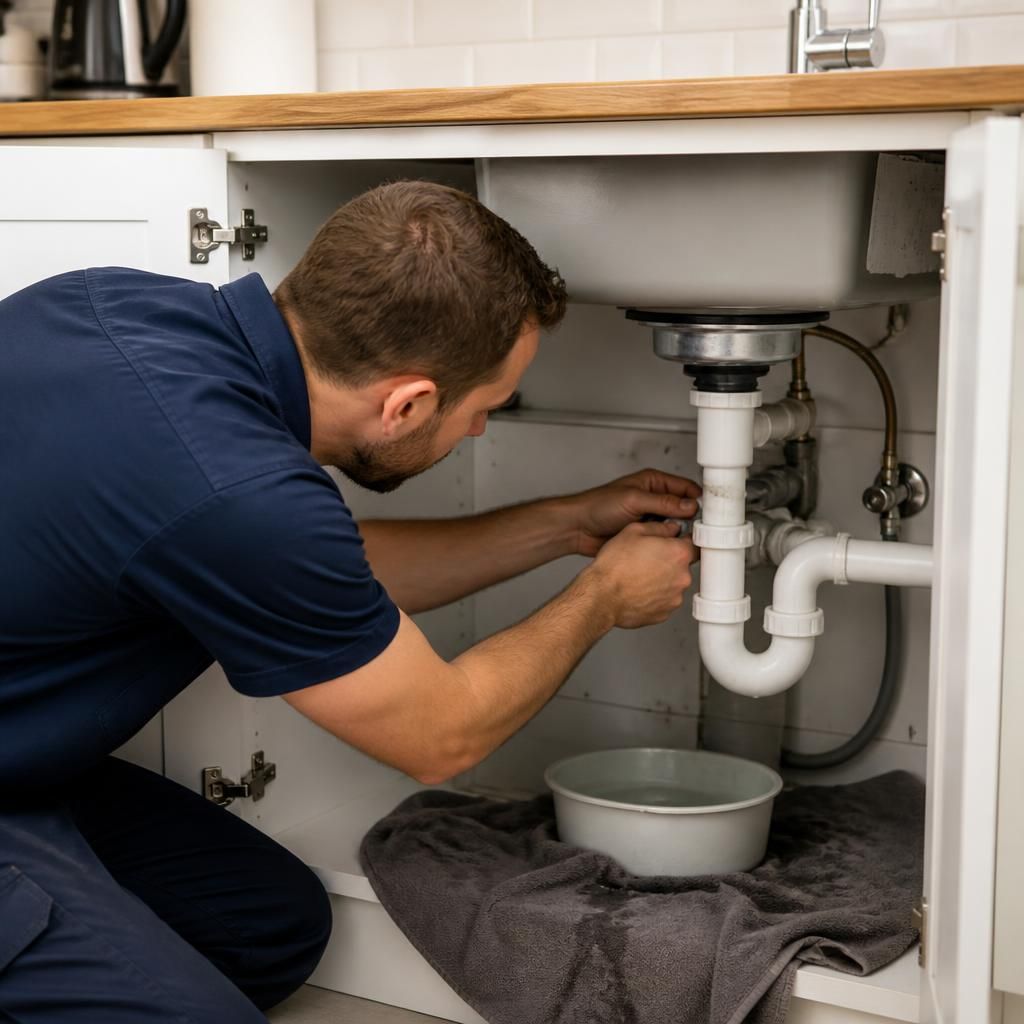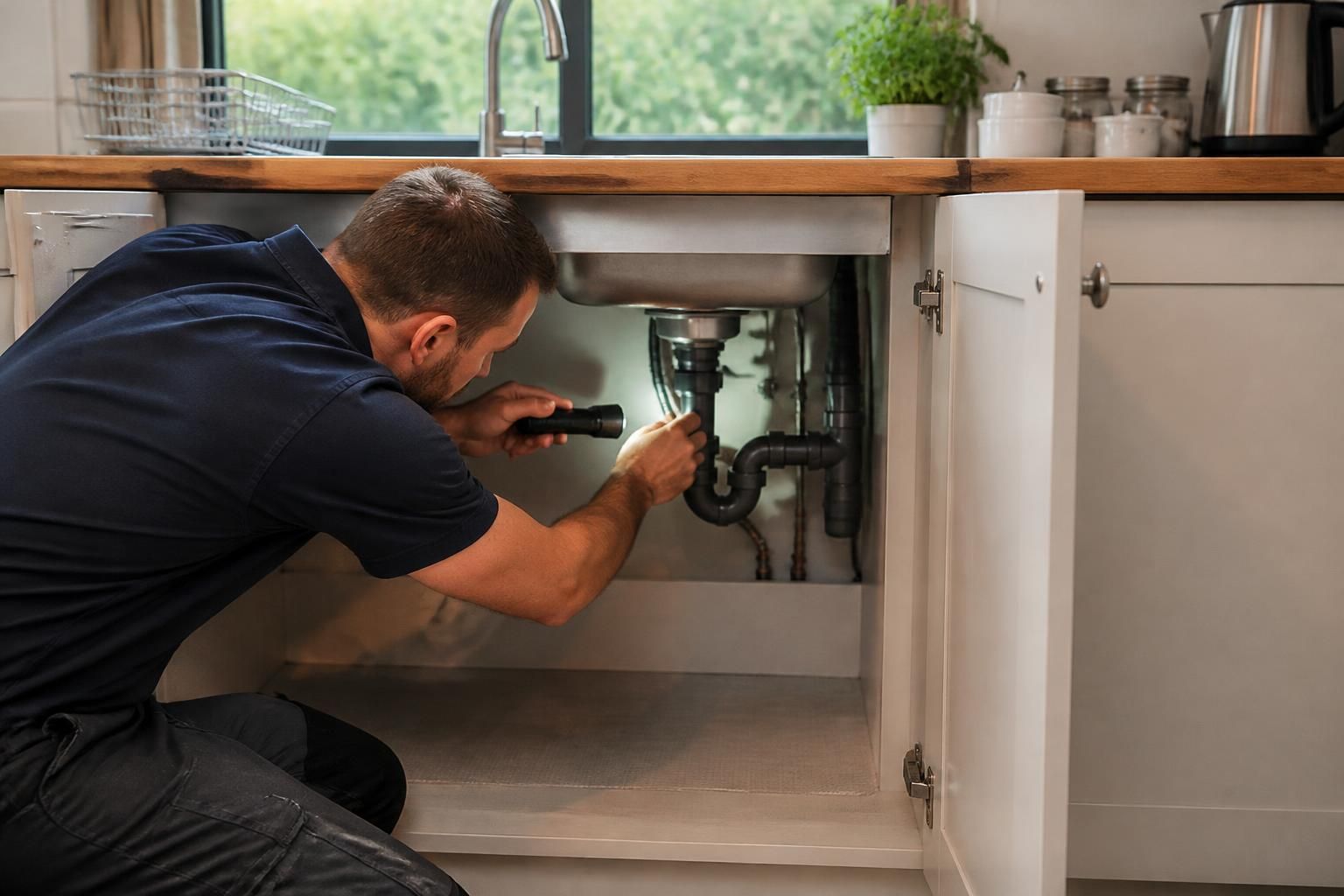
For a standard kitchen sink repair, disruption is usually modest: the plumber normally needs clear access to the cupboard, isolation valves, waste connections and the underside of the sink. The sink may be unavailable while the work is being carried out, but the surrounding kitchen can generally continue to be used unless the fault has spread to other areas.
The level of disruption depends mainly on the fault, the condition of the existing fittings and how easily the plumbing can be reached. A blocked waste, dripping tap connection or failed trap is generally more straightforward to address than concealed pipework, damaged units or a leak that has been running for some time.
What happens during a typical visit
- Inspection: The plumber checks the visible pipework, tap connections, waste fittings, isolation valves and any signs of moisture beneath the sink. They may need to run the tap or fill the bowl briefly to reproduce the problem.
- Isolation: The relevant water supply is shut off before components are disconnected. This reduces the risk of further leakage while the repair is in progress.
- Removal and repair: The affected part may be cleaned, tightened, resealed or replaced. A trap, flexible connector, tap fitting or waste assembly can usually be accessed from inside the cupboard.
- Testing: Once the work is complete, the supply is restored and the connections are tested under running water. The area should also be checked for drips before the cupboard is put back into use.
There may be some temporary noise from hand tools, pipe cutting or the removal of a seized fitting. Most sink repairs do not require extensive drilling or building work, although access can be more intrusive if pipework runs behind a fixed cabinet, tiled splashback or wall surface.
When the work can become more disruptive
- A leak has soaked the cabinet base, flooring or adjacent units and the affected materials need to be dried, removed or assessed.
- The isolation valve does not operate correctly, meaning the supply needs to be controlled elsewhere.
- Old or corroded fittings cannot be separated without replacing adjoining components.
- A blockage extends beyond the trap into the branch drain or external drainage system.
- The sink, worktop or cabinet has to be adjusted to accommodate replacement fittings.
- Concealed pipework is suspected of leaking and access through a wall, floor or cabinet panel is necessary.
Where a cabinet has been affected by water, plumbing work may be only one part of the process. The source of the leak needs to be corrected first, but the cabinet, flooring or worktop may require separate drying, repair or replacement. A plumber can identify the likely extent of the plumbing fault, but decorative or joinery work may fall outside the plumbing repair itself.
To keep the visit orderly, remove items from the cupboard beneath the sink and from the immediate worktop area. Keep cleaning products, stored appliances and loose objects away from the plumbing connections. If water is still escaping, place a container beneath the leak and avoid using the sink until the supply has been controlled. Do not force a seized valve or continue dismantling fittings, as this can turn a minor leak into a larger one.
After the repair, the area should be left dry enough for any new moisture to be identified. Check the base of the cupboard and the floor around the sink during subsequent use. A recurring smell, damp patch, swollen cabinet panel or renewed drip may indicate that the original fault has not been fully resolved or that water has reached another part of the installation.
Ideal Plumbing Services assesses kitchen sink faults for homeowners, landlords and tenants in Birmingham and the wider West Midlands. A clear explanation of the required work should distinguish between a contained plumbing repair and any additional access, drying or replacement work that may be needed.