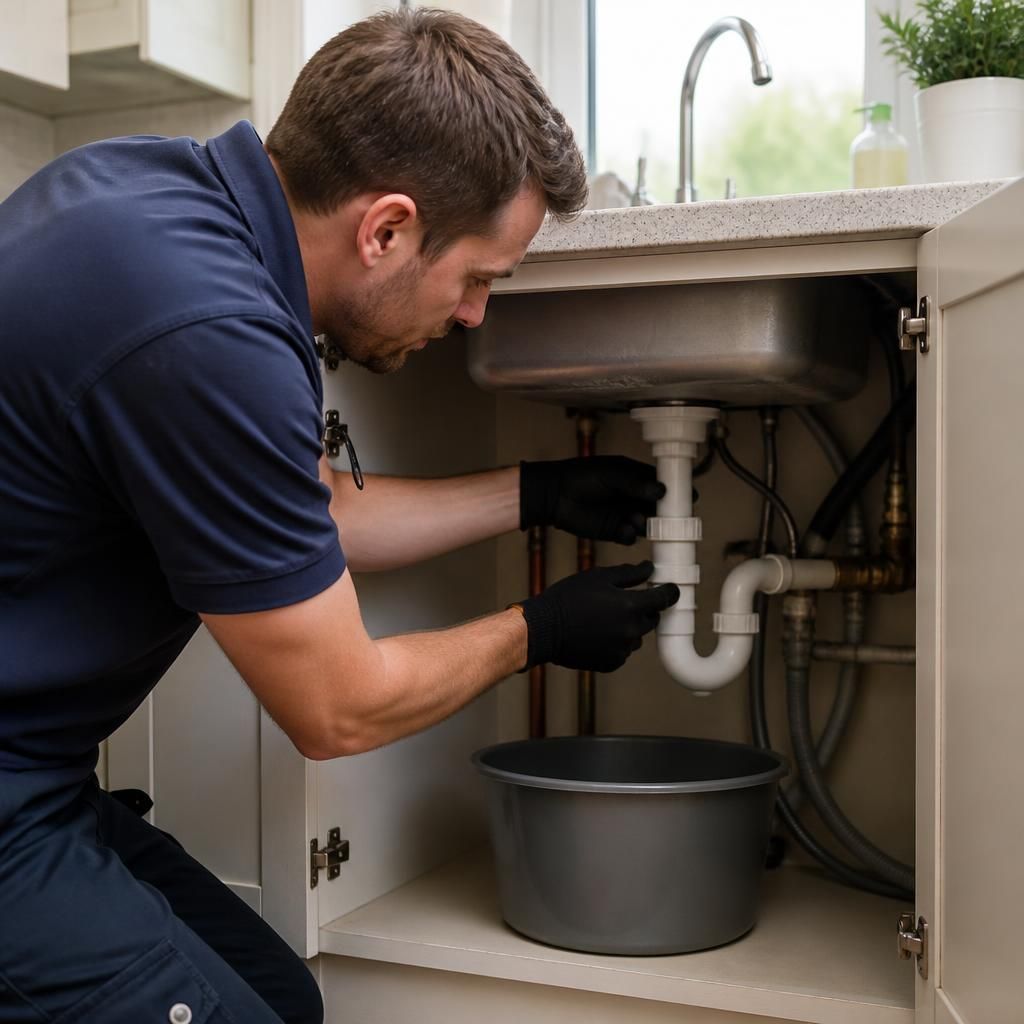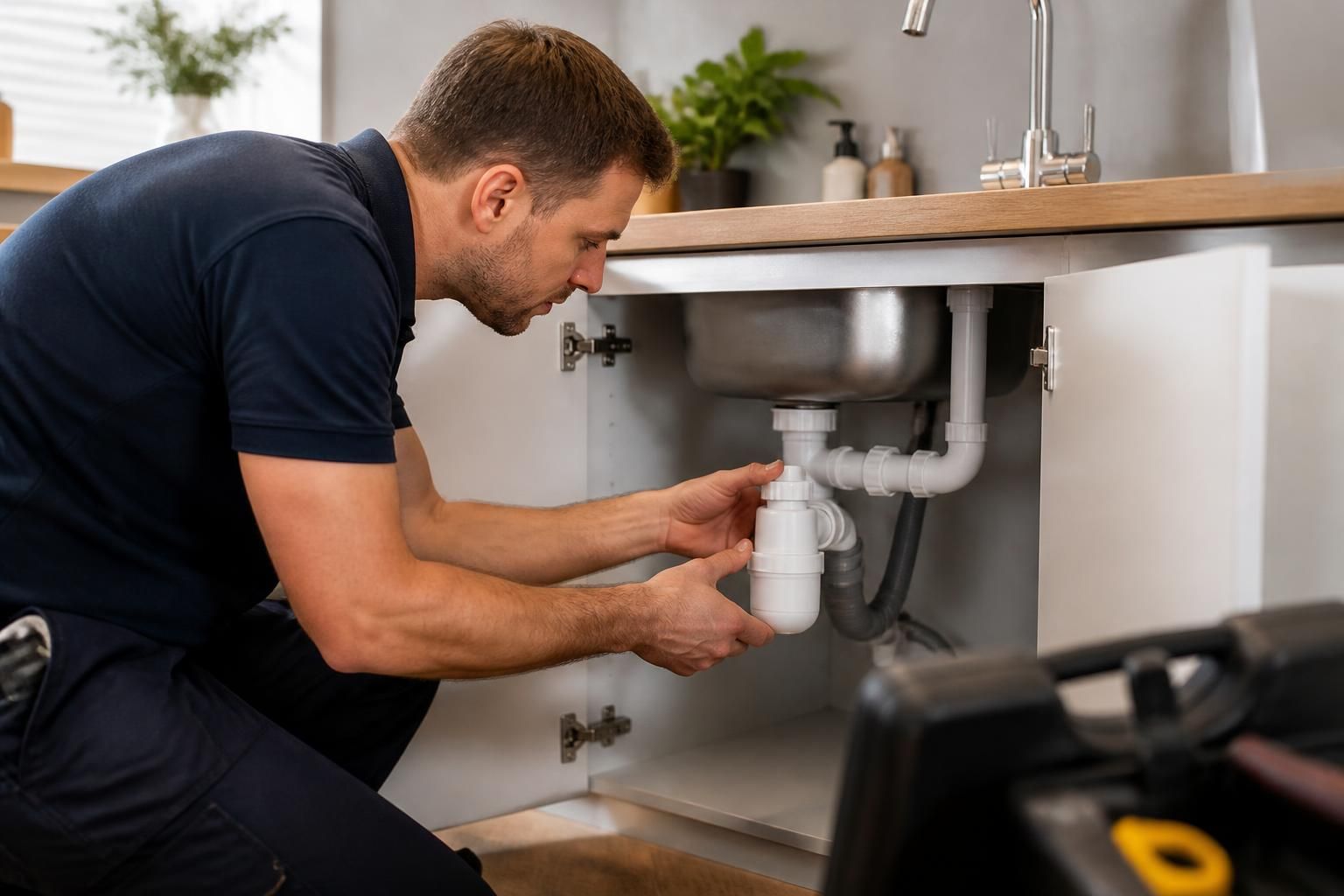
Kitchen sink plumbing costs are assessed by the work involved, the time needed to complete it, the condition of the existing installation and the materials required. A reliable assessment separates the cost of identifying the problem from the cost of correcting it, so you can understand what the quotation covers before work begins.
The main factors considered include:
- Fault diagnosis: The plumber establishes whether water is escaping from a supply connection, waste fitting, trap, tap, pipe joint or the sink itself. A visible drip may have a simple cause, while dampness inside a cupboard can require more careful investigation.
- Extent of the repair: Replacing a washer, seal or small section of pipe is generally a different job from renewing several connected fittings. If previous repairs have left components seized, damaged or incorrectly fitted, extra preparation may be needed.
- Access to the plumbing: Pipework beneath a sink is often hidden behind cupboards, drawers, panels or stored items. Difficult access can increase the labour involved, particularly where fittings cannot be reached without removing part of the surrounding installation.
- Condition of existing components: Corrosion, limescale, brittle plastic and damaged threads can affect how easily a fitting can be removed. A plumber may need to replace adjoining parts if they are no longer sound enough to reconnect safely.
- Parts and materials: The assessment takes account of the type and number of traps, waste fittings, isolation valves, flexi-hoses, pipework, seals, taps or other components needed. The specification should suit the sink and the existing pipework rather than relying on a nominal like-for-like replacement.
- Installation requirements: Fitting a new sink, tap or waste system can involve connecting several elements and checking that the finished arrangement drains correctly. Changes to the position of the sink or pipework may involve more work than replacing an item in its existing location.
Repair, replacement or investigation
The most economical option is not always to replace the visible component. For example, a leaking trap may be caused by a worn seal, a damaged thread or movement in the connected waste pipe. The plumber should identify the underlying cause before recommending a part. Replacement may be more appropriate where a fitting is cracked, heavily corroded or incompatible with the rest of the installation, while a repair may be suitable where the remaining components are in good condition.
When a leak is concealed, the assessment may also consider the risk of damage to cupboards, flooring and nearby materials. Finding the source can require additional inspection before a repair can be priced accurately. A clear explanation should distinguish confirmed work from any further work that might only become necessary once the affected fittings are exposed.
How the quotation may be structured
A plumber may calculate the price using labour, parts and any applicable call-out or diagnostic charge. Some jobs can be quoted as a defined task, while more involved faults may be priced according to the time and materials needed. Before agreeing to the work, ask whether the quoted amount includes removal of old parts, disposal, testing and any making good required after access has been created.
It is also sensible to check whether the price includes VAT where applicable and whether additional work requires approval. This is particularly relevant for landlords arranging repairs in a rented property, where the person requesting the work may need to authorise a change from repair to replacement.
What helps produce an accurate assessment
- Provide a description of when the problem occurs and whether it involves leaking, slow drainage, unusual smells or loss of water pressure.
- Share clear photographs of the sink, tap, pipework and any visible water damage if an initial discussion is possible.
- Keep the area beneath the sink accessible so the fittings can be inspected properly.
- Explain whether the sink or tap has recently been installed, moved or repaired.
- Ask for the recommended work, parts, labour and exclusions to be recorded clearly.
For residential plumbing work, a proper assessment should therefore result in more than a price for a replacement part. It should explain the cause of the fault, the proposed remedy, the materials involved and any conditions that could alter the final cost. Ideal Plumbing Services provides plumbing assessment and repair support for homeowners, landlords and tenants in Birmingham and the wider West Midlands.