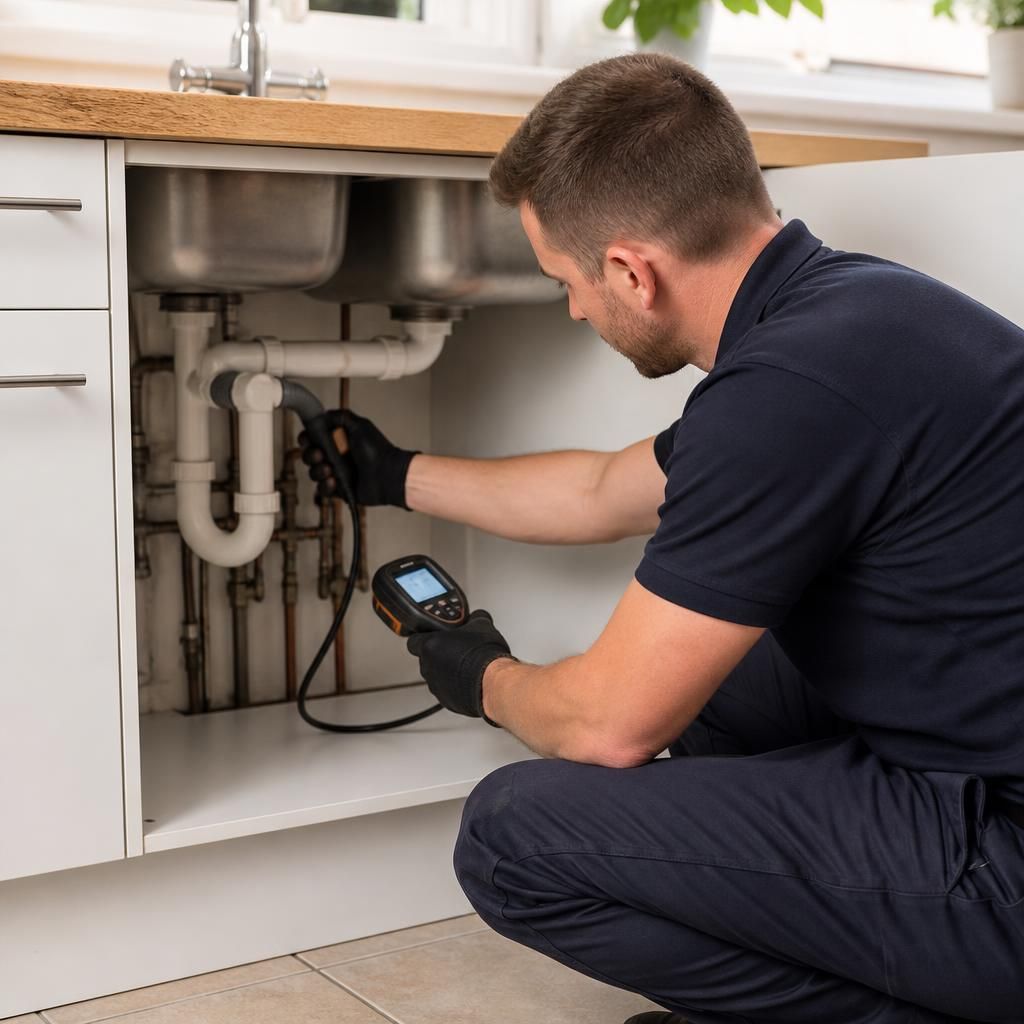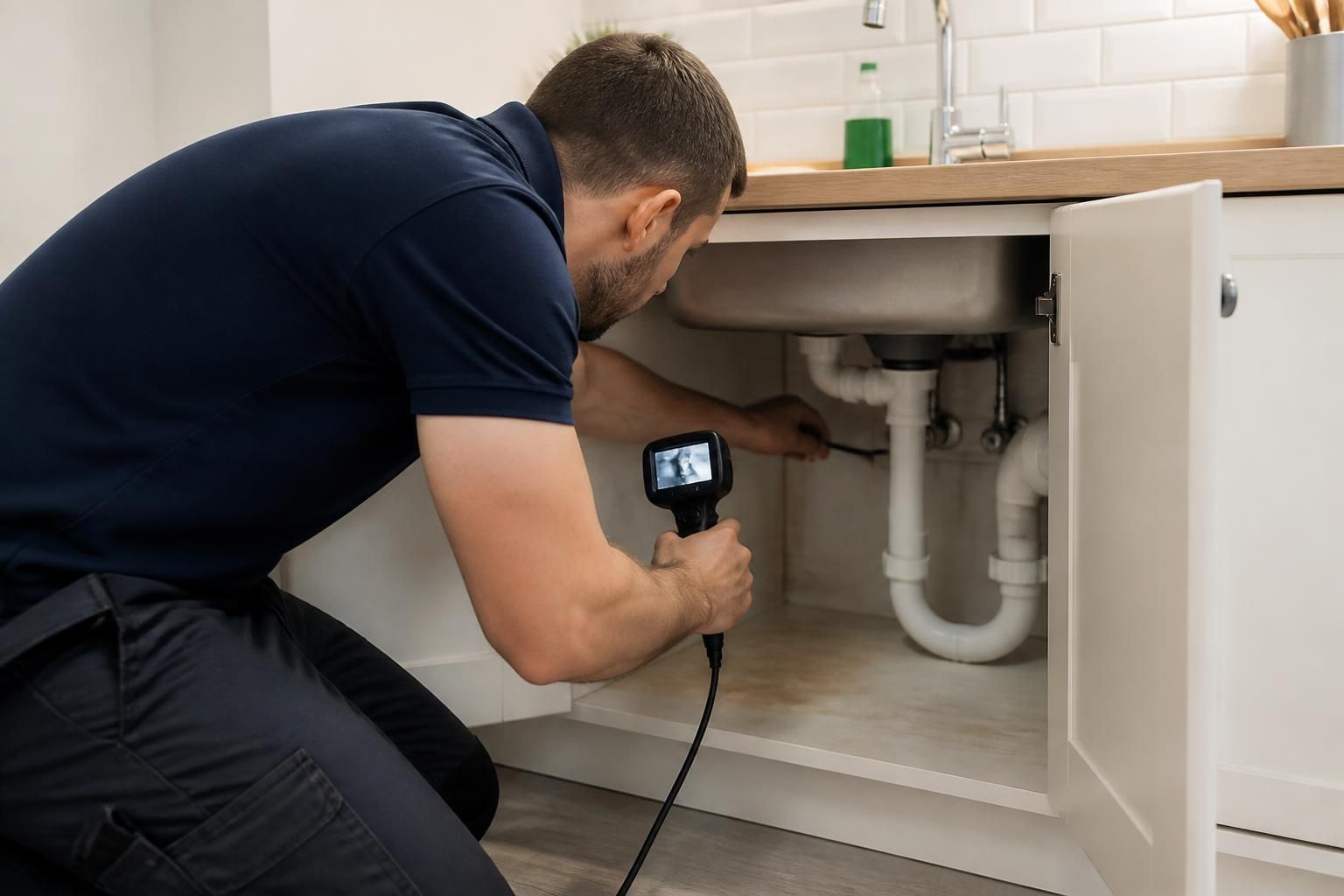
Leak detection for a rental property is a planned inspection used to locate the source of visible or concealed water loss before repair work is agreed. It can be arranged for rented houses, flats and other residential properties where a landlord, managing agent or tenant needs clearer evidence of the problem.
The person reporting the issue should provide as much detail as possible before the visit. Useful information includes where dampness, staining, mould or pooling water has appeared, when it was first noticed, whether the problem changes when taps or appliances are used, and whether the water supply or heating system has shown any unusual signs. Photographs can also help show how the issue has developed.
Responsibility for arranging access usually depends on the tenancy agreement and the urgency of the problem. A tenant should normally notify the landlord or managing agent as soon as a suspected leak is found, while a landlord or agent may arrange an inspection directly. Tenants should not remove fitted units, lift flooring or authorise substantial work without the appropriate permission, unless immediate action is needed to reduce a serious risk of damage.
During an inspection, the likely source is assessed rather than relying only on the location of the visible mark. Water can travel through wall cavities, floors and ceilings, so the point where damage appears may be some distance from the failed pipe, fitting, appliance connection or heating component. Areas commonly investigated include:
- Pipework concealed behind walls, ceilings or flooring
- Toilet, basin, bath and shower connections
- Washing machine and dishwasher supply or waste connections
- Central-heating pipework and radiators
- Water tanks, cylinders and other plumbing components
- External or underground supply pipes where the internal plumbing does not explain the symptoms
Depending on the circumstances, a plumber may use visual checks, moisture assessment, pressure observations and specialist detection equipment to narrow down the source. The appropriate method depends on the property, the type of plumbing system and the available evidence. Detection is separate from making good decorative finishes: identifying the leak may be possible without immediately opening up a wall or floor, but any necessary repair access should be discussed before work begins.
For landlords and agents, a clear record of the reported symptoms, inspection findings and recommended next steps can help with maintenance decisions and communication with the tenant. If the leak has affected another property, communal area or neighbouring flat, this should be mentioned when the inspection is arranged because access and responsibility may involve more than one part of the building.
Tenants should take sensible temporary precautions, such as placing a container under a drip, moving belongings away from affected areas and avoiding electrical equipment that has become wet. If water is escaping significantly, the tenant should follow the property’s emergency instructions and contact the landlord or managing agent promptly. Leak detection identifies the source; a separate repair may then be needed to stop the escape and address any related damage.
Ideal Plumbing Services provides leak detection and plumbing support for rental properties, helping landlords, agents and tenants establish what is happening and decide on suitable repairs. The company’s experience with residential plumbing can be useful where the source is not obvious or where an initial visual inspection has not explained the damage.