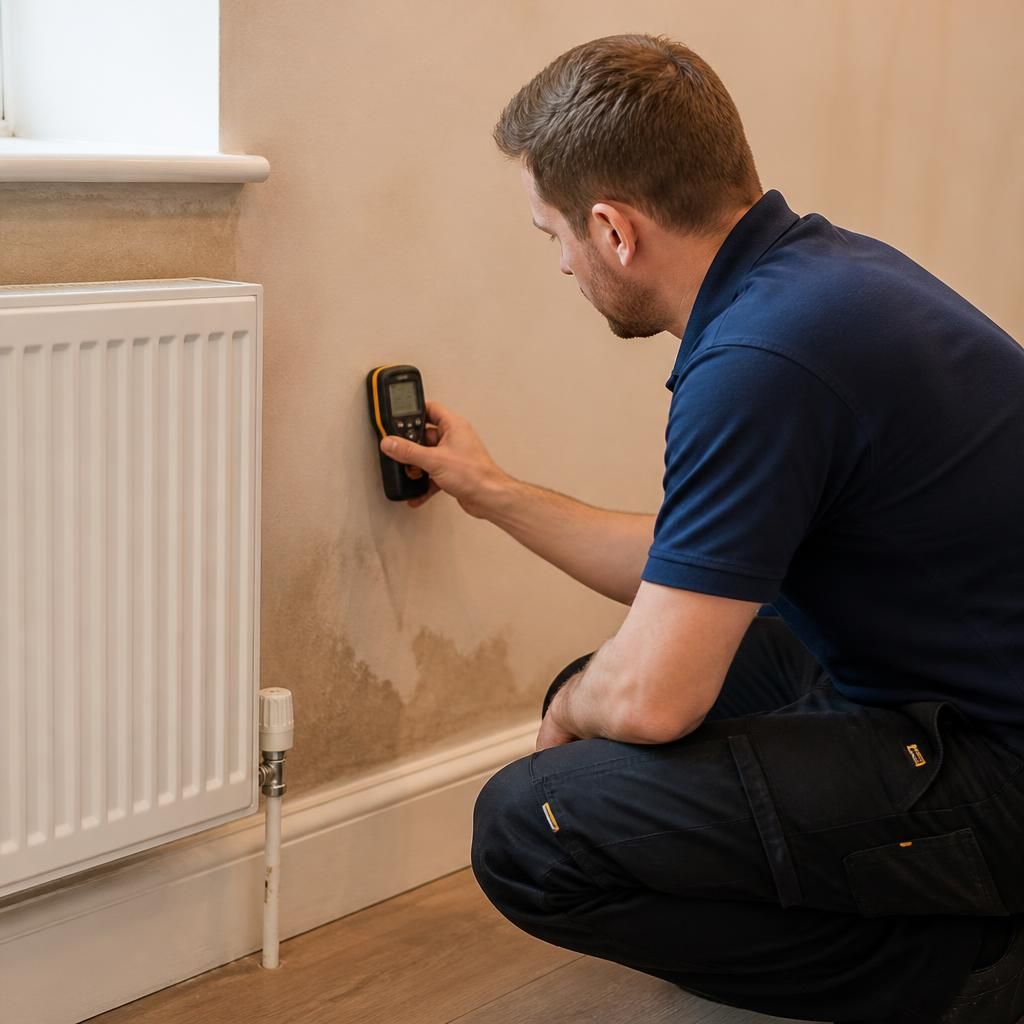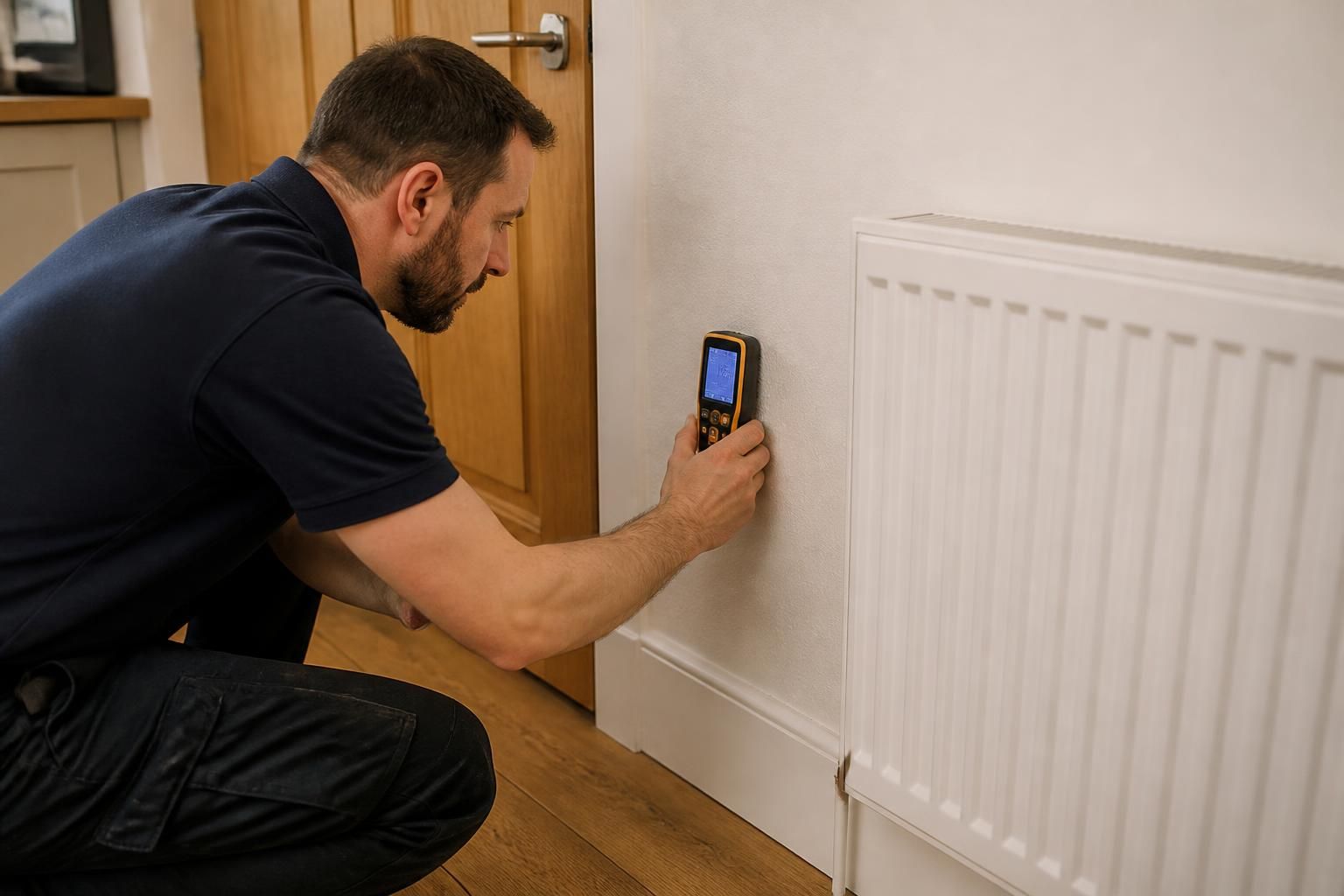
Professional leak detection is designed to minimise damage, not create it. A trained plumber normally investigates the pipework, fixtures and surrounding materials before deciding whether any physical access is necessary. In many cases, the leak can be identified with no cutting into walls and no lifting of floors.
The level of disruption depends mainly on the leak’s location, the type of building construction and whether the source can be separated from the route taken by the water. Water may travel along joists, behind plasterboard or beneath flooring, so the dampest area is not always directly above the failed pipe or fitting.
A typical inspection may involve:
- Checking visible pipework, valves, radiators, sanitaryware and appliances for signs of escape.
- Comparing moisture levels in nearby walls, ceilings and floors to identify the affected area.
- Testing the plumbing system to determine whether pressure is being lost.
- Tracing the likely path of the water before any surface is disturbed.
- Using specialist equipment to narrow the search to the smallest practical area.
These steps help avoid unnecessary exploratory work. Instead of removing a large section of plaster or flooring, a plumber can often identify a limited access point if one is needed. The aim is to expose only enough of the pipe or fitting to confirm the fault and complete a safe repair.
Some limited opening-up may still be necessary. This is more likely when a pipe is concealed within a solid wall, beneath a screed, under fixed flooring or inside a boxed-in service void. Access may also be required where several possible leak sources are close together, where previous repairs have obscured the pipework, or where the surface is already saturated and the exact fault cannot be confirmed externally.
Before making an opening, the plumber should explain why access is being considered and identify the likely size and location. It is reasonable to ask whether the source can be confirmed using further testing, whether an existing access panel or removable flooring can be used, and what will be left after the plumbing repair. Detection and reinstatement are separate parts of the work, so confirm whether making good, drying, plastering, decorating or replacing flooring is included in the quotation.
There is a difference between damage caused by detection and damage that has already resulted from the leak. Staining, softened plaster, lifted boards, swollen laminate and damaged flooring may have developed before the inspection took place. Finding and stopping the source can prevent further deterioration, but affected materials may still need drying, cleaning or replacement.
To reduce the risk of avoidable disruption, keep the suspected area accessible and tell the plumber about any recent building work, previous leaks or concealed services. Do not remove fitted flooring or cut into a wall yourself unless instructed, as this can hide evidence, damage cables or pipes, and make the source more difficult to trace.
For a Birmingham or West Midlands property, a professional leak detection assessment should therefore begin with the least disruptive suitable method. If an opening is unavoidable, careful tracing and targeted access can usually keep the work localised while providing the confirmation needed for an effective repair.