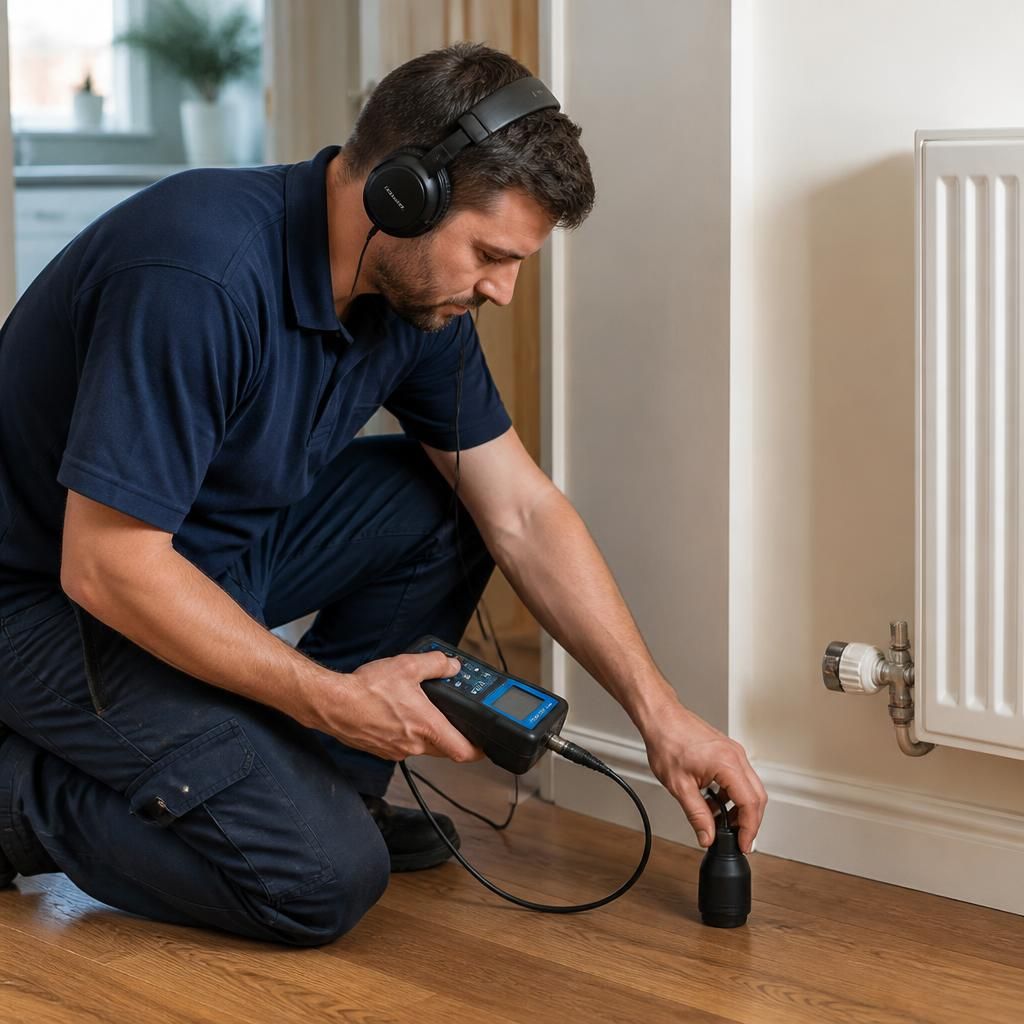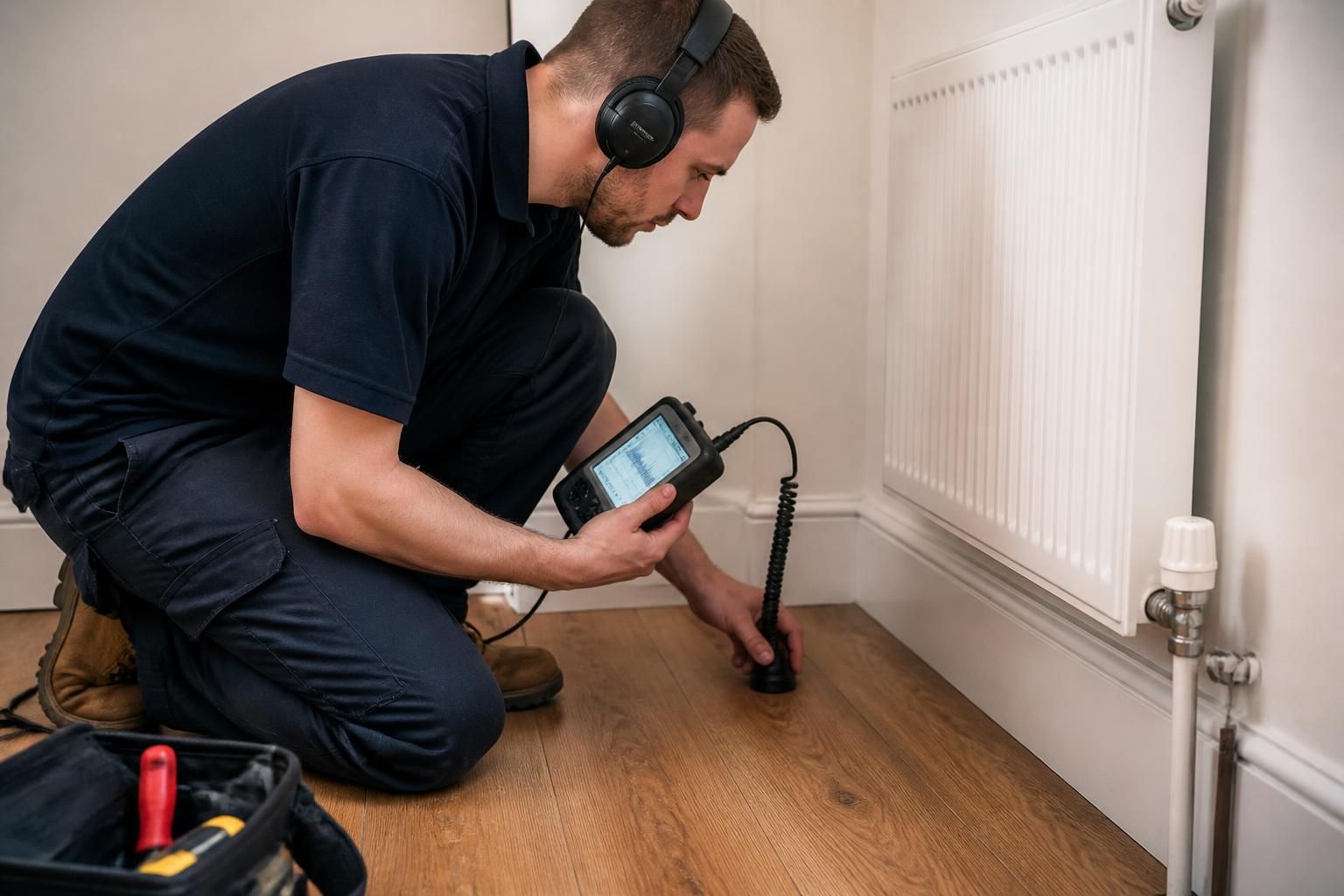
Leak detection charges are generally calculated by combining the attendance or call-out charge with the time, equipment and level of investigation needed to identify the source. The price for locating a leak is usually separate from the cost of repairing it, because the repair method cannot be confirmed until the cause and position of the leak are known.
The main factors affecting the charge include:
- Initial assessment: The plumber may need to review visible signs, check pipework, inspect fittings and assess whether the water loss is coming from a plumbing system, heating system or drainage connection.
- Time required: A straightforward trace may take less investigation than a concealed or intermittent leak. Charges may therefore reflect the time spent testing, narrowing down the source and confirming the findings.
- Detection equipment: Depending on the circumstances, specialist methods may be needed to trace water beneath floors, behind walls or within other concealed areas. The type and extent of equipment used can affect the overall charge.
- Accessibility: Accessible pipework is generally easier to inspect than pipework beneath fixed flooring, inside walls or in restricted spaces. Difficult access can require a more methodical investigation.
- Further testing: If the first checks do not identify the source, additional tests may be needed to distinguish between several possible leak points or to confirm that the suspected source is correct.
A call-out element may be included to cover the visit to the property and the initial diagnostic work. The exact way this is applied depends on the plumber’s pricing structure, so it is sensible to ask whether the quoted figure covers assessment, equipment use and a set amount of investigation, or whether some elements are charged separately.
Some providers use a fixed price for a defined leak detection service, while others calculate the charge from time and materials. A fixed price can make the initial cost easier to understand, but it should still be clear what is included and what would count as additional work. A time-based charge should explain the applicable rate and how time is recorded.
Before agreeing to the work, ask for clarification on whether the price includes:
- the initial inspection and diagnostic assessment;
- specialist detection equipment, if required;
- testing in more than one area;
- a written or verbal explanation of the findings;
- any report or documentation needed for an insurer, landlord or property record; and
- the cost of repairs, making good surfaces or replacing damaged fittings.
Leak detection itself does not normally include opening up walls or floors as part of the diagnostic charge. If access work, removal of materials or a repair is considered necessary, this should be identified as a separate part of the assessment wherever possible. Asking whether VAT is included in a quoted price can also prevent confusion when comparing estimates.
For a reliable comparison, describe the symptoms accurately, including the location of dampness, any drop in pressure, visible water, unusual sounds or changes in heating performance. Providing this information helps the plumber assess the likely scope of the investigation. Ideal Plumbing Services can explain the proposed diagnostic work and any associated charges before proceeding, with no hidden charges.