A hot water cylinder can be installed in a flat, but the viable solution depends on the building’s existing hot water arrangement, the cylinder type being considered and the restrictions imposed by the lease or building management. A survey should establish whether the flat has its own boiler and stored hot water system, connects to a communal plant, or uses a heat interface unit before any equipment is selected.
The main cylinder options
- Unvented cylinders are supplied directly from the mains and do not require a cold water storage tank. They can be suitable where the incoming water pressure and flow are adequate, but they require correctly fitted safety controls, an appropriate discharge route and suitable expansion equipment.
- Vented cylinders use a cold water storage cistern, normally positioned above the cylinder. This can be difficult in a flat if there is no loft, high-level cupboard or other approved location for the cistern and associated pipework.
- Communal or cylinder-free systems may not be compatible with an individual cylinder. Some flats receive hot water from shared plant or use a heat interface unit, so altering the arrangement could affect metering, maintenance responsibilities or other residents.
Lease and building permissions
In a leasehold flat, the cylinder itself may be within the homeowner’s responsibility, while the pipework, risers, external walls, structural elements or communal plant may belong to the freeholder or management company. Written permission may therefore be needed before changing the system, routing a discharge pipe, drilling through a wall or modifying shared services. The lease should be checked alongside any building management requirements rather than assuming that all plumbing within the flat can be altered independently.
Work that passes through fire-resisting walls or floors must preserve the building’s fire separation. Service penetrations may need suitable fire-stopping, and access panels or cupboards should not obstruct shared equipment or escape routes. These considerations are particularly important in purpose-built blocks and converted properties.
Space and structural considerations
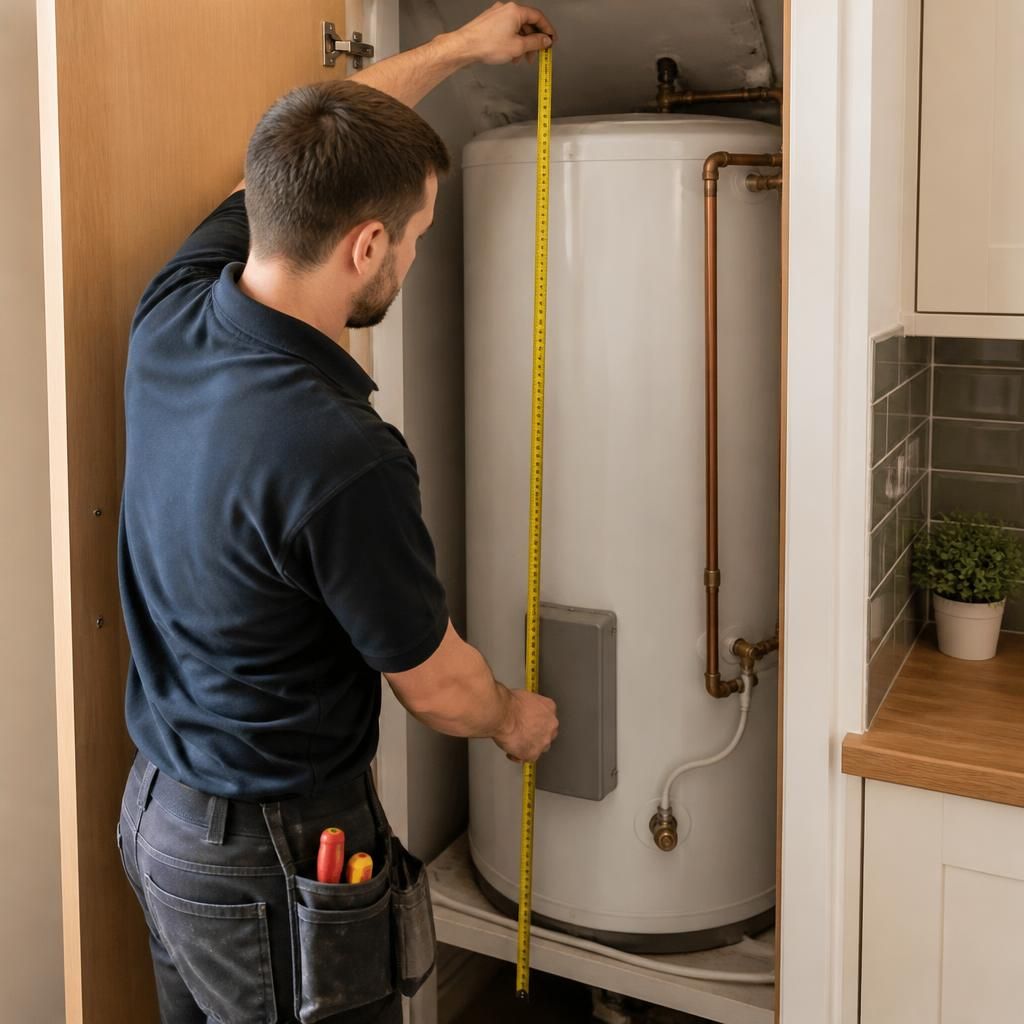
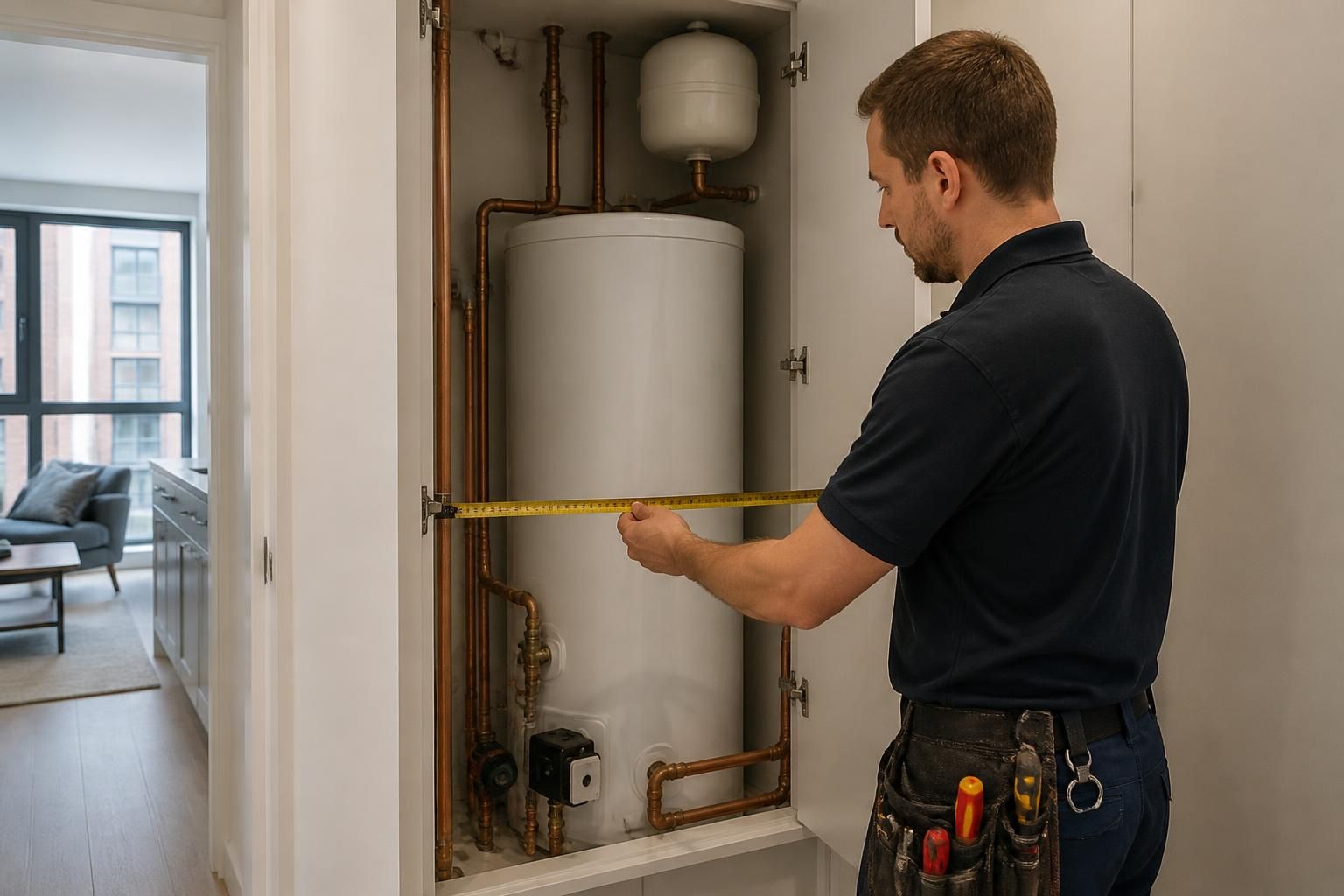
A cylinder needs more than its visible footprint. The installer must allow for valves, controls, insulation, pipe connections and future maintenance. The route used to bring the cylinder into the flat also matters: a narrow hallway, stairwell or small cupboard may prevent a standard-size unit from being delivered or removed. In some cases, a smaller cylinder, a different cylinder shape or a sectional solution may be considered, but the replacement must still provide an appropriate volume of hot water.
The supporting floor and cupboard construction should also be assessed. A full cylinder is substantially heavier than an empty one, so the location must be capable of supporting the combined weight of the cylinder, stored water and associated fittings. This is a site-specific structural consideration, especially where the proposed position is on an upper floor or over a non-standard floor construction.
Services that must be checked
- The incoming mains pressure and flow, if an unvented cylinder is proposed.
- The route and termination point for safety discharge pipework.
- The size and condition of existing hot and cold water pipework.
- The boiler’s output and controls, where the cylinder is heated by a central-heating system.
- The electrical supply for an immersion heater, including suitable isolation and protective arrangements.
- The position of thermostats, valves, expansion equipment and inspection points.
An unvented cylinder should be installed and commissioned by a suitably qualified person, with its safety devices tested as part of the work. The discharge arrangement must be visible and correctly configured; it should not simply be connected to an unsuitable waste pipe. Controls should also prevent unsafe water temperatures, while the cylinder’s manufacturer instructions and relevant installation requirements must be followed.
When a cylinder may not be the best option
A cylinder may be impractical where the flat is connected to a communal hot water system, there is no compliant discharge route, the available water pressure is insufficient, or the building owner does not permit changes to shared services. In those circumstances, improving the existing heat interface unit, replacing a compatible cylinder in the same location or using another approved hot water arrangement may be more appropriate. The correct alternative depends on the property’s ownership arrangements and the equipment already serving it.
A plumbing assessment should therefore identify the current system, confirm who owns each relevant service, check pressure and electrical provisions, measure the installation and removal route, and review any permissions required. That information allows the cylinder type and installation method to be selected safely and avoids choosing equipment that cannot be legally, technically or practically accommodated in the flat.