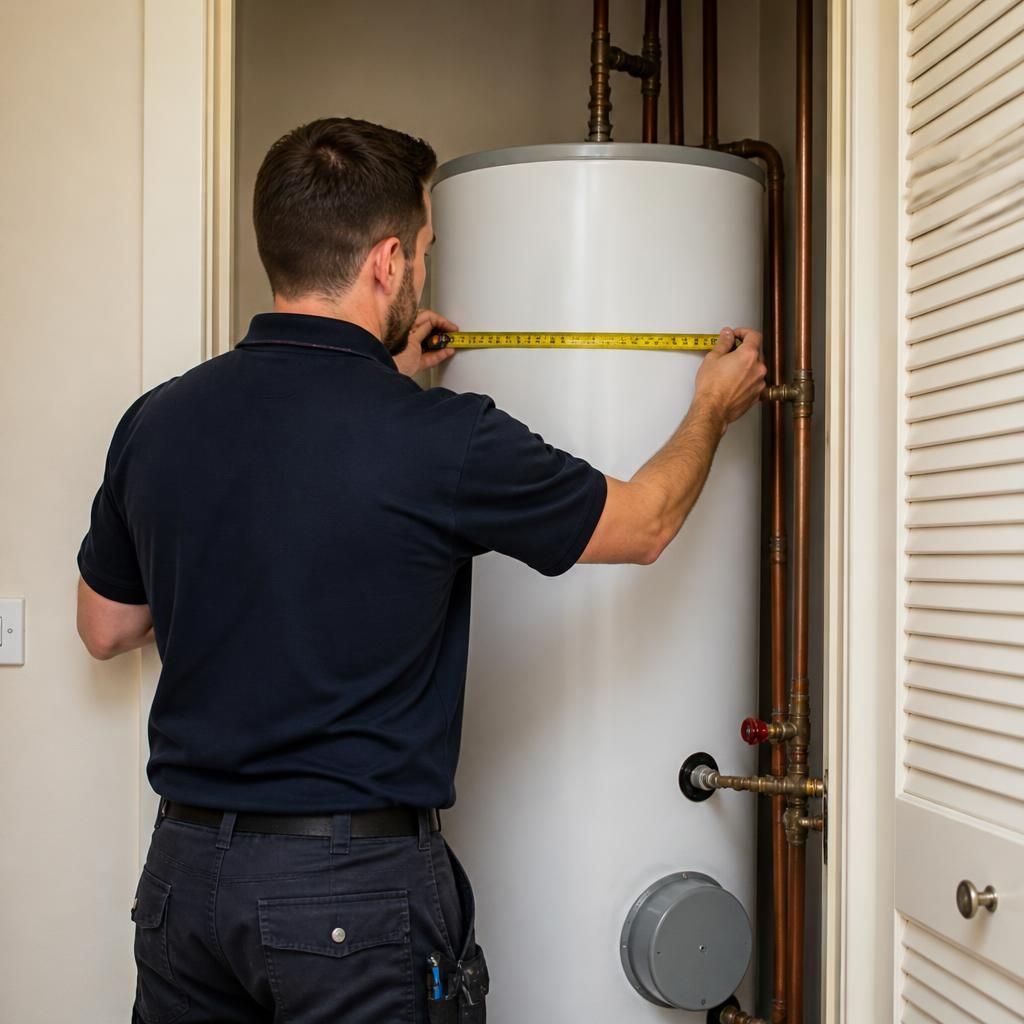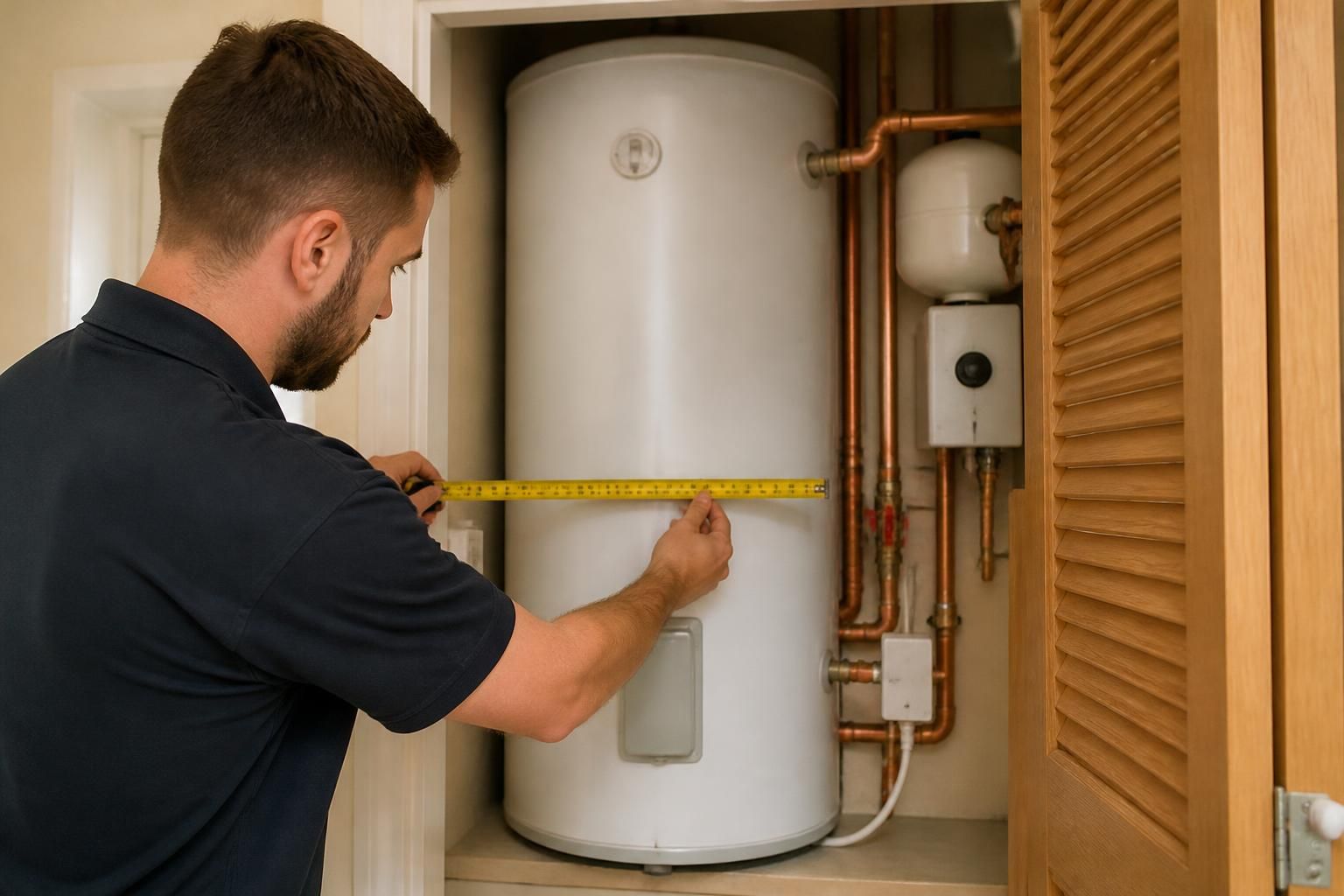
The access needed for hot water cylinder installation depends on the cylinder’s location, size, connection points and the route available for removing the existing unit and bringing in its replacement. A cylinder in a standard airing cupboard is usually assessed differently from one in a loft, utility room or enclosed service space.
The installation area itself must allow the engineer to work safely around the cylinder and reach the connections, valves, electrical controls and discharge pipework. The available space is considered not only at floor level, but also above and beside the cylinder. Low ceilings, sloping roofs, fixed shelving or narrow cupboard openings can affect whether a particular cylinder can be positioned, connected or removed without alteration to the surrounding enclosure.
The access route is assessed as a whole. This includes the entrance to the property, internal doors, corridors, stair turns and the final approach to the installation area. The replacement cylinder may need to be handled upright or at a controlled angle, depending on its design and the route. If the route includes tight turns or restricted openings, the installer may need to establish whether the old cylinder can be taken out in the same way that the new one will be brought in.
For an existing cylinder replacement, access to the old unit’s connections is particularly important. The water supply, hot water outlet, primary flow and return, expansion arrangements, temperature controls and electrical connections may all need to be isolated or disconnected. Where the pipework is concealed behind panels or boxed in, those panels may need to be removable so the installation can be completed and future servicing remains possible.
In loft spaces, access is influenced by more than the position of the cylinder. The installer may need to check the strength and condition of the supporting surface, the safe route across the loft and the space available to work around the unit. A cylinder should not simply be placed on an unsuitable surface because the route into the loft is convenient. Any concerns about flooring, support or the position of the tank should be identified during the property assessment.
Properties with limited access can still be suitable for a new cylinder, but the installation plan may need to account for:
- the dimensions and orientation of the replacement cylinder;
- the size of the cupboard or service enclosure, including usable height and width;
- access to isolation valves, controls and safety components;
- the position of existing pipework and electrical supplies;
- the route for discharge pipework and connections; and
- whether panels, shelving, doors or other non-structural fittings restrict handling or future maintenance.
Access requirements can also vary between replacing an existing cylinder and installing one in a new location. A replacement may use established pipework and controls, while a new position could require additional routing, support or alterations to the surrounding services. Where the cylinder is being moved, the installer must check that the proposed location is appropriate for the hot water system rather than judging suitability by physical space alone.
Before the installation, provide details of any restricted areas, locked cupboards, loft access arrangements or building rules that could affect entry to the work area. Photographs of the cylinder, cupboard opening and surrounding pipework can help with an initial discussion, although they do not replace an on-site assessment. Ideal Plumbing Services can inspect the proposed route and installation position, identify practical access issues and explain whether any preparation or alterations are needed before work begins.