The level of disruption depends mainly on whether the work is a like-for-like replacement, where the cylinder is located and whether the surrounding pipework or controls need altering. A straightforward replacement is normally more contained than a new installation involving changes to the hot water system, cupboard, wiring or discharge arrangements.
Before work begins, the installer should establish how the existing system is configured and identify the isolation points, cylinder connections, electrical supply and discharge route. This helps determine the work sequence and highlights issues such as seized valves, restricted access, outdated pipework or a cylinder that cannot be removed through the available route.
During removal, the old cylinder has to be isolated and drained before it can be disconnected. Water may need to be controlled at more than one point, particularly where the cylinder forms part of a vented system with a cold water storage cistern. The installer may also need to disconnect immersion-heater wiring or other controls safely before moving the cylinder.
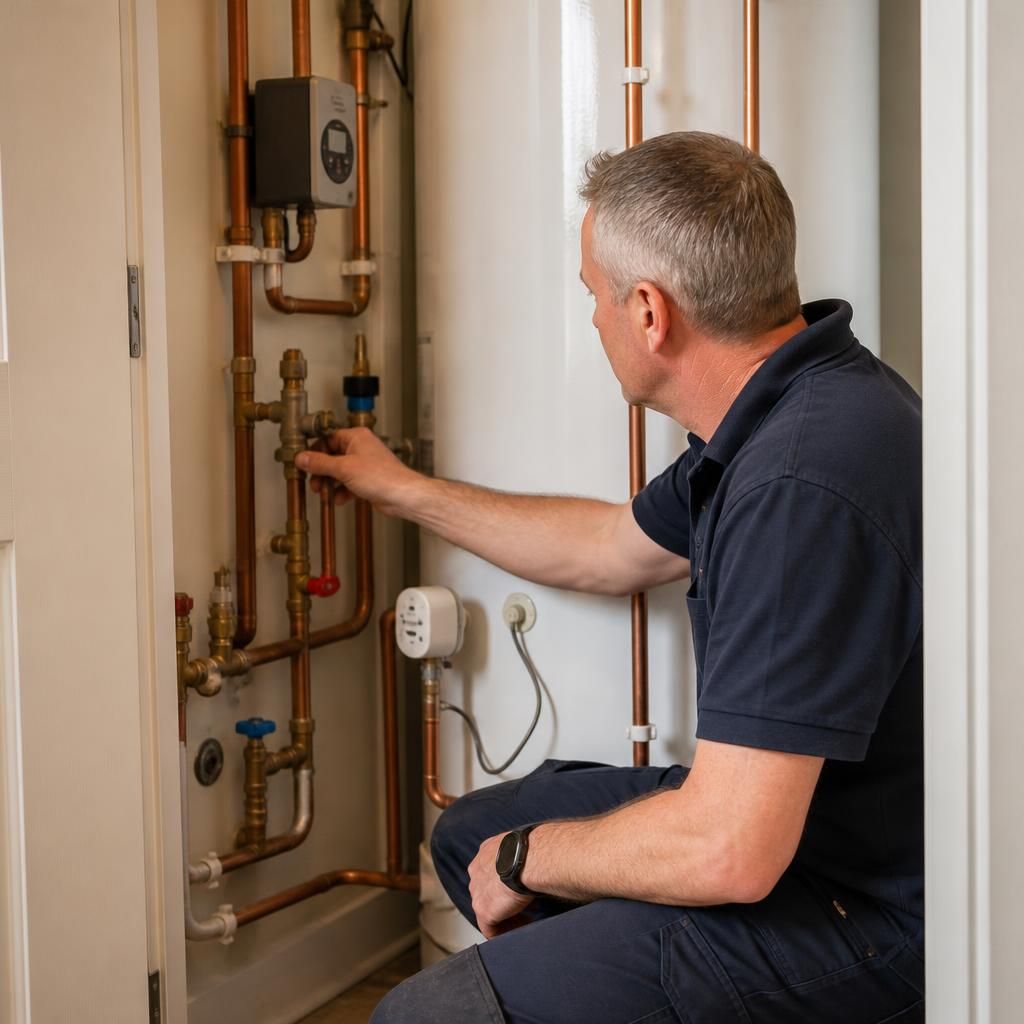
Most of the physical disruption is concentrated around the cylinder cupboard or plant area. There may be lifting, cutting of pipework and some drilling when connections or brackets are changed. Floors, nearby walls and access routes should be protected, while stored items should be removed from the cupboard before the plumber arrives. If the cylinder is in an airing cupboard, loft or another confined location, the restricted working space can make the job more involved.
Further work may be needed where the replacement cylinder differs from the original. This can include:
- altering hot and cold water connections to suit the new cylinder;
- repositioning valves, thermostats or temperature controls;
- adjusting the discharge pipework and safety components;
- checking or replacing insulation around the cylinder and associated pipes;
- modifying electrical connections for an immersion heater or connected controls; and
- checking the supporting surface and making sure the cylinder is stable and correctly positioned.
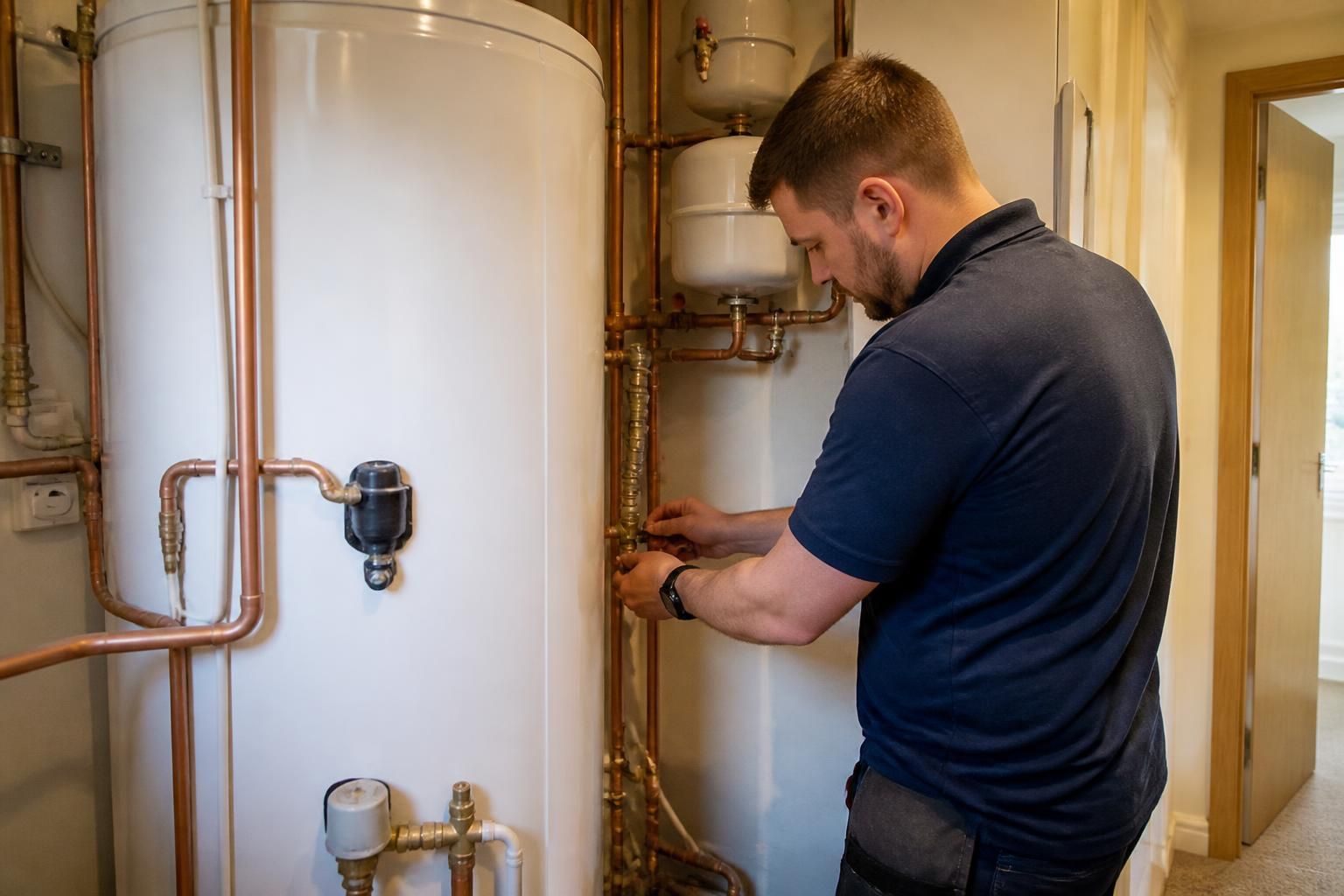
Unvented cylinders require particular attention to safety components, pressure control and discharge arrangements. These parts should be inspected and commissioned correctly rather than simply transferring every existing connection to the replacement unit. A vented cylinder may involve different checks, including the cold water storage cistern, vent pipe and open-vent arrangement.
The effect on the rest of the home is usually limited to the rooms involved in the installation and any route used to bring in or remove the cylinder. However, water supplies may need to remain isolated while connections are open, and nearby fixtures should not be used until the system has been refilled and checked. The installer should explain when the system is ready for use and identify any controls that have changed.
Testing is an important part of the work and can add to the time spent on site. The system should be refilled gradually, checked for leaks and assessed for correct pressure, temperature control and safe discharge. Pipework connections, valves, insulation and electrical components should be inspected before the work area is cleared. With an unvented system, the required safety checks and commissioning are especially important.
You can reduce avoidable disruption by clearing the access route, removing belongings from the cylinder cupboard, identifying the location of the main stopcock and providing details of previous faults or alterations. It is also useful to mention any vulnerable flooring, restricted parking or access limitations before the installation is planned. If the cylinder is in a loft or upper floor, the installer may need to assess how the old and new units can be moved safely.
For Birmingham homes and properties elsewhere in the West Midlands, Ideal Plumbing Services can assess the existing arrangement before carrying out hot water cylinder installation. A clear assessment helps distinguish normal installation activity from additional work caused by poor access, incompatible connections or defects in the wider hot water system.