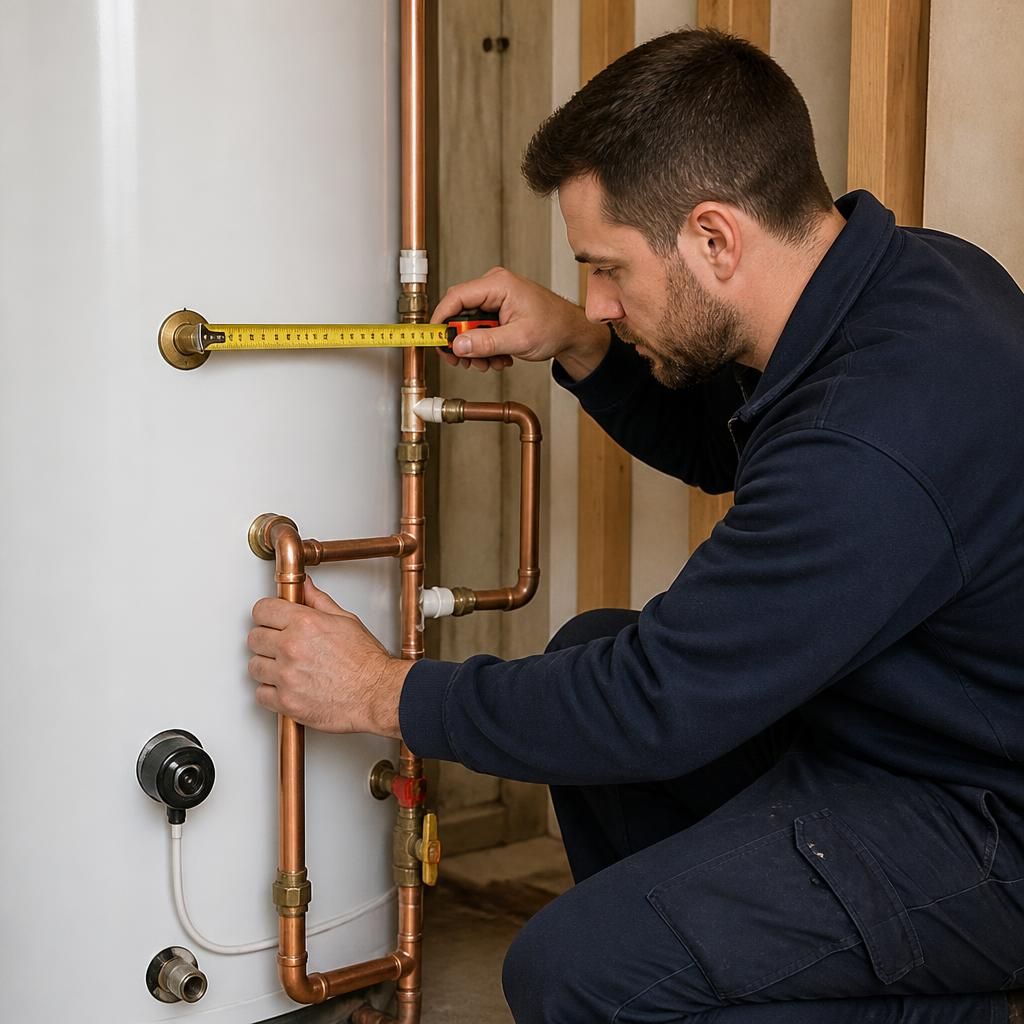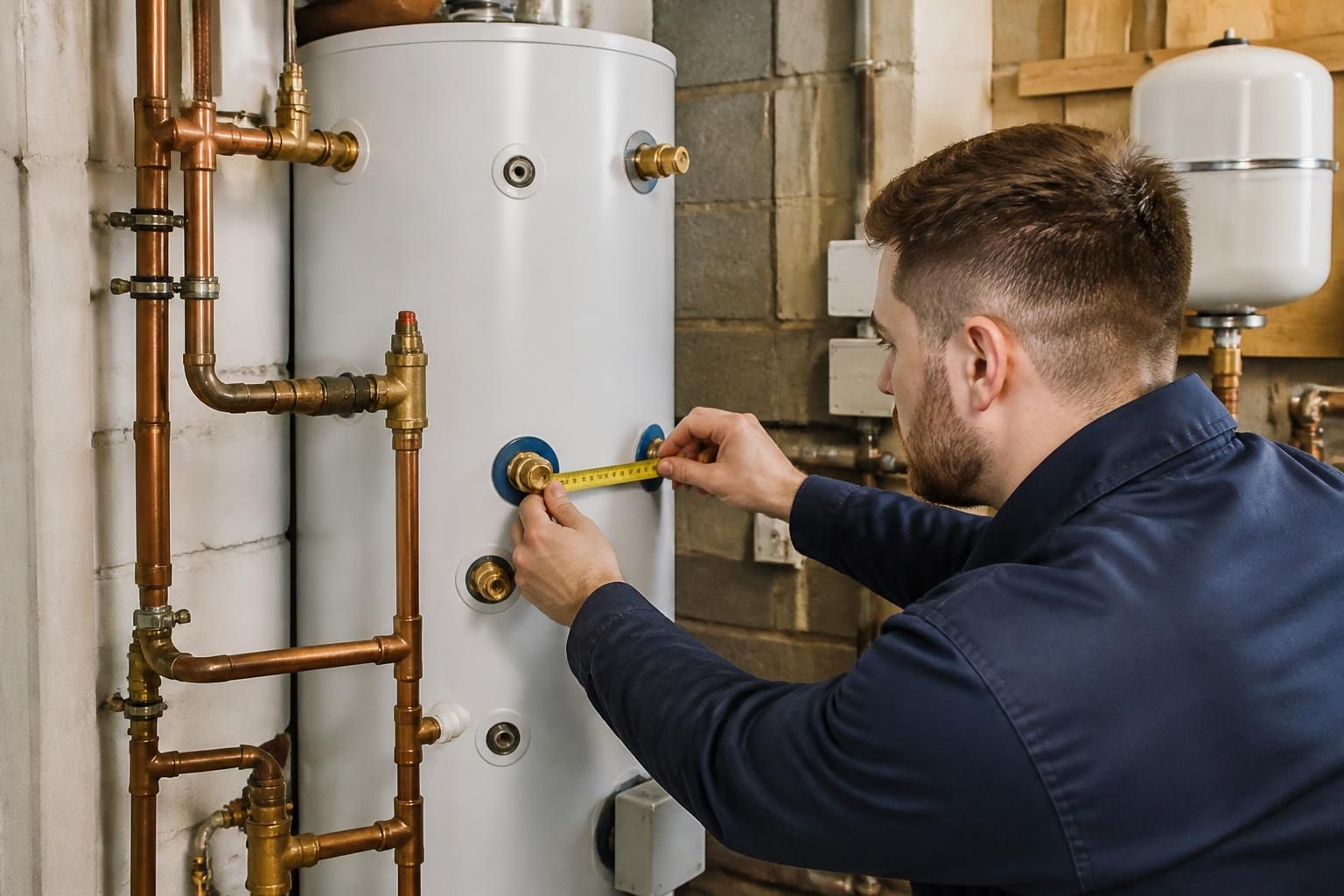
An accurate hot water cylinder installation cost is based on the work required at the property, not simply the price of the cylinder itself. The installer assesses the existing system, confirms the most suitable replacement, checks the installation location and identifies any alterations needed before the final price is prepared.
The main cost elements are:
- Cylinder specification: The model, capacity and type of cylinder affect the equipment cost. A replacement selected to match the household’s hot water demand may require different components from a smaller or differently configured system.
- Installation labour: Labour covers isolating and draining the existing system, removing the old cylinder, positioning the new unit, making the connections and carrying out testing and commissioning.
- Ancillary materials: Valves, fittings, supports, insulation, discharge arrangements and sections of replacement pipework may be needed. The condition and layout of the existing installation determine how many additional materials are required.
- Controls and electrical work: Some installations involve adapting thermostats, programmers, immersion-heater connections or other system controls. Any electrical work must be completed and checked appropriately.
- Removal and disposal: Taking away the old cylinder and disposing of it can be included as a separate line in the quotation.
Why site conditions affect the estimate
A cylinder in the same position as the existing unit is generally more straightforward to replace than one being moved to another cupboard, loft area or utility space. Relocation can involve longer pipe runs, new supports, changes to the discharge route and alterations to electrical or heating connections. The installer also needs to consider whether the floor, wall or base can safely support the equipment when full.
Access is another practical consideration. Narrow doorways, restricted cupboards, stairs and limited working space can affect the time needed to bring in the new cylinder and remove the old one. If panels or surrounding fittings must be removed and reinstated, this should be identified before work starts.
Existing system checks
The quotation should account for the condition of related components rather than treating the cylinder in isolation. During an assessment, the plumber may check pipework, isolation valves, pumps, thermostats, expansion components, safety devices and visible signs of corrosion or leakage. Defective parts may need to be replaced so that the new cylinder can operate safely and correctly.
Where the existing heating or hot water arrangement does not suit the proposed cylinder, additional adaptation may be necessary. This could include changes to pipework, controls or system configuration. These items should be explained separately, particularly where they are recommendations rather than essential parts of the replacement.
What a clear quotation should show
- The cylinder type, capacity and specification.
- Labour for installation, testing and commissioning.
- Included valves, fittings, controls and other materials.
- Whether removal and disposal of the old unit are included.
- Any proposed pipework, access or electrical alterations.
- Items that are excluded or may only be needed if an underlying fault is found.
- Whether VAT is included in the quoted total, where applicable.
An itemised quotation makes it easier to compare like-for-like proposals and reduces the risk of unexpected additions. A responsible assessment should distinguish between the planned installation and optional improvements or remedial work. Ideal Plumbing Services provides plumbing advice and installation support for homeowners, landlords and tenants across Birmingham and the wider West Midlands, with quotations based on the actual requirements of the property.