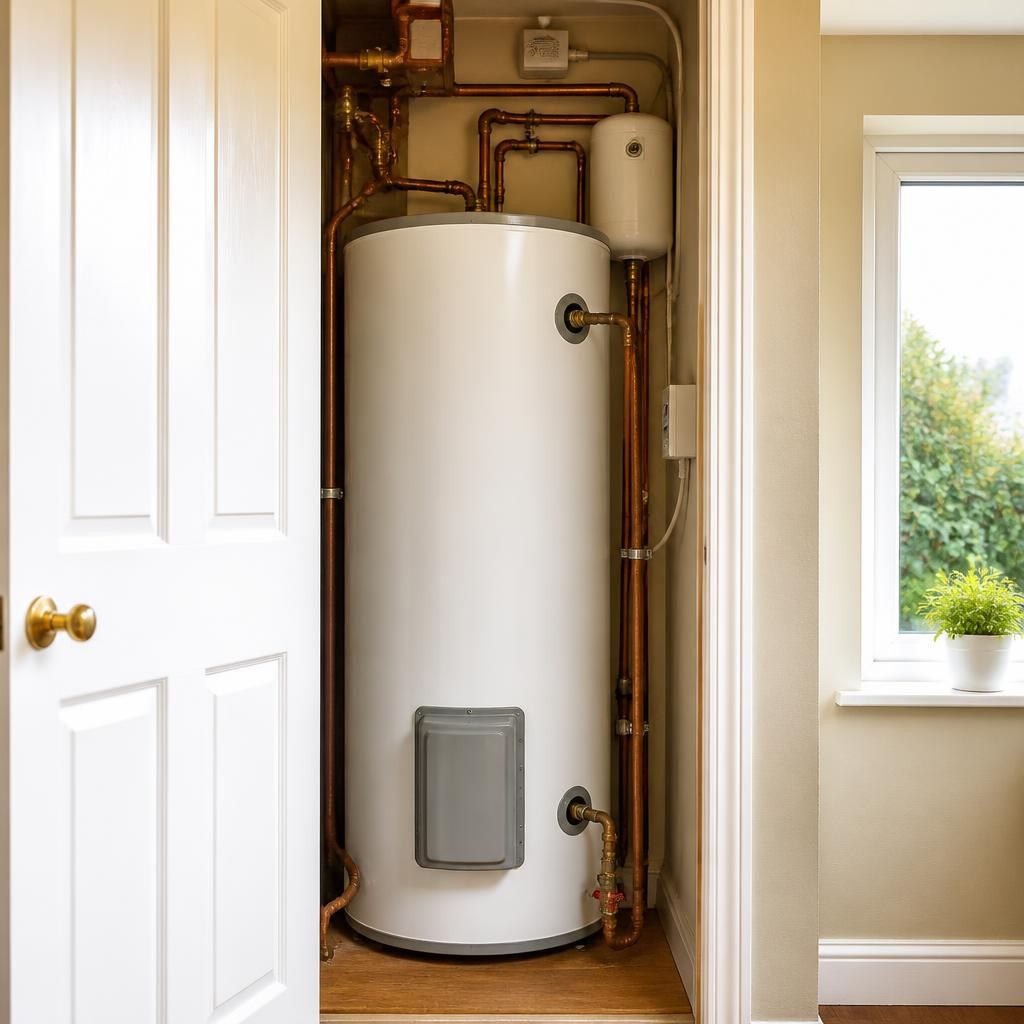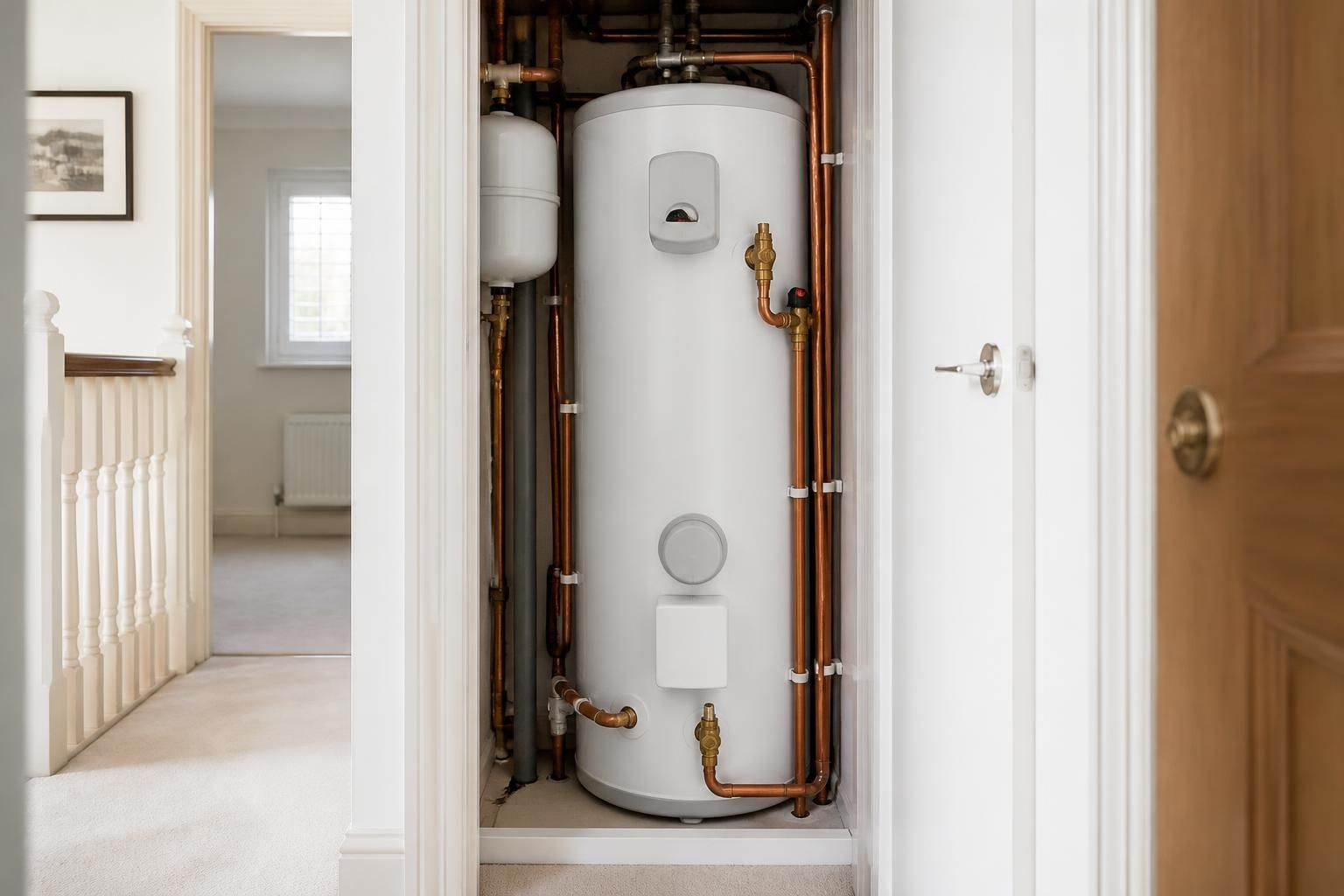
The correct hot water cylinder is the one whose usable storage volume and reheating capacity match your property’s expected hot water demand. Choosing it involves more than selecting a cylinder based on its physical dimensions: the heat source, incoming water supply, demand pattern and installation arrangement all affect the appropriate specification.
Cylinder capacity is normally assessed against the amount of hot water likely to be drawn during the busiest period. A cylinder that is too small may run out of stored hot water before the system has reheated it. A cylinder that is unnecessarily large can take longer to heat, occupy more space and incur greater standing heat losses. The aim is to provide sufficient reserve without oversizing the system.
Several technical factors should be considered before a size is selected:
- Reheating performance: the cylinder must work effectively with the boiler, immersion heater, heat pump or other heat source connected to it. A cylinder with a larger volume may be suitable where the heat source can recover the stored water efficiently, but it may be impractical if reheating is slow.
- Peak-use pattern: the timing and concentration of hot water use are important. Several outlets being used close together create a different requirement from the same total usage spread throughout the day.
- Incoming water performance: unvented cylinders depend on adequate mains pressure and flow. If the incoming supply cannot support the required outlets, increasing cylinder capacity alone will not resolve the problem.
- System controls: timers, thermostats and priority controls influence when the cylinder reheats and how much stored water is available at different times.
- Future demand: planned changes such as an additional bathroom, altered occupancy or a change in heating technology should be considered before installation. Selecting a cylinder only for present conditions may restrict later improvements.
The stated cylinder capacity is not exactly the same as the volume of water available at the tap. Stored water is maintained at a controlled temperature and is mixed with cold water at the outlet, so the usable supply depends on the cylinder temperature, blending controls and incoming water temperature. This is one reason why comparing products by capacity alone can produce misleading results.
The cylinder type also affects the assessment. Vented cylinders use a cold-water storage arrangement and are influenced by the height and design of that system. Unvented cylinders are supplied directly from the mains and require suitable safety components, pressure controls and discharge arrangements. These differences affect the installation requirements and the way the cylinder delivers hot water, even where two cylinders have a similar nominal capacity.
A proper sizing assessment should therefore review the property’s hot water demand, heat source, water pressure and flow, control strategy, pipework and available installation arrangement. The installer can then recommend a cylinder capacity and recovery specification rather than relying on a rule of thumb. They should also confirm that the proposed cylinder is compatible with the existing system and that its safety and temperature controls are correctly configured.
If the existing cylinder regularly runs out of hot water, the cause may not be capacity alone. Incorrect controls, poor insulation, restricted pipework, a faulty thermostat or inadequate heat-source performance can create similar symptoms. Diagnosing these points before replacing the cylinder helps prevent an unnecessarily large unit being installed.
Ideal Plumbing Services can assess the system requirements and advise on a suitable hot water cylinder for the property. The recommendation should be based on calculated demand and system compatibility, with the final specification covering both storage capacity and the rate at which the cylinder can recover.