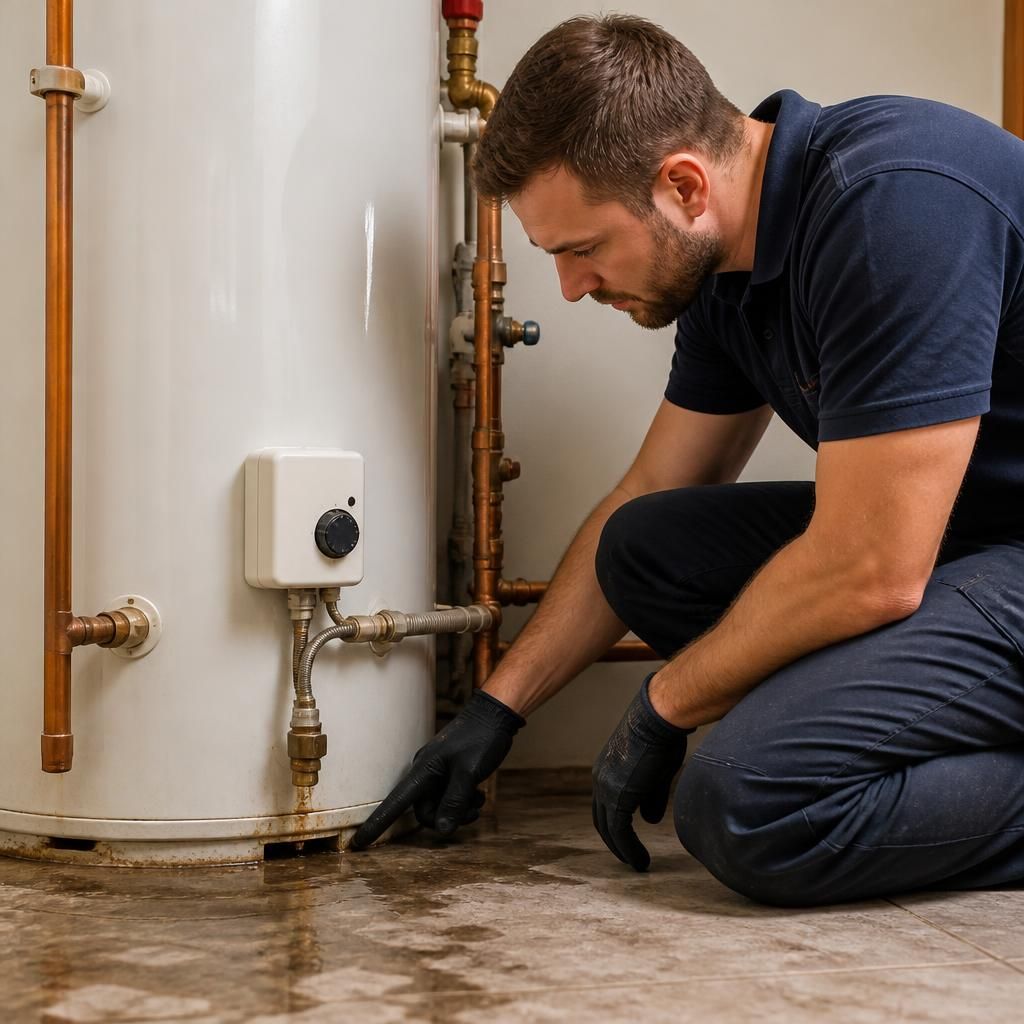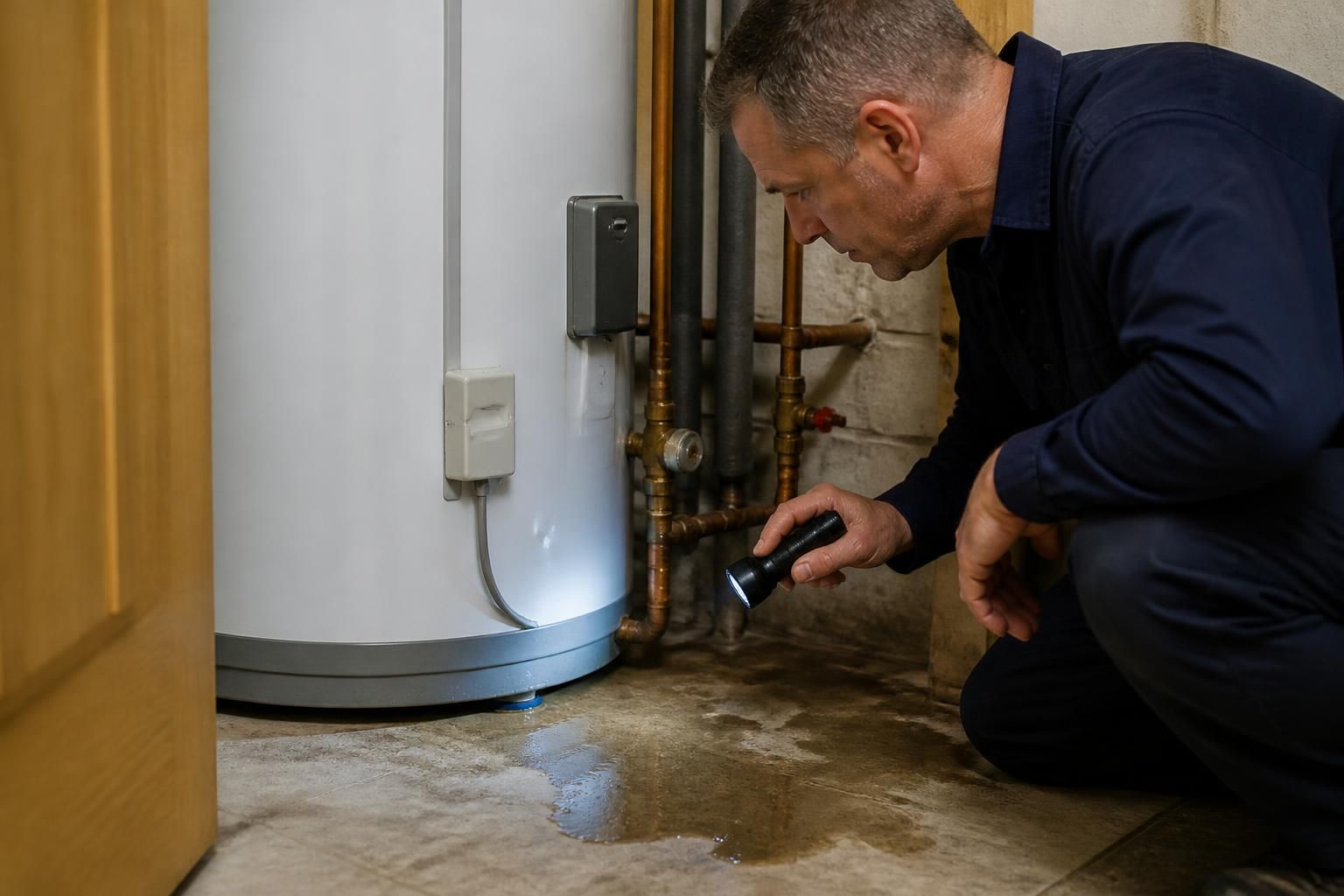
The safe-isolation guidance above is the correct first decision. After that, the water heater should be left undisturbed for a professional inspection, unless there is a clear and safe reason to take another basic protective step. The purpose of the inspection is to establish where the water is coming from, whether the appliance remains pressurised, and whether the fault affects the heater itself or nearby pipework.
A visible leak does not always identify the actual source. Water can run along the base of a cylinder, follow insulation or pipework, and appear some distance from the failed component. Common possibilities include:
- a leaking connection, union or flexible hose;
- a faulty inlet, outlet or isolation valve;
- corrosion or a split in the storage vessel;
- a discharge from a temperature and pressure relief pipe;
- a failed immersion-heater seal or adjacent fitting;
- pipework concealed behind a panel, wall or cupboard; or
- condensation or discharge that has been mistaken for a leak.
The type of water-heating system affects how it should be assessed. A hot-water cylinder may retain a substantial volume of water after its supply has been isolated. An unvented cylinder can also contain stored pressure, so its safety controls, expansion components and relief arrangements should not be adjusted by an untrained person. Where hot water is produced by a boiler, the apparent leak may be connected with the boiler, a pressure relief route or the surrounding heating and hot-water pipework rather than the storage vessel itself.
Do not remove covers, open inspection panels, loosen fittings, drain the cylinder or repeatedly reset the appliance before it is examined. These actions can release stored water, expose electrical parts, alter pressure conditions or make it harder to identify the original fault. Applying tape, sealant or temporary clamps to a pressurised connection is also unsuitable as a substitute for diagnosis.
If the area is safe to approach, useful information can be recorded without touching the appliance. Note when the moisture was first noticed, whether it appears continuously or only when the heater operates, and whether the water is cold, warm or discoloured. A photograph of the visible area can help a plumber understand the location, provided taking it does not require standing in water or reaching over wet equipment. Any display message, unusual noise or change in hot-water performance may also be relevant.
Where water has reached flooring, cupboards or stored belongings, move items only if this can be done without entering an unsafe area. Avoid using electrical equipment near wet surfaces, and do not assume that a small drip is harmless: slow leaks can damage flooring, plasterwork and cabinets, while leaks from pressurised systems may worsen without warning.
A professional inspection normally includes a visual examination of the heater, connections, valves, discharge pipework and accessible surrounding areas. The plumber may check for active moisture, staining, corrosion, pressure-related symptoms and signs that water has travelled from another location. They can then distinguish between a repairable component, a system fault and damage that may require replacement. If the leak has stopped, inspection can still be necessary because stored water, intermittent operation or residual moisture may conceal the underlying defect.
For safety, contact a qualified plumber when the source cannot be identified, the appliance is in a confined or wet location, the leak involves a cylinder or pressure vessel, or the water has reached electrical equipment. Ideal Plumbing Services provides water-heater leak inspections and related plumbing support for residential customers in Birmingham and across the wider West Midlands.