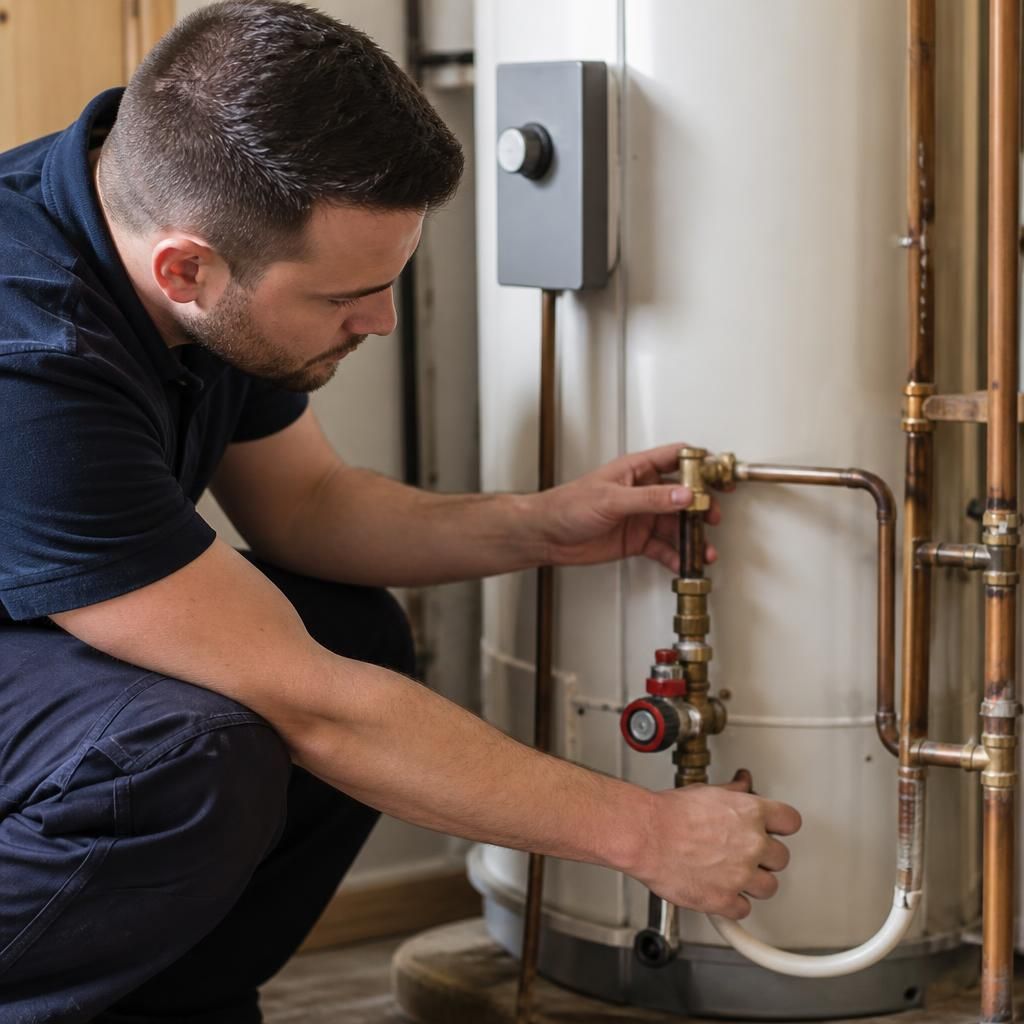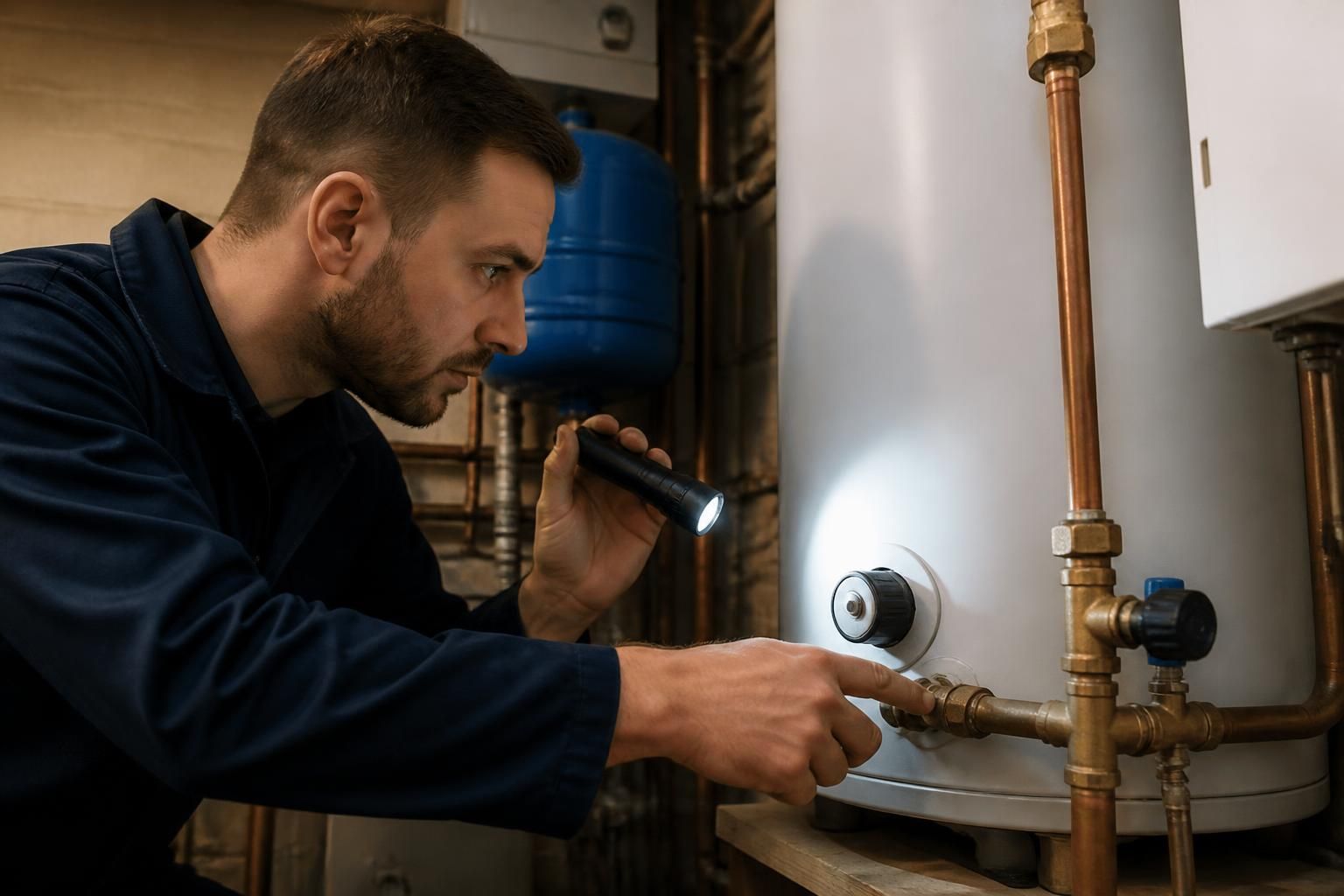
Preparing for a water heater leak detection visit means making the area safe, preserving useful evidence and collecting information that can help the plumber assess the cause. Do not dismantle the appliance, remove panels or attempt a repair before the inspection, as this can increase the leak or conceal important signs.
- Control the water only if it is safe. If water is still escaping, use the appliance’s isolation valve or the main stopcock if you know how to operate it. Stop using nearby taps and water-consuming appliances if doing so could add to the leak. If the leak has reached electrical components, sockets or cabling, do not touch them or enter standing water.
- Isolate the energy supply where appropriate. An electric water heater may have a dedicated isolation switch. This should only be turned off if it can be reached safely from a dry position. Do not remove electrical covers. If the appliance uses gas and you smell gas, avoid switches and naked flames, leave the area and follow the relevant gas emergency guidance rather than trying to inspect the heater yourself.
- Protect the surrounding property. Use a suitable container or towels to limit further damage, but do not place items where they could create a trip or electrical hazard. Move removable belongings away from the affected area and tell the plumber about any flooring, cabinetry, ceilings or walls that may have been exposed to water.
- Keep the original evidence. Avoid wiping away scale, rust, discolouration or deposits around joints unless necessary to prevent damage. Do not apply sealant or tape to the suspected source before the visit. These details can help distinguish a connection failure from corrosion, pressure-related discharge or a leak from an internal component.
- Collect relevant paperwork. If available, keep the installation invoice, previous repair records, servicing notes, warranty information and any recent plumbing work details together. These documents can show when parts were fitted or replaced and whether the system has had recurring issues.
- Note any recent changes. Tell the plumber if the leak followed building work, a change to the water system, unusual noise, a pressure adjustment, a power interruption or a period when the appliance was not used. Mention any previous attempt to tighten a fitting or stop the leak, even if it appeared unsuccessful.
- Prepare access to related controls. The inspection may require checks of the isolation valve, expansion vessel, temperature and pressure controls, pipework or discharge route. Make sure you know where the main stopcock and relevant electrical isolation point are located, and inform the plumber if a control cannot be operated.
- Arrange permission where needed. Tenants should notify the landlord or managing agent in line with their agreement and confirm who can authorise inspection or repair work. Landlords should provide any access instructions, previous contractor notes and information about rooms or cupboards that must remain available for assessment.
- Consider household safety. Keep children and pets away from the affected area, particularly where there may be hot water, sharp metal edges, damp flooring or exposed electrical equipment. If the heater is producing unusually hot water, steam or a strong smell, stop using it and state this when arranging the visit.
A leak detection visit is primarily an investigation, so the plumber may need to test associated pipework, valves and operating conditions rather than simply examine the visible drip. Be ready to explain what has already been isolated or switched off, which parts of the system remain in use and whether the water has caused damage elsewhere.
Ideal Plumbing Services provides water heater leak detection and plumbing repairs for homeowners, landlords and tenants in Birmingham and across the West Midlands. Once the source has been identified, the findings can be used to determine whether the appropriate next step is a targeted repair, further inspection or replacement of a failed component.