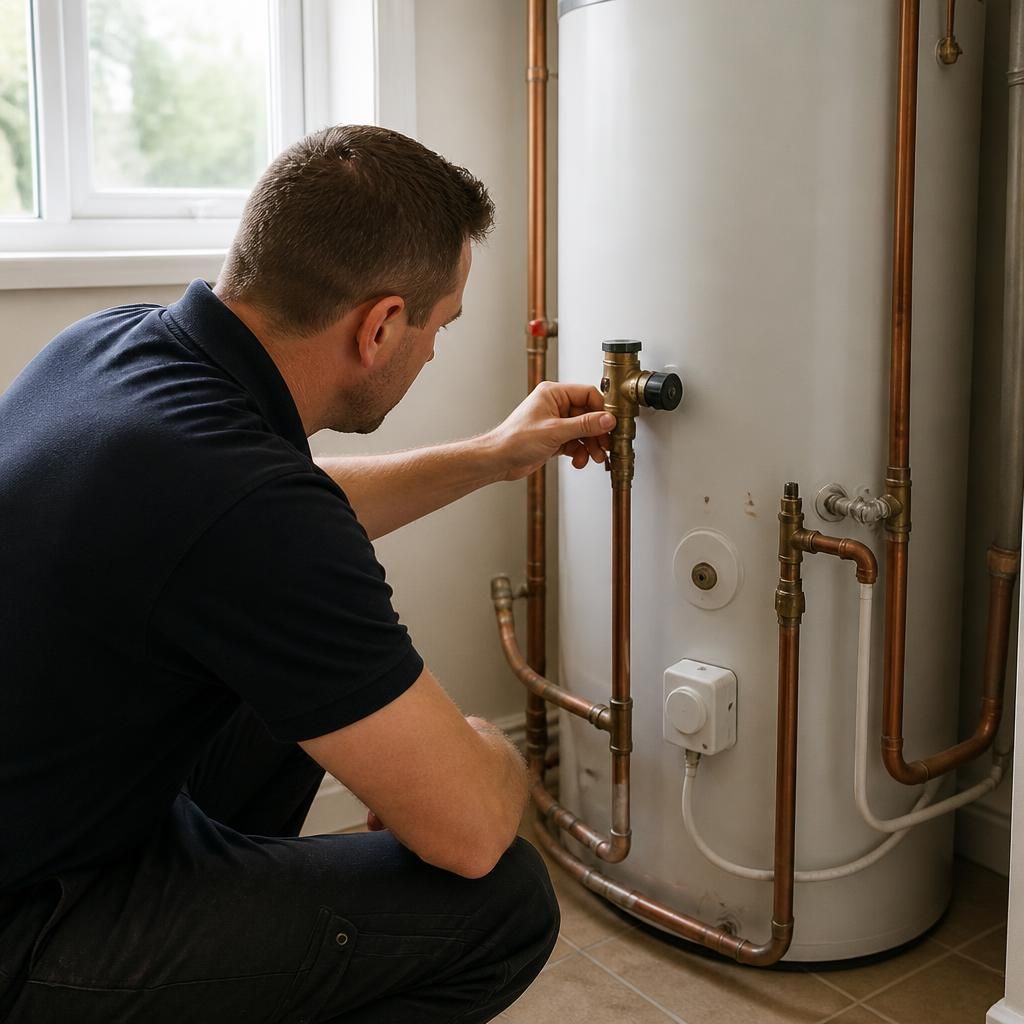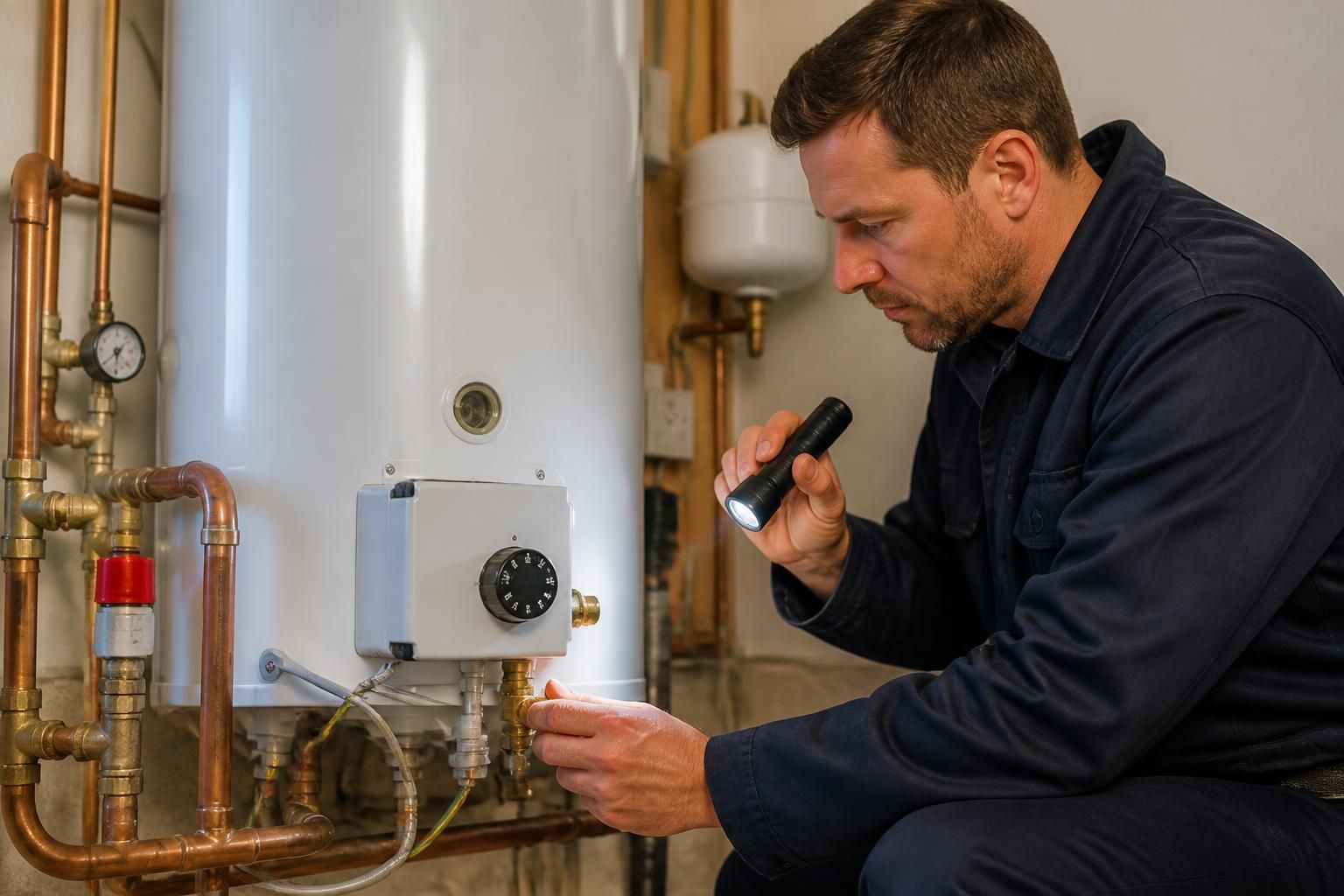
Professional inspection is advisable when a water heater shows electrical, gas-safety, pressure, control or performance symptoms that cannot be explained by normal operation. Some faults are intermittent, so the absence of a visible problem at the time of inspection does not necessarily mean the appliance is safe or working correctly.
Electrical warning signs
- The circuit breaker or residual-current device trips when the water heater operates.
- A reset button repeatedly needs to be pressed before the heater functions.
- There is buzzing, crackling, scorching, discolouration or unusual warmth around the isolation switch, cable or controls.
- An electrical smell comes from the appliance or its surrounding controls.
Do not remove electrical covers or continue resetting a protection device. Isolating the appliance, where it can be done safely, and arranging a qualified inspection can help reduce the risk of electric shock, overheating or further component damage.
Gas and combustion warning signs
- A pilot light repeatedly goes out or will not stay lit.
- The flame appears yellow or orange rather than predominantly blue.
- Soot marks, staining or unusual condensation appear around the flue or combustion area.
- A carbon monoxide alarm sounds, or anyone in the property experiences unexplained headaches, dizziness or nausea while the appliance is operating.
- There is a smell of gas or combustion products.
Turn off the appliance if safe to do so, avoid operating electrical switches where gas may be present, and leave the property if a carbon monoxide or gas-safety concern exists. A registered gas professional should investigate the appliance, flue, ventilation and combustion performance before it is used again.
Pressure and discharge symptoms
- The pressure gauge repeatedly moves outside the manufacturer’s normal operating range.
- A temperature-and-pressure relief outlet discharges water, or a tundish shows a continuing flow.
- Taps splutter, pressure changes noticeably when the heater starts, or pipework bangs when valves open and close.
- The system requires repeated topping up or pressure adjustment.
These symptoms can involve a relief valve, expansion vessel, thermostat, inlet control or another part of the system. They should not be resolved by simply adjusting the pressure repeatedly, because that may conceal the underlying fault.
Control and operating problems
- The display shows an error code, warning symbol or temperature reading that does not match the system’s behaviour.
- Timers, thermostats or programmed settings no longer control the heater reliably.
- The appliance starts and stops repeatedly without completing a normal heating cycle.
- The hot-water supply takes noticeably longer to recover after ordinary use, even when the controls appear correctly set.
Record any error code and note when the symptom occurs. A professional can test the thermostat, sensors, heating element, burner, valves and controls rather than replacing parts based only on the displayed fault.
Water quality and usage changes
- Hot water develops a persistent sulphur-like, musty or metallic odour.
- Particles or unusual colouring appear from the hot tap and do not clear after the tap has been run appropriately.
- Energy use increases without a corresponding change in household habits or hot-water demand.
- The appliance becomes difficult to operate, or its controls no longer respond consistently.
These signs may relate to internal deposits, the sacrificial anode in a storage cylinder, heating controls, pipework or water-quality conditions. A technician can determine whether cleaning, component replacement, adjustment or a wider system assessment is appropriate.
Inspection is particularly sensible for an older water heater with no clear maintenance history, a system that has had repeated repairs, or an appliance showing several minor symptoms at once. Intermittent faults should be documented with dates, error messages, photographs of controls or discharge points, and details of when the symptom appears. This information helps the plumber reproduce the problem and assess the appliance safely.
A professional inspection should cover the heater’s controls, connections, pressure protection, electrical or gas components, ventilation and surrounding pipework as relevant to the system type. The outcome should distinguish between a minor adjustment, a defective component, a safety-related repair and a condition where replacement is more suitable. Until the cause is established, do not bypass safety devices, dismantle the appliance or continue using it when there are signs of gas, carbon monoxide or electrical danger.