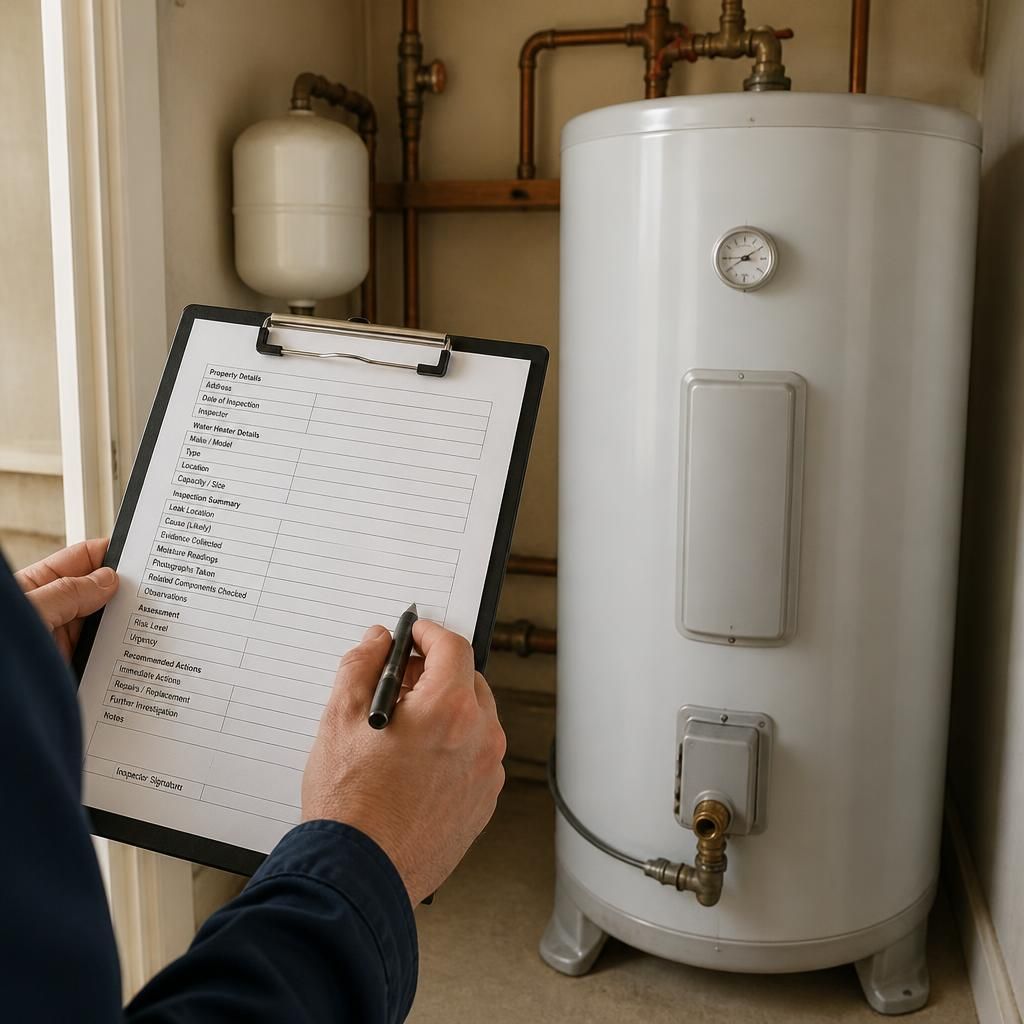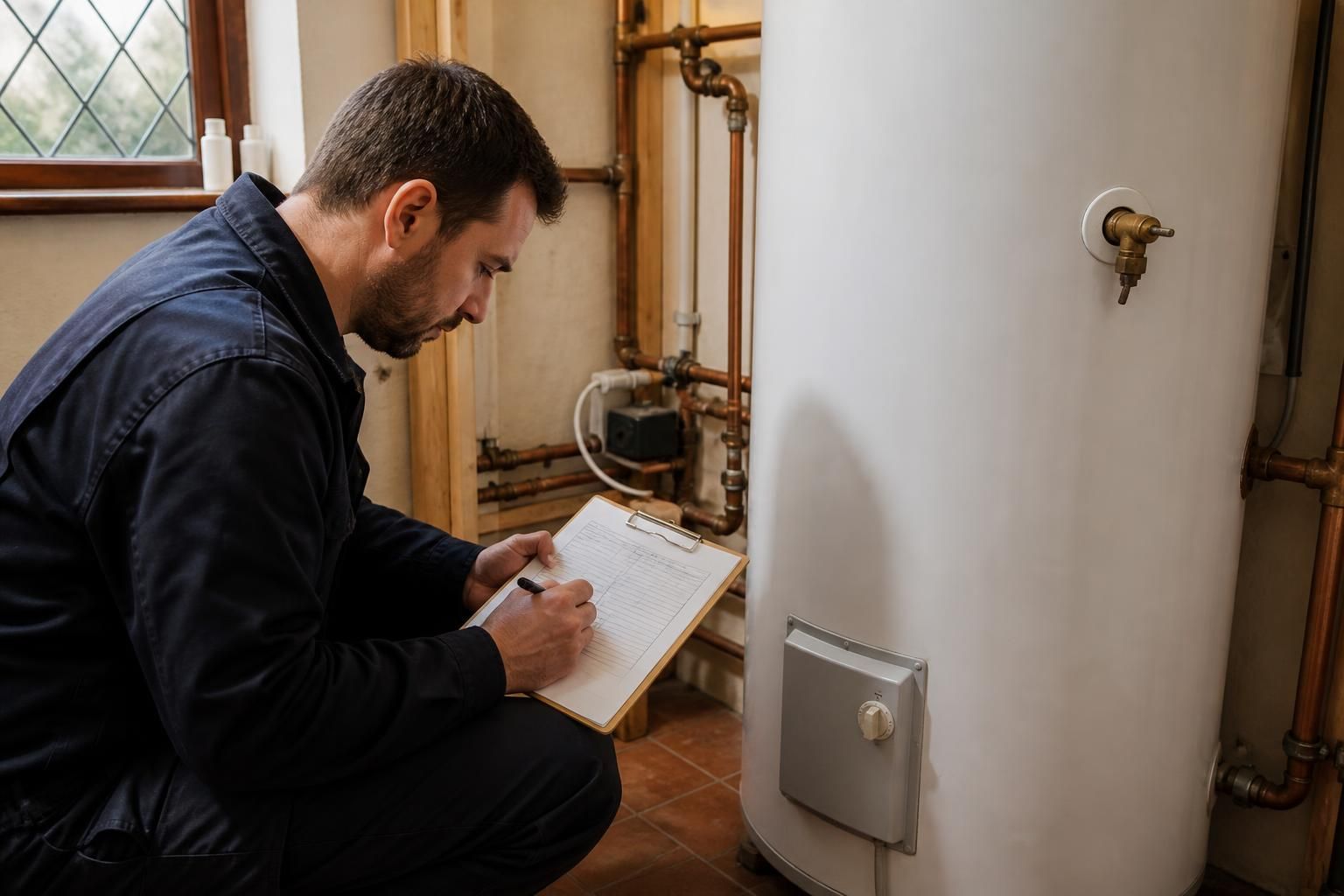
A water heater leak detection report is a written record of the inspection, the evidence obtained and the practical decisions that follow. It should allow a homeowner, landlord, tenant, insurer or repair professional to understand what was checked, how the leak was assessed and what action is appropriate.
A complete report will normally identify the property and appliance inspected. This may include:
- the inspection date and the relevant property or room;
- the water heater type, location and accessible connections;
- any visible identification details, such as the model information or installation arrangement;
- the person who requested the inspection and any relevant access limitations.
It should then describe the inspection method. This is important because the reliability of a conclusion depends on how the source was investigated. The report may state whether the assessment involved a visual examination, moisture readings, tracing water marks, checking pipework and valves, observing the appliance in operation, or comparing conditions before and after water use. If a panel, floor covering or other obstruction could not be removed, that limitation should be recorded rather than left unclear.
The report should distinguish the apparent source from nearby symptoms. Water around a cylinder or heater does not necessarily originate from the tank itself. It may come from an inlet or outlet connection, temperature and pressure relief pipework, a drain valve, a flexible hose, a joint above the appliance or a concealed pipe. The report should state whether the source was directly observed, inferred from the water trail or still unconfirmed. Where the leak is intermittent, it should explain the conditions under which it appeared, such as heating, hot water use or pressure changes.
Useful supporting evidence includes dated photographs, marked-up locations, moisture readings and other relevant observations. Photographs should show both the wider installation and close views of affected components. Readings should identify what was measured and where, rather than presenting unexplained numbers. If no active leak was present during the visit, the report should say so and explain which signs led to the conclusion.
The report should also assess the seriousness of the situation. This does not mean simply labelling a leak as minor or major. It should explain whether water is reaching electrical equipment, flooring, cupboards, ceilings or adjoining rooms; whether corrosion or deterioration is visible; and whether continued use could increase the damage. It should record any immediate precautions taken during the inspection, such as isolating a water supply or advising that the appliance should not be operated. Any safety concern should be described in clear terms, with the reason for the advice.
A useful report separates confirmed facts from professional judgement. For example, it can set out:
- what was seen or measured;
- what those observations indicate;
- how certain the suspected source is;
- what alternative sources have been considered;
- what additional testing would be needed to reach a firm conclusion.
It should record the condition of related parts that could affect the repair decision, including accessible valves, connections, pipework, insulation, supports and visible signs of corrosion. This helps prevent a report from focusing on the wettest area while overlooking a deteriorating component that may contribute to the problem.
The recommendations should be specific and proportionate. Depending on the findings, they may cover tightening or replacing a connection, renewing a valve, repairing associated pipework, monitoring an intermittent fault, opening an area for further investigation or considering replacement where the appliance or tank is no longer suitable for repair. The report should explain why each option is suggested and identify any work that falls outside the inspection itself. A detection report is not automatically a repair specification, so the proposed action should not be presented as completed work.
Where a quotation is provided separately, it should be clear whether it covers the confirmed repair only or also includes access, removal of damaged materials, follow-up testing and making good. If the source remains uncertain, the report should avoid presenting an exact repair price or definite outcome before the necessary investigation has taken place.
Finally, the report should state any follow-up requirements. These may include checking a repaired connection, reassessing moisture in affected materials, arranging specialist work or keeping a record for an insurer or property manager. A clear conclusion should summarise the current evidence, the level of certainty and the next sensible step without implying that undetected areas have been fully ruled out.