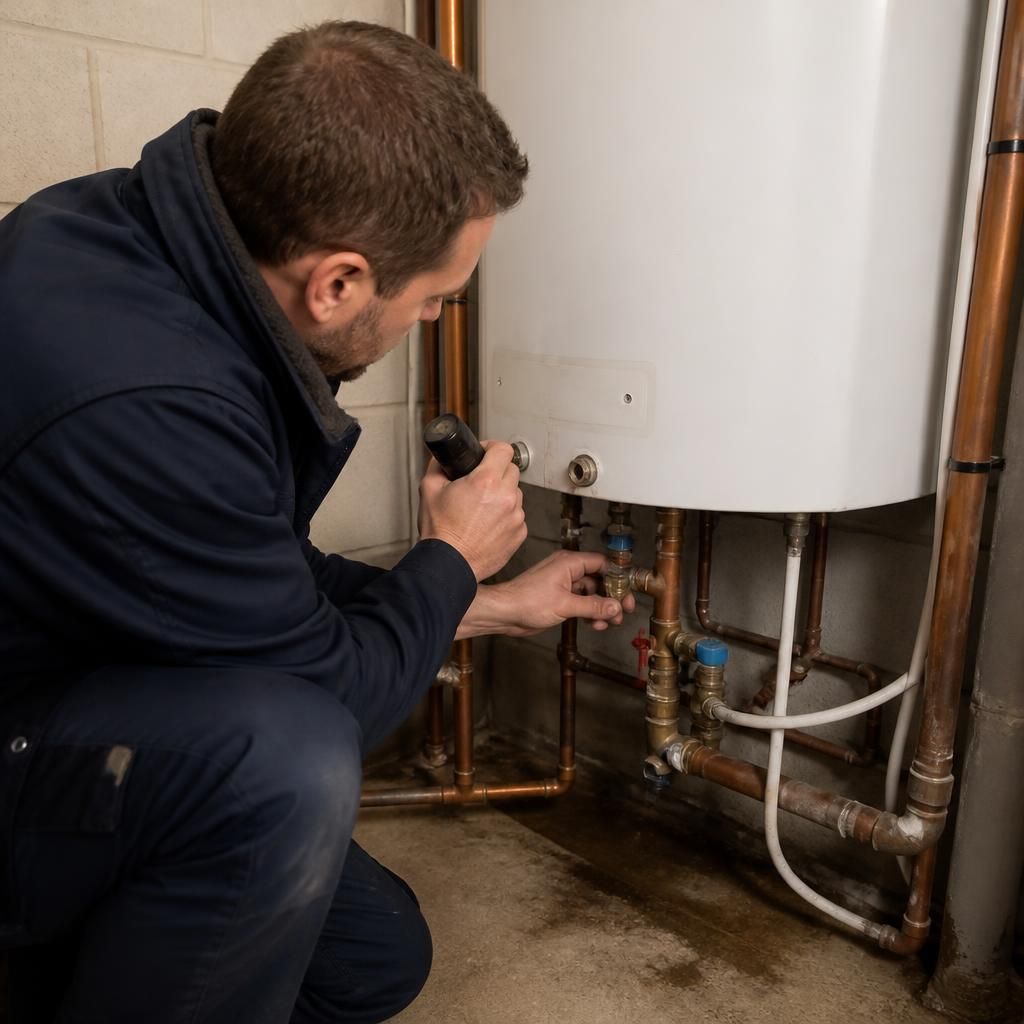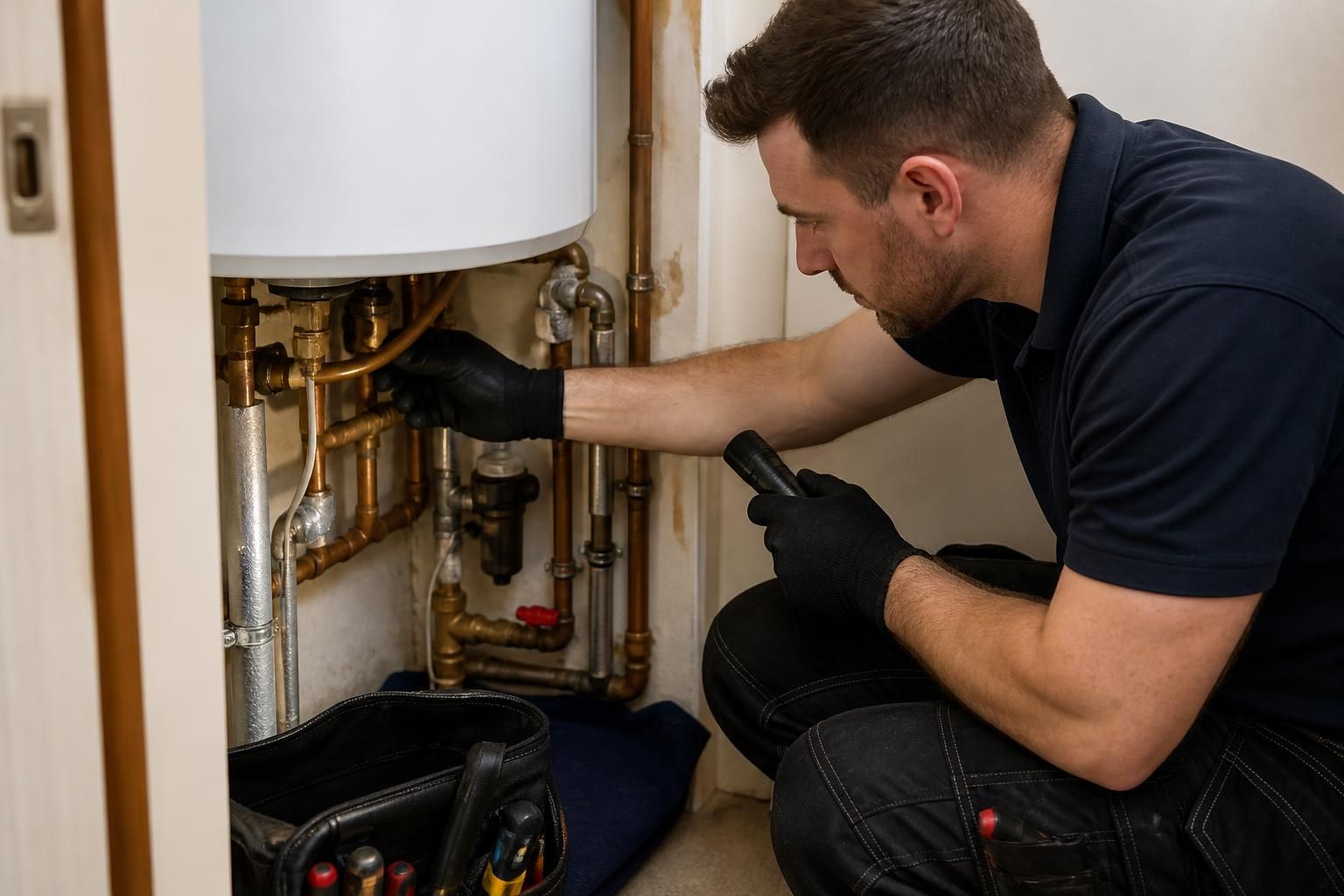
Once a water heater leak has been located, the next stage is to establish whether the source can be repaired safely or whether the appliance and connected pipework need replacing. The plumber confirms the exact failure point, checks the condition of the heater and its controls, and carries out the appropriate corrective work before testing the system.
- The leak source is verified. Water can travel along insulation, pipework or flooring, so the visible damp area is not always the point of failure. The plumber checks joints, valves, seals, connections, the cylinder or tank body, and any discharge pipe to distinguish the original leak from secondary moisture.
- The appliance is made safe for inspection and repair. Depending on the type of water heater, this can involve isolating the water, electrical supply or fuel supply, while taking account of stored hot water and system pressure. A qualified professional should carry out these steps where electrical or gas components are involved.
- The failed component is assessed. A leaking connection, valve, gasket or section of pipe may be repairable. Corrosion, cracking, a damaged internal tank or repeated pressure-related faults can indicate that repair is unsuitable or unlikely to provide a durable result. The age, condition and availability of compatible parts are also considered.
- Surrounding areas are checked. Water may have affected flooring, cupboards, plasterboard, insulation or nearby electrical fittings. The inspection helps identify continuing dampness and prevents the appliance being returned to service while concealed water or damage remains a risk.
- A repair or replacement plan is agreed. If repair is appropriate, the work may include replacing a valve or seal, renewing a connection, repairing pipework or correcting a pressure-related fault. If the heater itself is compromised, replacement may be more suitable. The recommendation should explain the reason for the work, what is included and any limitations caused by existing damage.
- The system is restored and tested. After the work, the water supply is reintroduced in a controlled manner and the repaired area is checked for further moisture. The plumber may also check operating pressure, temperature control, safety devices and discharge arrangements, where relevant to the heater type. The appliance should not be considered ready for normal use until it has been checked under operating conditions.
If water has reached electrical equipment, damaged the building fabric or continued after the supply was isolated, further specialist attention may be needed. Keep photographs and details of when the leak was noticed, where water appeared and whether the heater stopped working; this information can assist with repair decisions and any insurance enquiry.
A water heater leak detection report should normally record the confirmed or suspected source, affected components, visible surrounding damage, safety concerns, recommended work and any follow-up inspection. For homeowners, landlords and tenants in Birmingham and the wider West Midlands, this provides a clear record of what was found and what needs to happen next.