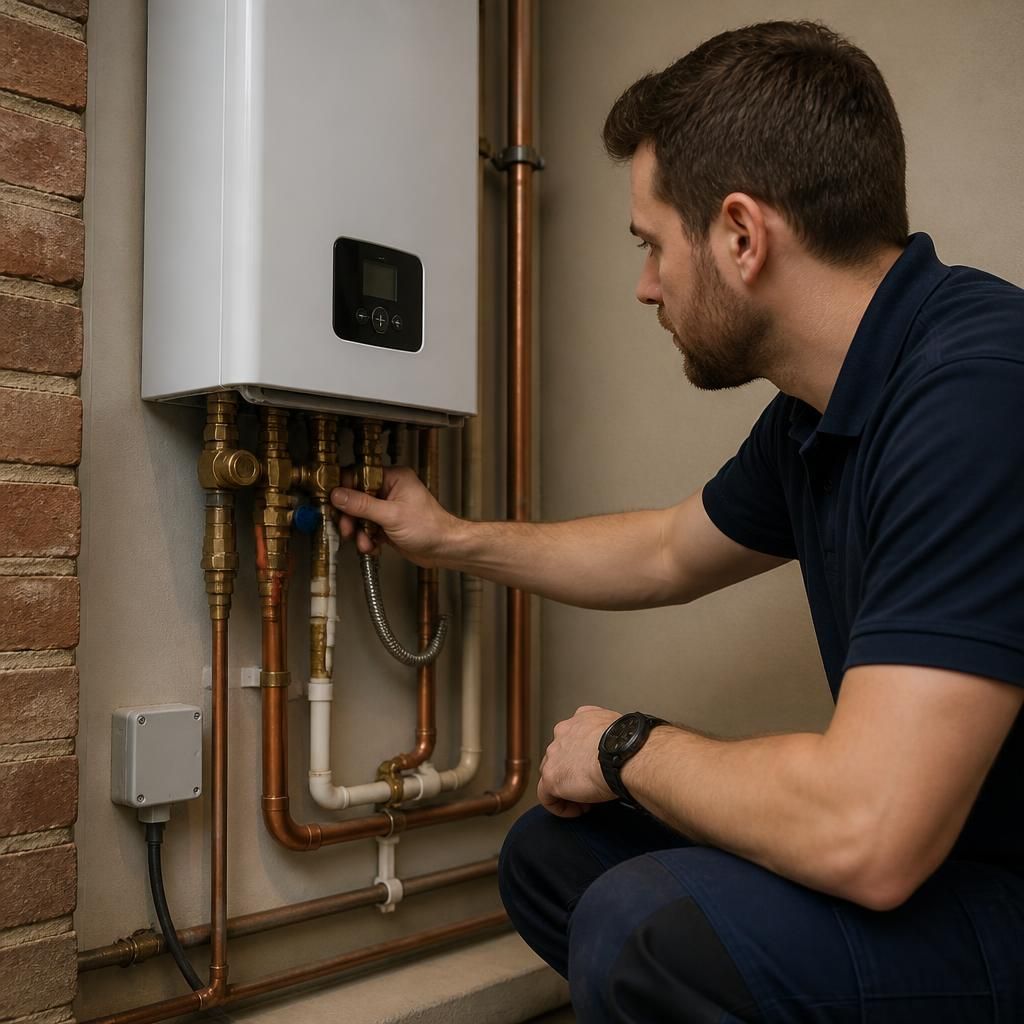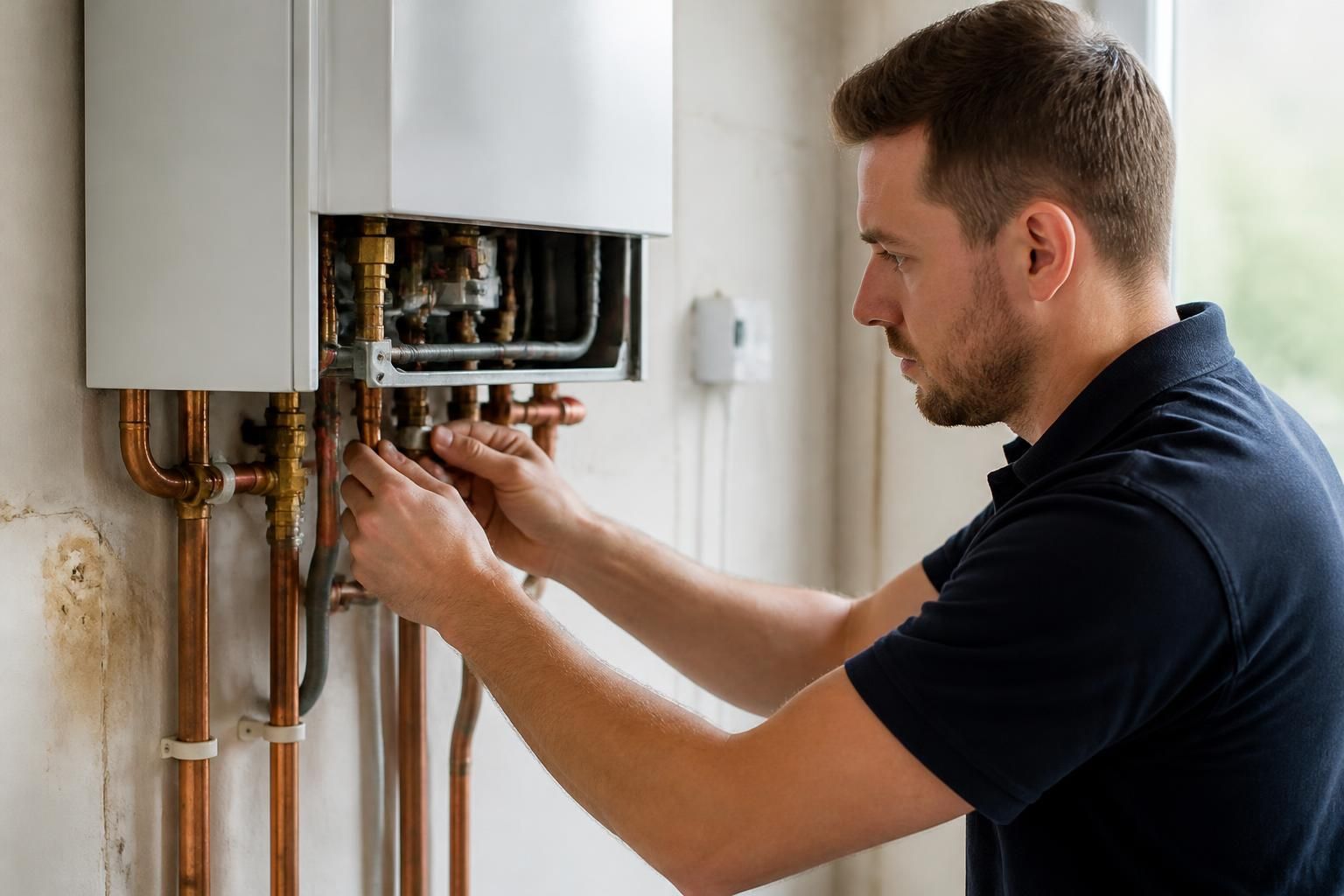
Suitability depends on the property’s existing services, construction and hot-water demand. A tankless water heater can be suitable for houses, flats, apartments, extensions and some rental properties, but the installation must be assessed individually rather than assumed to be interchangeable between buildings.
Property types and layouts
Most property types can accommodate a tankless system if there is an appropriate installation position and a suitable route for the necessary pipework, wiring, ventilation or flue components. The available space may be more flexible than with a storage cylinder because the appliance does not need a large hot-water tank. However, the unit still needs enough clearance for safe operation, inspection and future maintenance.
Flats and apartments can involve additional restrictions. The installer may need to consider the building’s shared services, lease conditions, access arrangements and whether an external flue or other alteration is permitted. A property with a communal hot-water or heating system may not be suitable for an individual replacement without approval from the building owner or managing agent.
Gas-fired and electric options have different requirements
A gas tankless water heater needs an appropriate gas supply, safe combustion air, and a compliant flue route for removing combustion products. The existing gas pipe may not be adequate for the appliance, particularly where other gas appliances share the supply. The flue position and route also need to meet current safety and building requirements; a convenient location is not automatically an acceptable one.
An electric model avoids a gas flue, but it may require a substantial electrical supply and dedicated protective equipment. The property’s consumer unit, cabling and available electrical capacity must be checked before installation. In some buildings, upgrading the electrical installation could be necessary, and that work may affect whether an electric system is a practical choice.
Water supply and household demand
Tankless heaters warm water as it passes through the appliance, so performance depends on the incoming water supply as well as the heater’s capacity. The installer should assess:
- incoming mains pressure and flow;
- the number of bathrooms and hot-water outlets;
- whether showers, taps or appliances may be used at the same time;
- the distance between the heater and the outlets; and
- the condition and size of the existing hot and cold-water pipework.
A property with limited flow may not deliver the expected temperature and volume from several outlets simultaneously. Conversely, a suitable supply may allow the system to serve the household effectively without a storage cylinder. The assessment should therefore consider actual usage rather than selecting an appliance based only on the size of the property.
Existing heating and hot-water arrangements
Replacing a cylinder or another water-heating system is not simply a matter of disconnecting the old appliance and connecting a new one. The installation may involve altering hot and cold-water pipework, removing redundant components, adapting controls and making good connections to the existing heating system where relevant. The condition of older pipework can also affect the work required.
Properties with an existing combination boiler, cylinder, immersion heater or point-of-use heater may each need a different approach. A tankless water heater might provide domestic hot water independently, or it may need to work alongside other equipment. The proposed arrangement should account for the property’s heating requirements, available space and intended pattern of use.
Ventilation, drainage and condensate
Some gas appliances produce condensate that needs a suitable discharge connection. The installer must also confirm that ventilation provisions and flue arrangements are appropriate for the selected appliance and its location. These details are important in cupboards, utility rooms, loft spaces and other enclosed areas where access or airflow may be restricted.
Safety and compliance
Installation work must follow the appliance manufacturer’s instructions and applicable gas, electrical, water and building safety requirements. This includes checking clearances, combustion and ventilation arrangements, flue integrity, electrical protection, water connections and controls. Where the property is rented, the landlord may also need to retain the relevant installation and safety documentation.
Older properties, converted buildings and listed or protected buildings may need closer assessment because their construction, existing services or alteration restrictions can limit the available options. A technically possible installation may still require consent before work begins.
What an assessment should establish
- Which type of tankless heater is appropriate for the property and household demand.
- Whether the gas or electrical supply can support the proposed appliance.
- Where the heater, controls and associated pipework can be positioned safely.
- Whether the flue, ventilation, drainage and condensate arrangements are compliant.
- Which existing components can be retained and which need altering or removing.
- Whether building-owner, landlord or other permissions are required.
In practice, the answer is property-specific: many homes can be adapted for tankless water heating, while others may need service upgrades, a different appliance type or an alternative hot-water arrangement. A site assessment by a suitably qualified plumbing and heating professional is the appropriate way to confirm feasibility before equipment is selected.