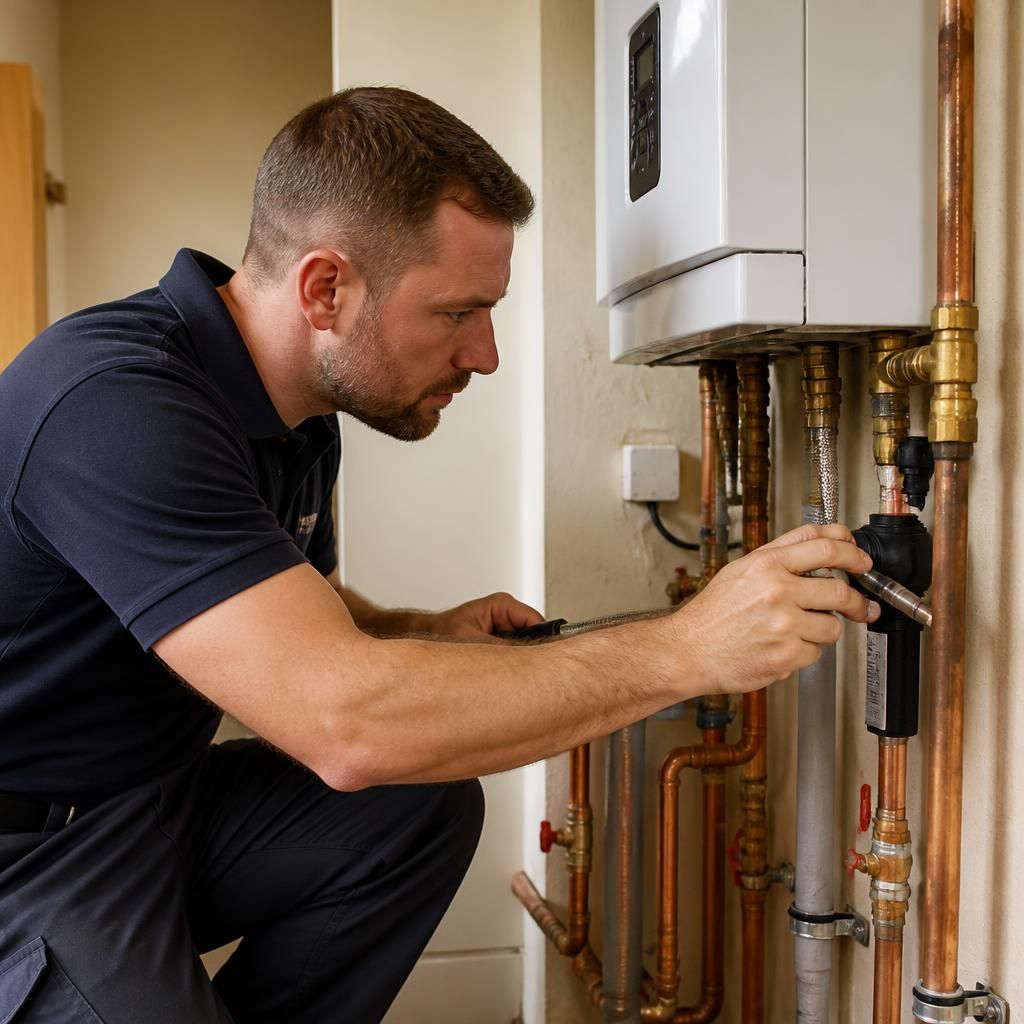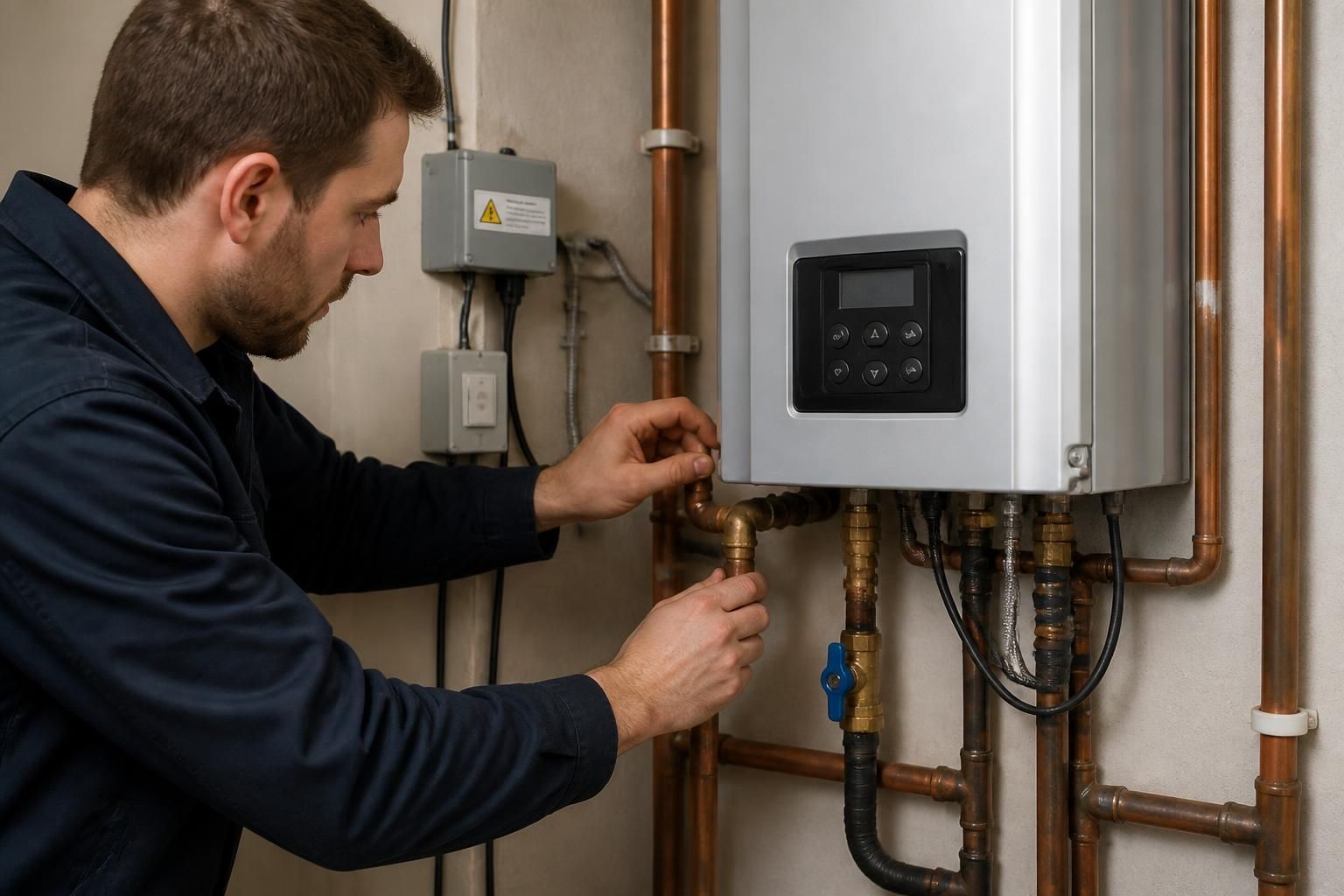
Preparing for a tankless water heater installation means confirming your household’s hot water requirements, documenting the existing system and resolving any property or approval issues before the installer attends. Good preparation helps determine whether the proposed heater is suitably sized and whether additional work is needed for safe, compliant operation.
Start by recording how the hot water is used. Note the number of bathrooms, showers, baths, sinks and other outlets supplied by the heater. Consider which outlets may operate at the same time, such as two showers running together or a shower being used while a tap is open. This information helps the installer calculate the required flow rate and output rather than selecting a unit based only on the number of occupants.
- How many people normally use the property?
- Are there peak periods when several outlets need hot water together?
- Do you prefer a higher-flow shower or a lower-flow fitting?
- Will an extension, loft conversion or additional bathroom be added later?
Keep details of the current water-heating system available, including its make and model if known, approximate age, service records and any recurring faults. Photographs can also help show the existing controls, pipe connections and surrounding area before the survey. If the installation is replacing a cylinder or another water heater, decide whether it will be removed, retained or relocated, as this can affect the work involved and the final quotation.
Check property permissions before work is arranged. Homeowners should review any requirements that apply to alterations, particularly where the installation affects a gas appliance, external flue or the building fabric. Tenants may need written permission from their landlord, while leaseholders should check their lease and any freeholder or managing-agent requirements. Building control or other statutory requirements can vary according to the type of property and installation, so ask the installer what certification or notification will apply.
For a gas-powered heater, do not disconnect, alter or test gas components yourself. Gas appliance and flue work must be completed by an appropriately qualified professional. For an electric model, avoid changing circuits, consumer-unit protection or cabling without suitable electrical expertise. The installer needs to establish that the proposed supply is appropriate rather than relying on an existing socket or connection.
Think about the controls and operating arrangement you want before the equipment is selected. Discuss the preferred hot water temperature, whether controls should be positioned in a particular room and whether the heater will serve the whole property or only selected outlets. A point-of-use electric unit, for example, may be considered for a single outlet, whereas a whole-property system requires a different assessment of demand and supply capacity.
Prepare questions for the survey and request a written scope of work. The quotation should make clear whether it includes:
- removal and disposal of the existing heater or cylinder;
- new valves, pipework, brackets and connection components;
- flue or ventilation work where applicable;
- condensate arrangements for a condensing gas appliance;
- electrical alterations or controls;
- commissioning, safety checks and certification;
- testing of the hot water outlets; and
- making good any surfaces affected by the installation.
Also ask what could change the quoted price if the survey identifies restricted water flow, unsuitable wiring, inadequate gas capacity, damaged pipework or structural limitations. A clear scope helps separate the installation itself from optional upgrades and makes it easier to compare quotations without overlooking essential work.
Before installation day, remove personal belongings from nearby cupboards or storage areas, protect items that could be affected by dust, and ensure the installer knows about concealed pipes, cables or previous alterations. Do not switch off or drain the existing system unless instructed, because doing so prematurely can create leaks or leave the property without usable water.
For properties in Birmingham and the wider West Midlands, a local installer can assess the dwelling’s existing arrangement and explain which preparation is actually necessary for the selected tankless system. The most useful information to provide is an accurate account of hot water demand, the current system’s history, any planned property changes and any permissions that may apply.