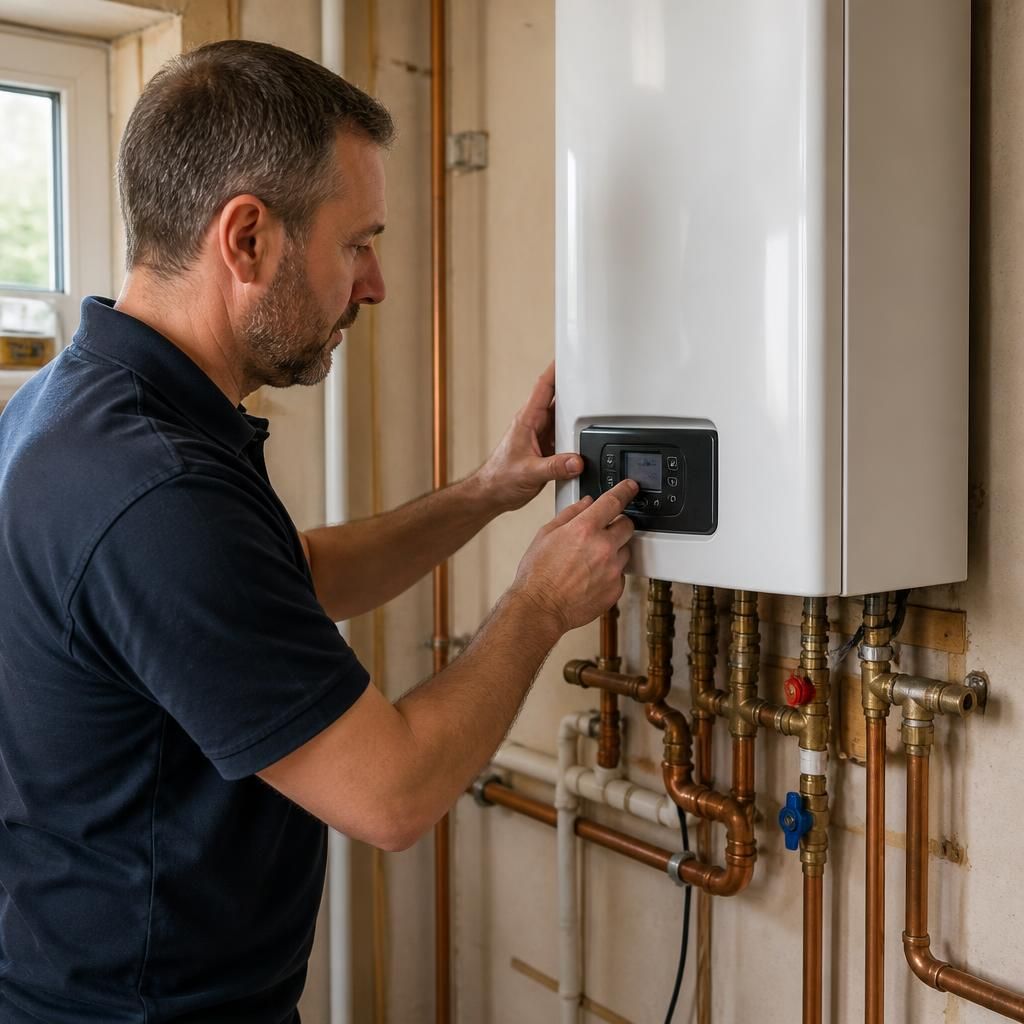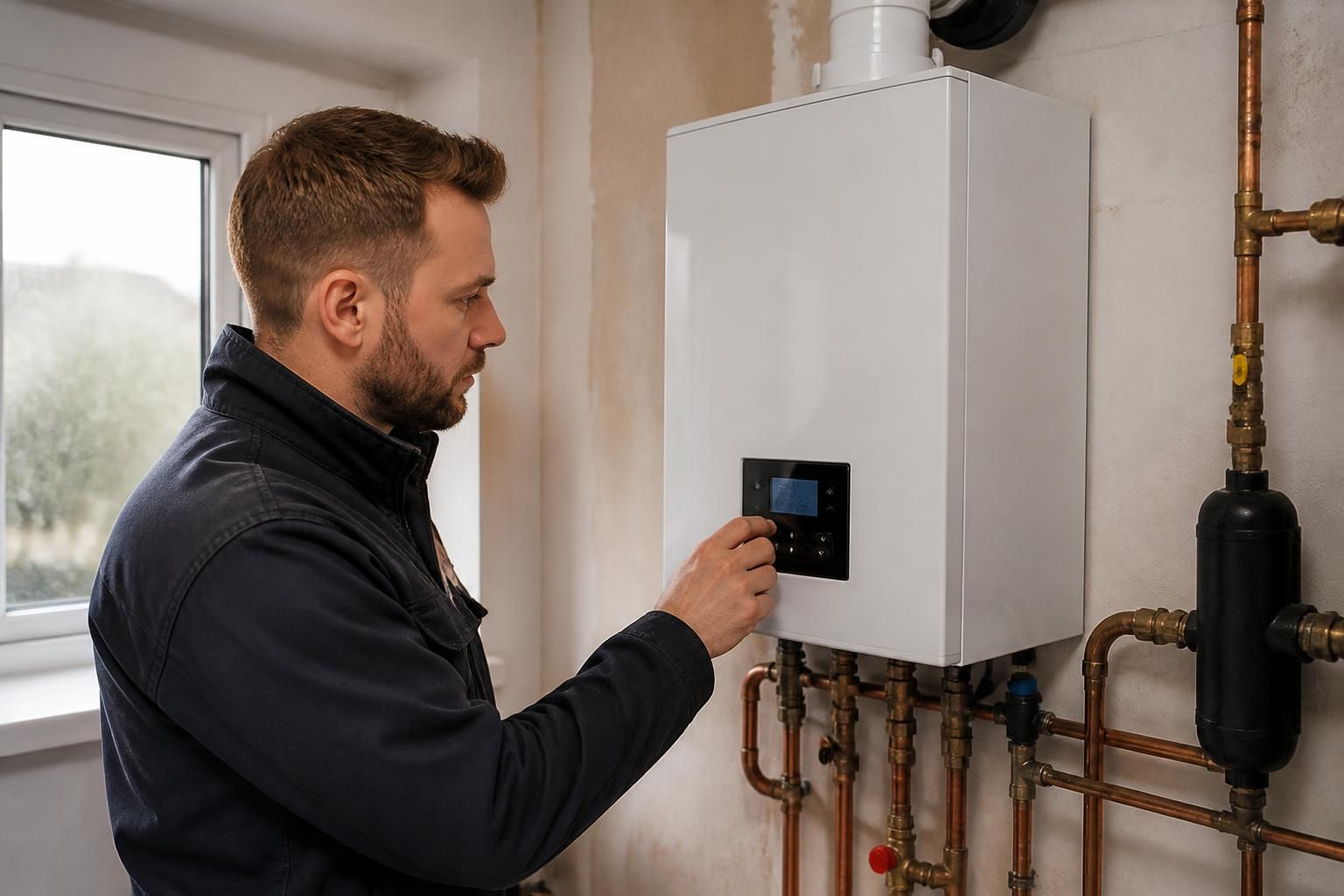
Tankless water heater commissioning is the formal validation and handover stage that confirms the newly installed appliance is suitable for operation, complies with relevant requirements and has been left ready for the household to use. It is more than switching the heater on: the engineer reviews the completed installation, checks that the system performs as intended and records important information for future servicing.
Reviewing the installation
The engineer first assesses the installation as a complete system rather than looking at the heater in isolation. This can include checking that the appliance is correctly positioned, accessible for servicing and supported appropriately. The surrounding pipework, isolation points, discharge arrangements and any required ventilation are reviewed against the appliance instructions and the circumstances of the property.
For a gas-fired tankless water heater, the flue route and terminal are particularly important. The engineer will check that combustion products can discharge safely and that the flue installation is appropriate for the appliance. Gas pipework, ventilation and the supply arrangement also need to be suitable. Any gas-related commissioning must be carried out by an appropriately qualified engineer.
For an electric model, attention is focused on the electrical supply, protective devices, cable sizing, earthing and isolation arrangements. The installation must be appropriate for the heater’s electrical demand and the property’s existing supply. The precise checks depend on the appliance design and the installation instructions.
Checking performance under operating conditions
Commissioning normally involves observing the heater while it operates at different demand levels. The engineer may run outlets individually and together to assess whether the appliance responds correctly when demand changes. They will look for signs of unstable operation, unusual noise, leaks, error codes or inconsistent delivery.
Temperature performance is assessed against the selected settings and the manufacturer’s requirements. The aim is to confirm that the controls respond properly and that the delivered water is appropriate for the intended use. If the system includes a thermostatic mixing valve, secondary controls or a recirculation arrangement, these components may also need to be checked as part of the overall setup.
Safety and compliance checks
- Inspection of accessible joints and components for signs of leakage.
- Confirmation that isolation controls can be identified and operated.
- Review of pressure, supply and discharge conditions where these apply to the appliance.
- Confirmation that protective cut-outs and safety controls operate as intended.
- Checking that condensate or other drainage arrangements are correctly connected on models that require them.
- Assessment of warning labels, clearances and access for future maintenance.
These checks help identify installation issues before the heater is put into normal use. If a fault or non-compliant detail is found, it should be corrected and the relevant part of the commissioning process repeated. A heater should not simply be left operating with a known safety concern or unresolved installation defect.
Recording the commissioning information
The completed paperwork can include the appliance details, installation date, test results, settings and details of the engineer or business carrying out the work. Gas installations may require the appropriate safety documentation, while an electrical installation may require relevant certification or notification depending on the work undertaken and the property.
Keeping these documents is useful when the system is serviced, repaired or sold with the property. They provide a reference for the original settings and may help another qualified engineer understand how the installation was configured. The homeowner should also be given the appliance instructions and information about any warranty registration or manufacturer servicing requirements, where applicable.
Handover and homeowner guidance
The final handover should cover the controls that the household will use regularly, including temperature selection, power or isolation controls and any display messages. The engineer should also explain which actions are appropriate if the heater shows a fault and which tasks should be left to a qualified professional.
Commissioning does not replace routine maintenance. Filters, strainers, inlet components, heat exchangers, electrical parts and combustion components may need future attention depending on the model and water quality. The recommended service arrangements should be recorded in the appliance documentation rather than assumed from the commissioning visit.
Ideal Plumbing Services can provide professional tankless water heater installation and commissioning for homeowners, landlords and tenants in Birmingham and the wider West Midlands. The exact commissioning procedure will depend on whether the appliance is gas or electric, its control system and the configuration of the property.