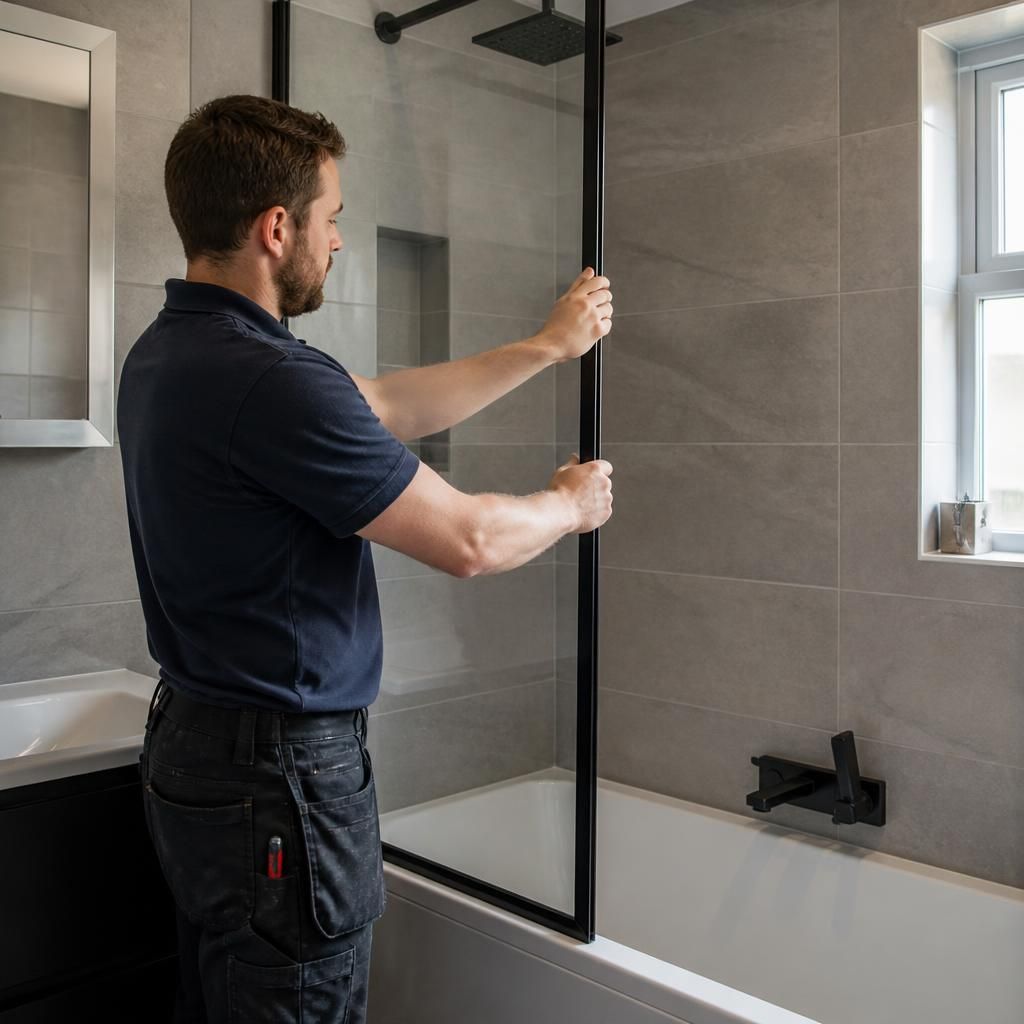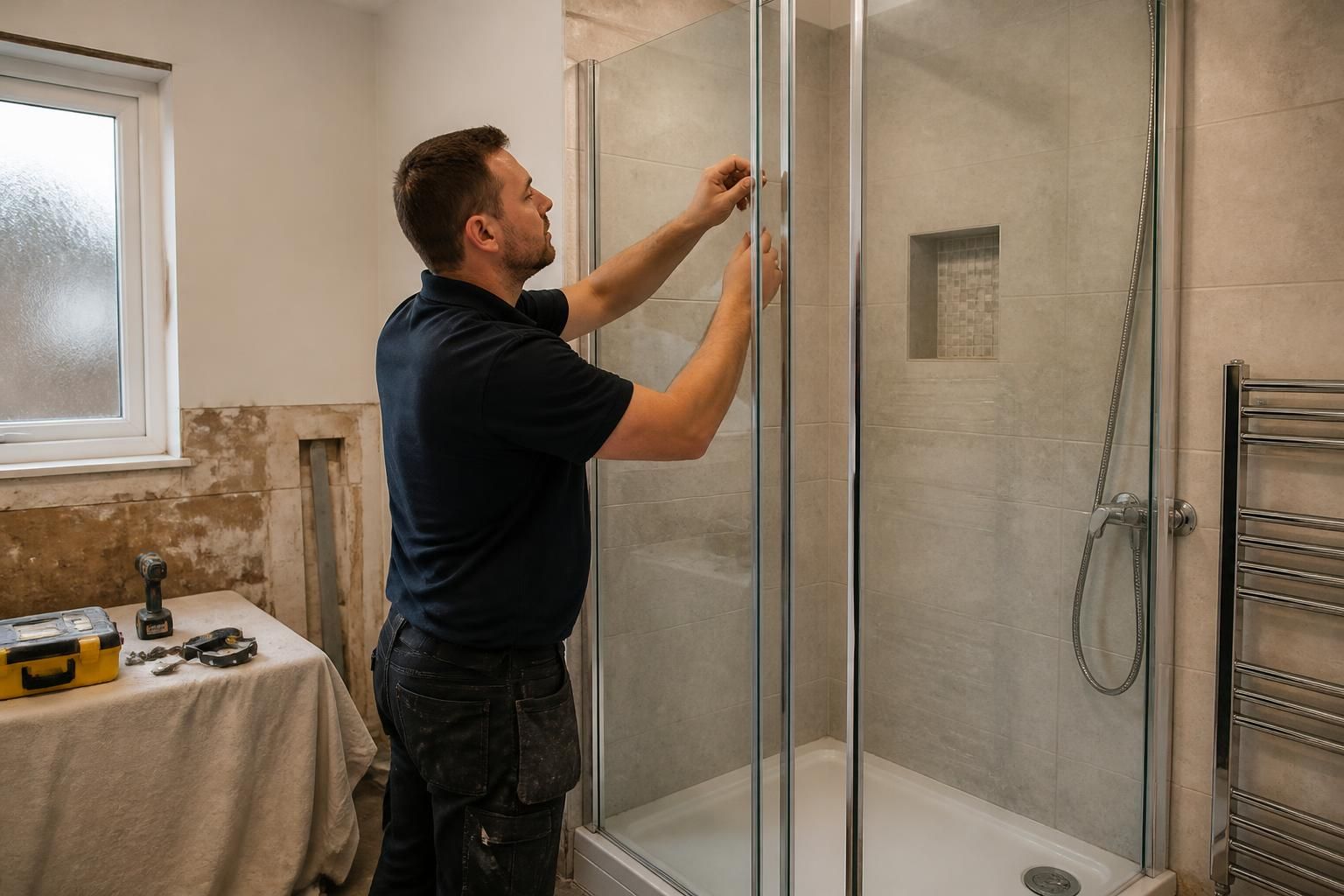
Bath or shower installation typically creates short-term disruption through loss of use of the bathroom, installation noise, dust and the need for tradespeople to move materials through the property. A straightforward replacement is generally less disruptive than a redesigned bathroom, although the exact programme depends on the layout, the chosen suite and the condition of the surrounding surfaces.
What the work usually involves
- Protecting floors, doorways and nearby furniture before work begins.
- Removing the existing bath, shower, basin or associated fittings where these are being replaced.
- Preparing the walls and floor for the new installation, which may involve removing old sealant, panels or selected tiles.
- Fitting the new sanitaryware, taps, shower equipment, screens and wastes.
- Connecting and testing the water and drainage systems.
- Sealing joints and completing any necessary finishing work before the bathroom is handed back for use.
During the main installation, the bathroom may not be usable. If the property has another bathroom, that can significantly reduce the practical impact. Where there is only one bathroom, it is sensible to discuss the order of work and the point at which water and sanitaryware will be unavailable before the installation starts.
Factors that can increase disruption
- Changing the layout: moving a bath, shower or toilet can require additional pipework, drainage alterations and floor access.
- Uneven or damaged surfaces: hidden damp, deteriorated flooring or unsuitable walls may need attention before new fittings can be secured.
- Wall and floor finishes: removing tiles or replacing panels can create more dust and may extend the finishing stage.
- Access restrictions: narrow hallways, stairs or limited parking can make it more difficult to bring in bulky fittings and remove waste.
- Older plumbing: existing valves, pipework or connections may not suit the new equipment and may need updating.
- Additional features: thermostatic controls, concealed pipework, electric showers or specialist shower screens can require more involved preparation and testing.
A like-for-like installation normally has a more predictable scope because the main connections and fittings remain in similar positions. A bespoke installation, particularly one involving concealed services or a different showering arrangement, should allow for investigation of the areas behind walls and beneath floors. This is where apparently minor changes can result in additional work.
How to reduce the impact on the household
- Remove toiletries, towels and loose items from the bathroom before the installer arrives.
- Clear a route from the entrance to the bathroom for equipment and waste removal.
- Confirm which fittings are being retained and which are being replaced.
- Ask how materials, dust and old sanitaryware will be managed.
- Make decisions about tiles, panels, screens and taps before work begins to avoid preventable delays.
- Keep pets and children away from the work area while tools, exposed pipework and debris are present.
Good preparation helps contain the work to the bathroom, but it cannot remove every source of disruption. Cutting, drilling, lifting and testing can produce noise, while access to pipework may require sections of flooring, boxing or wall finish to be opened. The installer should explain any areas that may need to be disturbed and distinguish essential work from optional improvements.
The installation should be considered complete only when the fittings are secure, connections have been checked, drainage is working correctly and sealant has been applied where required. Some sealants and finishing materials may need time to cure before the bath or shower is used; the installer should provide clear instructions for this stage.
Ideal Plumbing Services can assess the proposed arrangement, identify likely access requirements and explain the expected sequence before work starts. With over 20 years’ experience, the team provides bath and shower installation for homeowners, landlords and tenants, with the aim of keeping the work controlled and clearly explained from preparation through to testing.