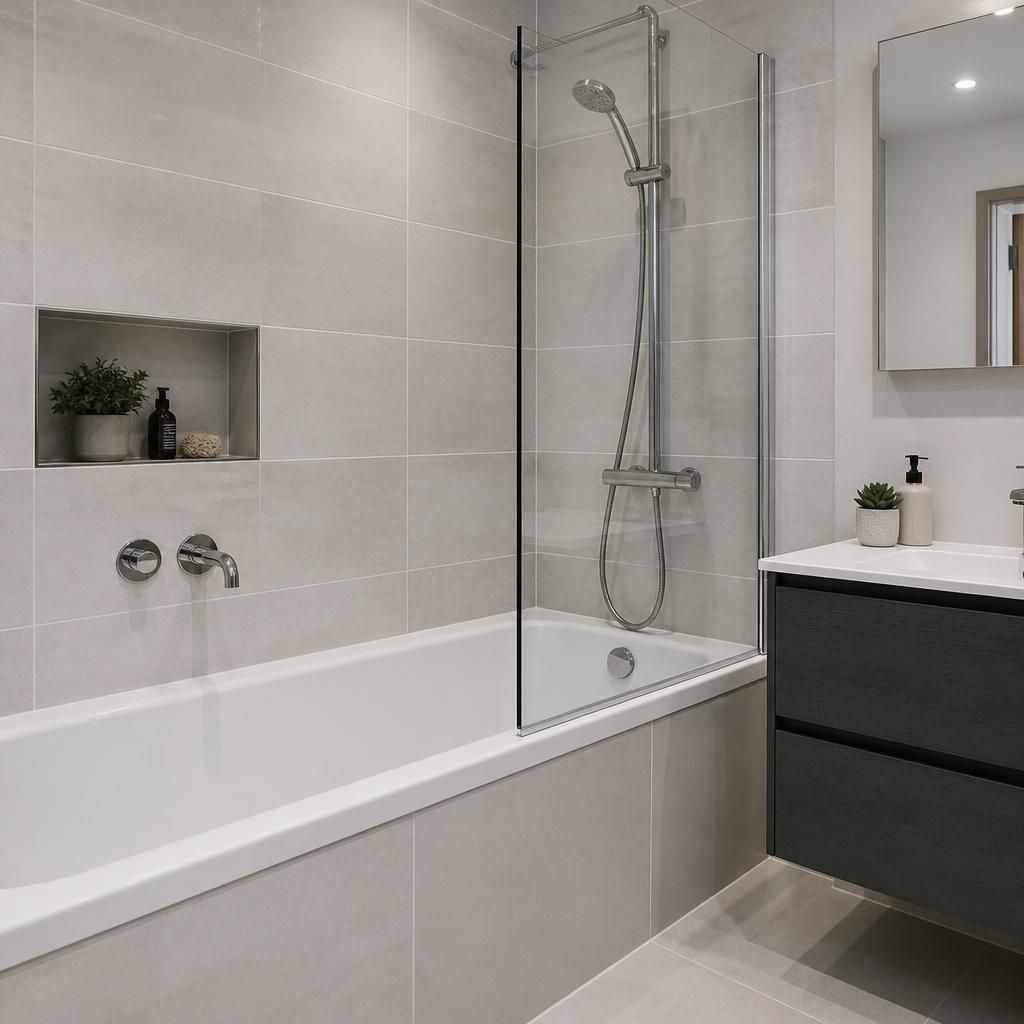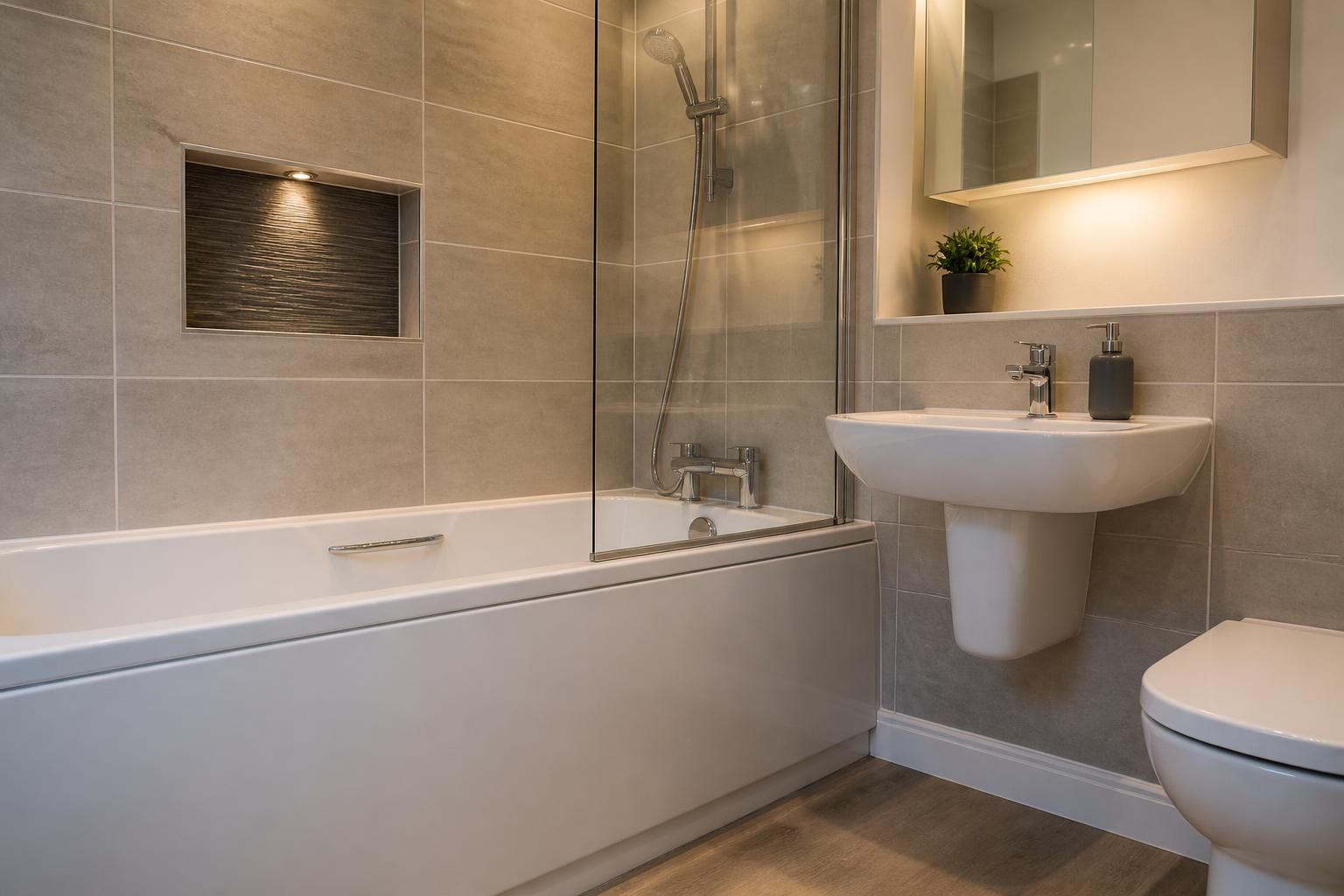
For most rental homes, a bath or shower installation is a practical investment when it improves usability without creating unnecessary maintenance or replacement costs. The best installation balances tenant comfort with robust materials, accessible controls, straightforward repairs and a layout that suits the property. A like-for-like replacement is usually simpler, while changing the position or type of sanitaryware requires closer assessment of the plumbing, drainage, ventilation and available space.
Choose the installation around likely tenant use
A family property may benefit from retaining a bath, particularly where tenants may have young children. A shower enclosure or shower over the bath can provide everyday convenience while preserving flexibility. In a smaller flat or house share, a well-designed shower may make better use of limited floor space. For properties intended for older tenants or people with reduced mobility, consider level access, grab rails, slip-resistant surfaces and controls that can be reached safely.
Tenant preferences should be considered, but the decision also needs to reflect the property’s structure and intended occupancy. A high-specification installation may not be appropriate if it uses delicate fittings, unusual parts or finishes that are difficult to clean. Simple, durable choices are often more suitable for a rental bathroom.
Prioritise durable and maintainable components
Rental bathrooms receive repeated use, so fittings should be selected for strength, reliable seals and the availability of replacement parts. Useful features include:
- Robust taps, shower controls and handles that can withstand regular use.
- Easy-clean wall and floor surfaces with secure, well-finished joints.
- Accessible isolation valves so the water supply can be shut off for maintenance.
- A properly supported bath or shower tray that is unlikely to move under load.
- Removable access panels where valves, traps or connections may require attention.
- Effective ventilation to limit condensation, mould and deterioration of sealant.
Decorative features are not necessarily a problem, but they should not make routine cleaning or repairs difficult. Concealed pipework can give a neat appearance, although it must be installed in a way that allows faults to be investigated without excessive removal of finishes.
Check the plumbing before choosing the design
An existing bathroom may appear suitable for an upgrade while still having weaknesses below the surface. Before installation, a plumber should check the condition and position of the hot and cold supplies, waste pipework, flooring, wall structure and existing connections. The available water pressure and hot water system can also affect shower performance. A design that demands more flow than the system can provide may lead to poor performance or tenant complaints.
Changing from a bath to a shower, moving a waste outlet or installing a larger enclosure can involve more than replacing visible fittings. Floor levels, pipe gradients and access to the drainage system all need to be considered. Identifying these points before work begins helps prevent avoidable alterations once the old suite has been removed.
Control water damage and leak risks
Water damage can affect flooring, ceilings and adjoining rooms, so waterproofing and jointing are particularly important in rental properties. The bath or shower should be properly levelled and supported, with seals and wall connections finished to prevent water escaping behind the installation. Shower screens and curtains should direct water into the tray or bath rather than towards vulnerable flooring.
It is also sensible to consider how a future leak would be found and isolated. Accessible service points, clearly identified shut-off valves and sensible pipe routes can reduce disruption during repairs. After installation, the landlord or managing agent should receive information about any isolation points and recommended maintenance.
Meet safety and property requirements
Bathroom work can involve water, drainage, electrical equipment, ventilation and structural fixings. Electrical items such as shower supplies, lighting or extractor fans must be installed in accordance with applicable safety requirements, with suitable protection in wet areas. Where walls, floors or drainage arrangements are altered, the work may also need to comply with relevant building requirements.
Anti-scald measures can be valuable where children, older occupants or vulnerable tenants may use the bathroom. Slip-resistant flooring, stable screens, secure grab rails and easy-to-operate controls can improve safety without requiring a high-maintenance design. Landlords should check the requirements that apply to their property and keep appropriate records of completed work.
Plan for cleaning and routine maintenance
A rental bathroom should be easy for tenants to keep clean. Open, accessible surfaces are generally easier to inspect than cramped layouts with multiple small gaps. Sealant, grout, shower heads, traps and extractor fans need periodic checking because small defects can develop into leaks, blockages or damp if they are overlooked.
Tenants should be given clear, practical instructions covering ventilation, cleaning products, the location of isolation valves and the reporting of leaks. They should also know not to force stiff controls or ignore dripping taps, loose fittings, slow drainage or damaged sealant. Early reporting allows a minor defect to be assessed before it causes wider damage.
Consider the effect on rental costs and void periods
The overall cost depends on the chosen suite, the condition of the existing plumbing, the amount of preparation required and whether the layout changes. Keeping the bath or shower in its current position can reduce pipework alterations, while replacing damaged flooring or improving ventilation may be worthwhile if those issues would otherwise shorten the life of the new installation.
For a planned refurbishment, obtain a clear description of what is included. This should cover removal and disposal, preparation of walls and floors, plumbing alterations, waterproofing, ventilation, electrical work where relevant, finishing and testing. A written scope makes it easier to compare options and reduces uncertainty about additional work discovered after removal.
When a rental installation may not be suitable as planned
A proposed bath or shower should be reconsidered if the floor cannot support it securely, the drainage route is unsuitable, the water system cannot deliver adequate performance, or ventilation is insufficient. Persistent damp, damaged flooring or defective pipework should be addressed rather than concealed behind a new suite. In these situations, repairing the underlying problem first may produce a more reliable result than proceeding with a cosmetic replacement.
For landlords, the most appropriate installation is therefore not necessarily the cheapest or most elaborate option. It is the one that fits the property, meets safety requirements, serves the likely tenants and allows faults to be inspected and repaired without disproportionate disruption. A detailed assessment by a qualified Birmingham plumber can help confirm whether the proposed bath or shower is suitable before materials are ordered and work begins.