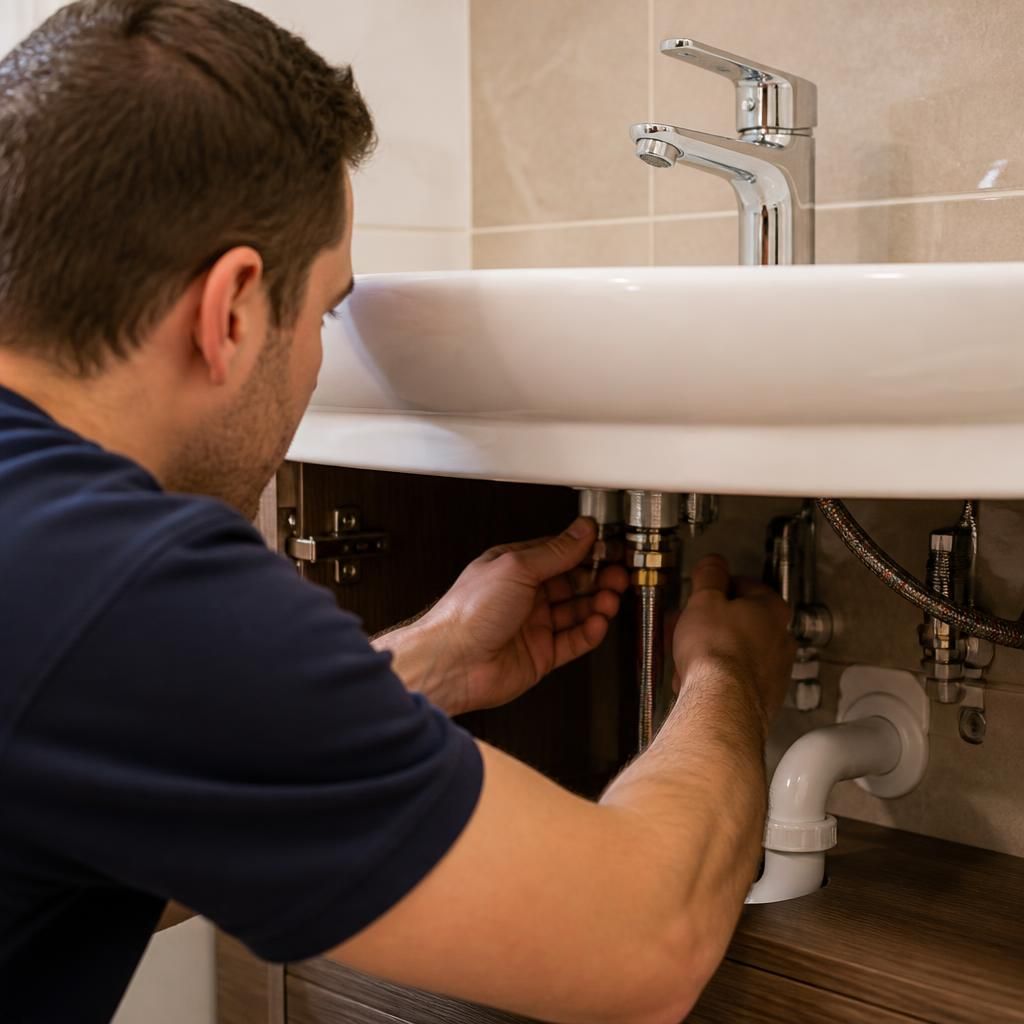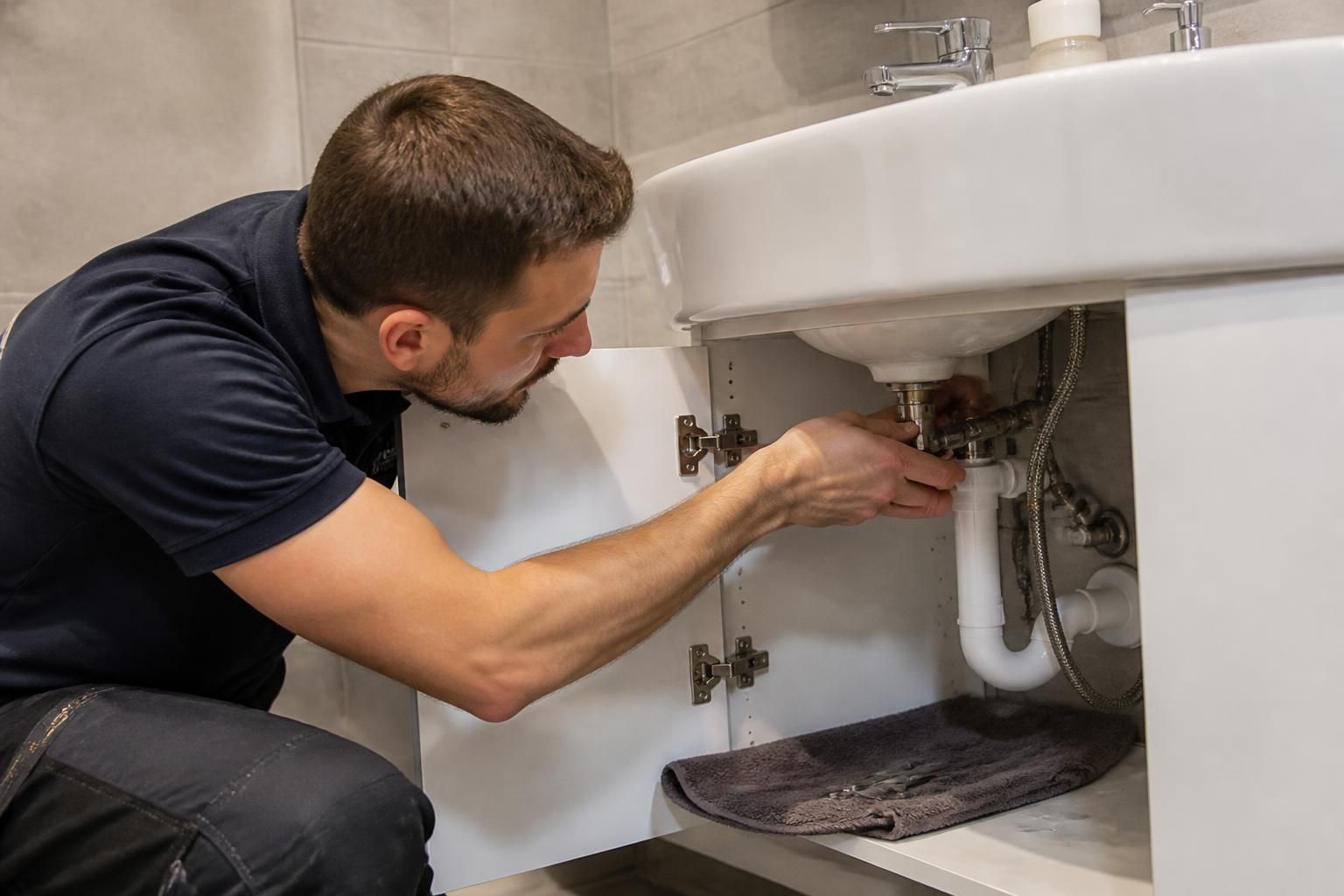
The deciding factor is whether a plumber can reach the tap’s fixing point and water connections beneath the basin. If there is sufficient working space, the tap can usually be isolated, disconnected and repaired or replaced in position, leaving the basin and surrounding tiles undisturbed.
A typical repair involves turning off the relevant water supply, opening the tap to release pressure, and protecting the cabinet or floor below. The plumber then disconnects the flexible hoses or pipework and checks the fixing arrangement. Depending on the fault, the work may involve replacing a cartridge, washer, seal, O-ring, flexible connector or complete tap assembly. The connections are tested for leaks before the area is cleaned and returned to use.
Access is generally more straightforward with:
- a vanity unit or cupboard that allows the doors, drawers or shelf to be removed;
- a tap secured with a conventional fixing nut that can be reached with suitable tools;
- flexible hoses rather than rigid pipework in a confined space; and
- adequate clearance behind and below the basin for safe disconnection.
Some taps need specialist tools because the retaining nut is deep, corroded or awkwardly shaped. A basin wrench or extended socket may provide access where ordinary spanners cannot. Using the correct tool reduces the risk of rounding the nut, damaging the tap shank or putting strain on the basin.
Basin removal becomes more likely when the fixing is completely inaccessible, the tap has seized in place, or the design leaves no room to turn the retaining nut. It may also be considered where the basin is already loose, the waste or pipework needs attention at the same time, or the tap cannot be withdrawn through the available opening. Removal should be treated as part of gaining safe access, rather than as the first step in every tap repair.
The condition of the basin and its seal also matters. Older sealant may need to be cut away carefully, and the basin must be supported if it is detached from a wall or worktop. After the repair, the fixing should be tightened firmly without over-tightening, as excessive force can crack ceramic or distort a mounting seal. Any disturbed sealant should be renewed to help prevent water reaching the cabinet or wall.
Before arranging the work, it is useful to clear stored items from beneath the basin and identify the isolation valve if it is visible. Photographs of the tap, the space below it and any signs of corrosion can help a plumber understand the installation. Do not force a seized connection or continue using a tap that is leaking into an enclosed cabinet, as this can worsen damage to fittings and surrounding materials.
For homeowners, landlords and tenants in Birmingham and the West Midlands, Ideal Plumbing Services can assess the installation and determine the least disruptive repair method. The basin should only be removed where access, safety or the condition of the fittings makes that step necessary.