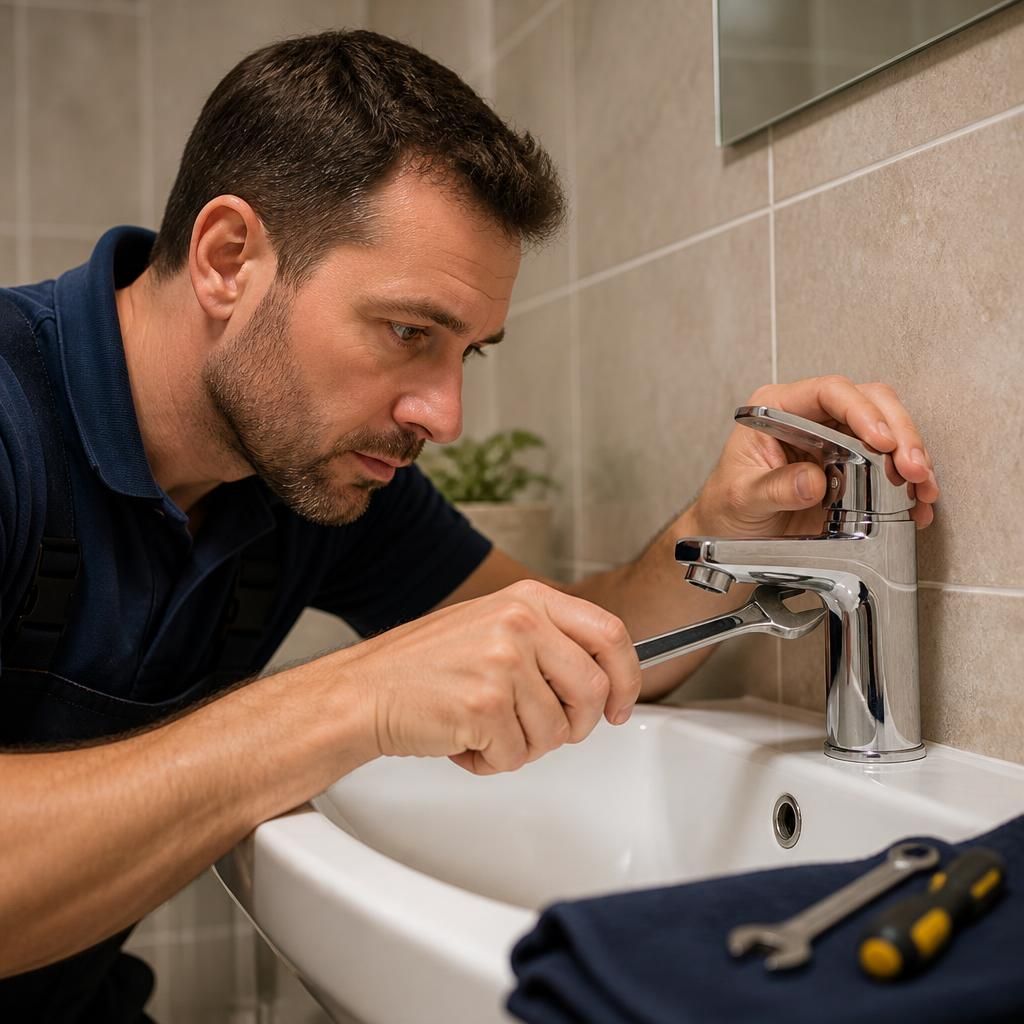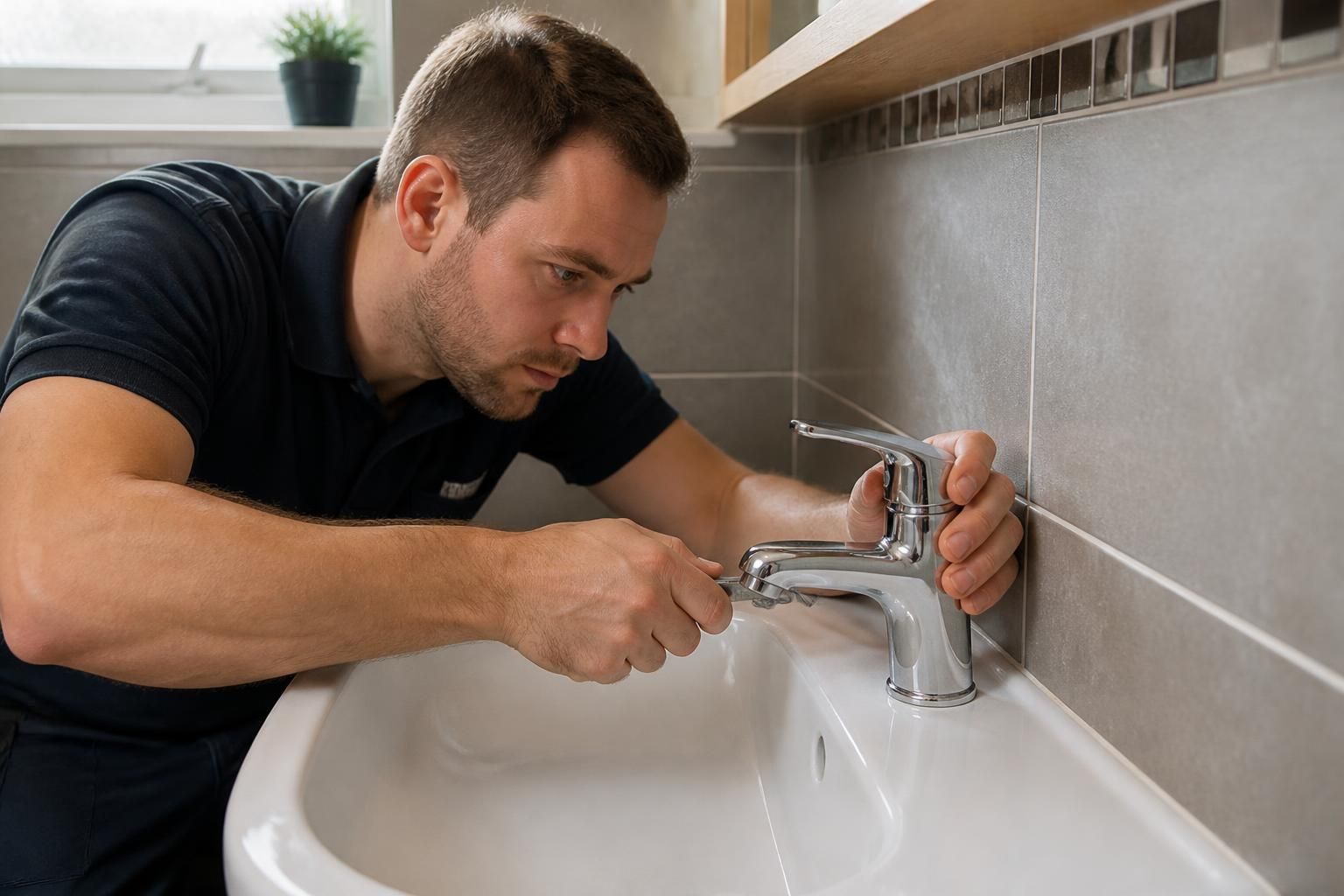
Bathroom tap repairs should not damage sound, correctly installed tiles. The likelihood of damage depends mainly on how the tap is fixed, the condition of the surrounding tiles and whether the repair requires access behind the finished surface. Most faults can be dealt with through the tap, its retaining fittings, the flexible connectors or the nearby isolation valves.
Tiles are more vulnerable when they are already cracked, loose, poorly bonded or affected by moisture. A repair can also carry more risk where a fixing has seized, the tap has been heavily over-tightened, or the fitting is mounted through a tiled wall rather than on the basin. In these situations, force applied to the tap or fixing may transfer pressure to the tile or grout.
Before starting, a plumber should identify the type of tap and establish how it is secured. This normally involves checking the visible fittings, isolating the water supply, protecting the basin and surrounding surfaces, and removing the tap components in a controlled way. Suitable tools help prevent unnecessary twisting, slipping or leverage against the tiles. Where access is restricted, the basin may need to be loosened or moved, but this is different from removing the tiled surface.
Tile damage is most likely if the work involves drilling new holes, lifting tiles, cutting through grout or using excessive force to release a fitting. These steps should not be assumed to be part of an ordinary tap repair. They are generally considered only when there is a concealed leak, damaged pipework, an unsuitable previous installation or a wall-mounted fitting that cannot be reached through its existing access point.
Sealant and grout can sometimes stick to an old tap or basin edge. Removing them carefully is important because pulling away hardened material too quickly can chip an edge or lift a weak tile. An experienced plumber will assess whether the seal needs cutting, whether the fitting can be released without disturbing the surrounding finish, and whether an existing crack should be recorded before work begins.
If a tile does become loose or cracked during access, the appropriate response depends on the cause and extent of the damage. A loose tile may need to be removed and refixed after the plumbing fault has been dealt with. A cracked tile may require replacement, although matching an older tile can be difficult. Any damaged seal around the tap or basin should also be renewed where necessary, as gaps can allow water to reach the substrate and create a more serious problem later.
To reduce the risk before a repair, tell the plumber about previous leaks, loose tiles, unusual tap movement or areas that have already been resealed. Do not continue forcing a stiff handle or tap body, as this can worsen the fitting fault and place additional strain on the basin, connections or tiled wall. Photographs of the area and any spare tiles may also help if the installation needs more extensive work.
Ideal Plumbing Services approaches bathroom tap repairs by examining the fitting and its access points before deciding what needs to be removed. This allows the repair to be planned around the existing bathroom finish, with unnecessary disturbance avoided and any pre-existing tile or grout problems taken into account.