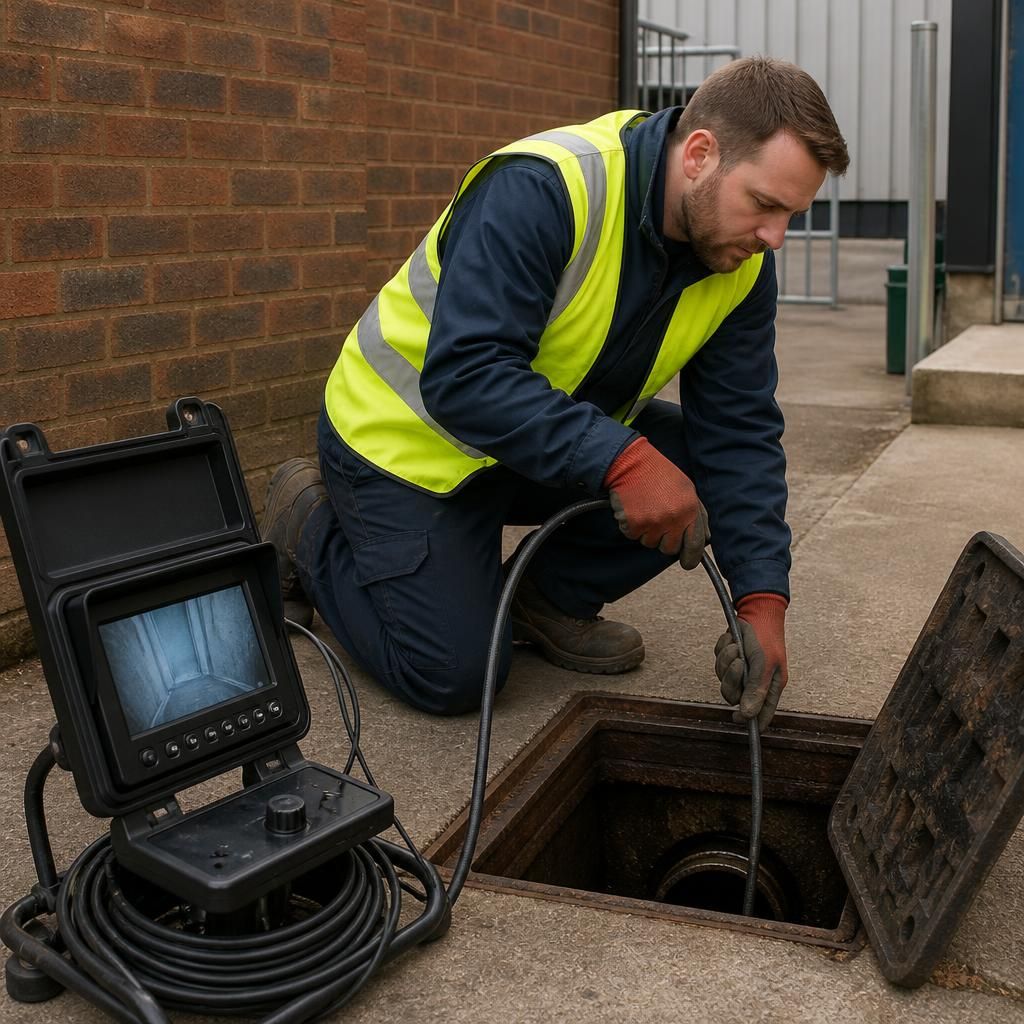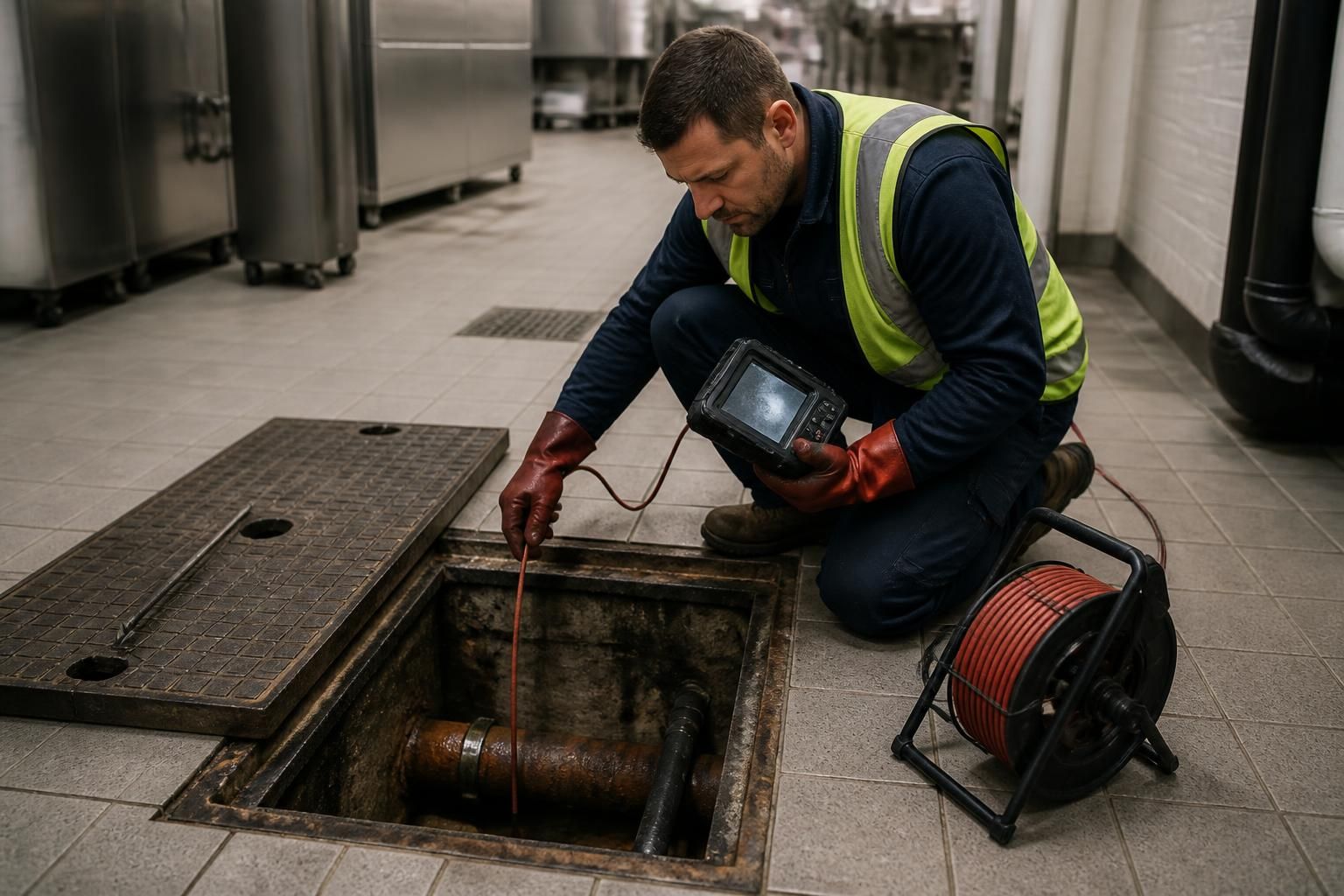
The least disruptive approach to commercial drain maintenance is to plan the work around the building’s layout, drainage risk and operating requirements before any cleaning or inspection begins. This allows the contractor to identify suitable access points, define the sections requiring attention and control any temporary restrictions rather than taking unnecessary areas out of use.
A pre-maintenance assessment should establish how the drainage system serves the property. This may include reviewing drainage plans, locating inspection chambers, identifying shared or isolated branches and noting areas where a blockage could affect kitchens, toilets, washrooms, staff facilities or tenant spaces. Previous blockages, slow drainage, unpleasant odours and recurring maintenance issues should also be recorded, as these can indicate where more focused work is required.
Maintenance can then be completed in controlled stages. Instead of restricting access to an entire property, the operative can work on individual drainage runs or access points in sequence. Suitable covers, barriers and warning signs help separate the work area from occupied parts of the building, while clear communication allows staff, tenants or facilities teams to understand which facilities are temporarily affected and when they can be used again.
- Inspection first: a visual inspection or drain camera survey can help confirm the condition of the system before more intrusive cleaning is considered.
- Targeted cleaning: jetting, mechanical cleaning or other appropriate methods can be directed towards deposits, grease, silt, roots or debris rather than applied unnecessarily across unaffected sections.
- Controlled access: work can be organised through existing inspection chambers and suitable service areas to reduce disturbance inside occupied spaces.
- Safe working controls: the area should be kept secure, with attention to hygiene, contaminated water, slip hazards and the safe handling of equipment.
- Condition records: photographs, survey findings and maintenance notes provide a useful reference for future inspections and help identify developing problems.
Some activities may still require temporary isolation of a toilet, sink, kitchen outlet or drainage branch. The important distinction is between a defined, limited restriction and an unexpected loss of drainage caused by a blockage. Planned maintenance gives the property manager an opportunity to notify affected users, arrange alternative facilities where necessary and keep other parts of the building operating normally.
The work specification should also reflect the type of premises. A food preparation area may require closer attention to grease and hygiene, while a multi-occupancy building may need coordinated access to shared drainage routes. For landlords and facilities managers, keeping a dated maintenance record can demonstrate that recurring issues are being monitored and can support decisions about repairs or replacement when a system is deteriorating.
Ideal Plumbing Services can assess commercial drainage requirements and recommend maintenance that matches the property’s use and existing condition. A clear scope of work, agreed access arrangements and documented findings help reduce avoidable disruption while ensuring that maintenance addresses the underlying drainage risk rather than only the visible symptom.