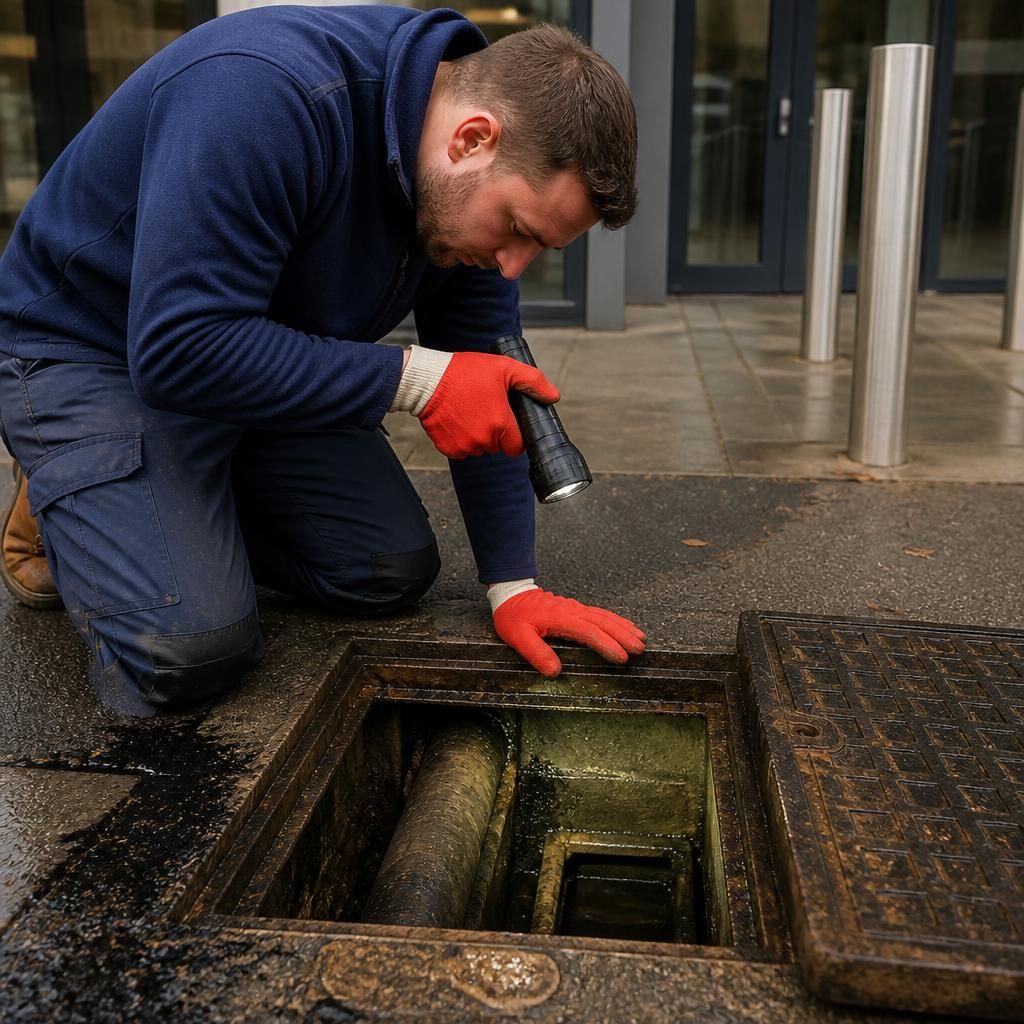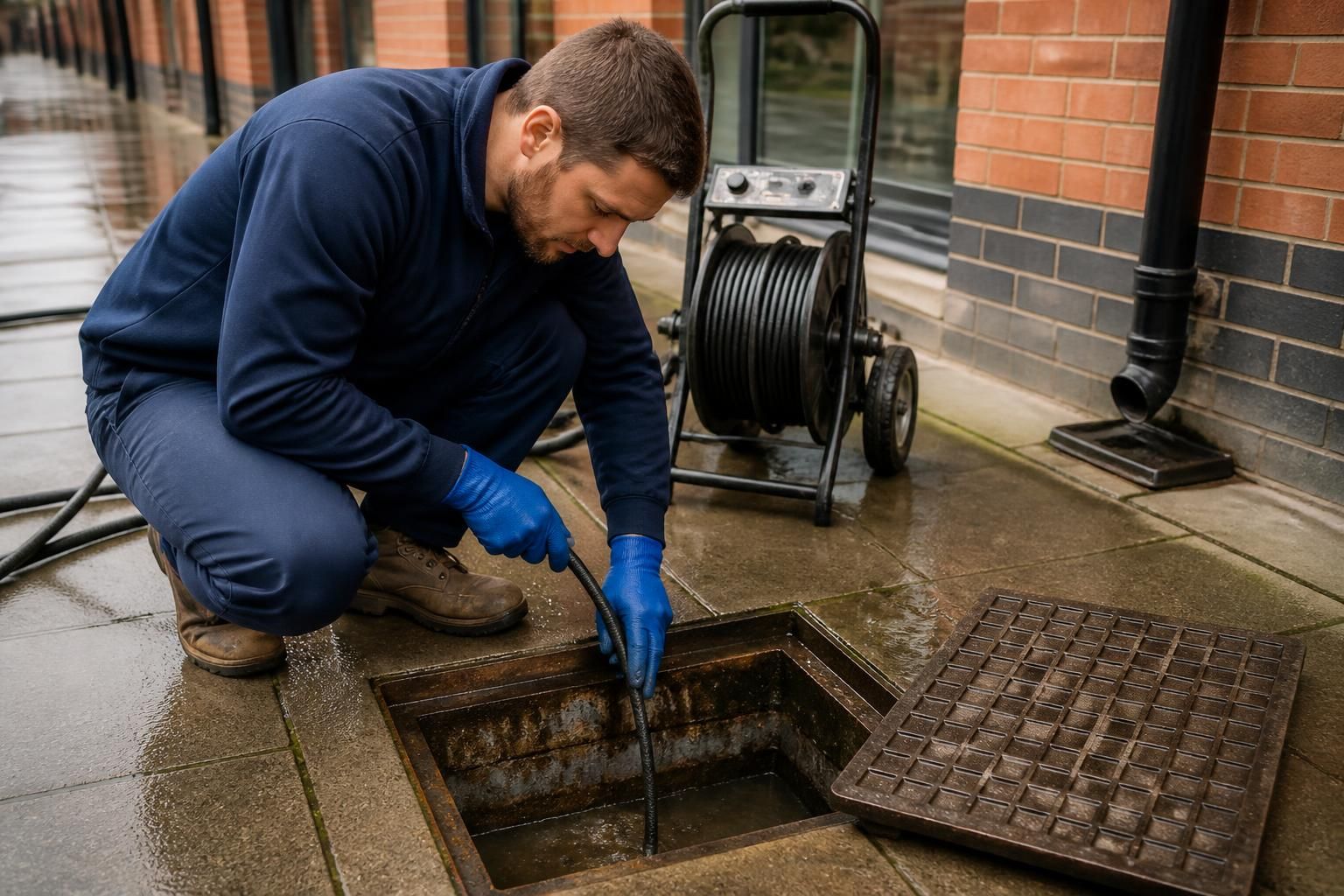
Planned drain maintenance is particularly valuable for commercial properties where a drainage problem could affect several occupants, interrupt trading, damage premises or create hygiene concerns. The most suitable sites are not defined by size alone; the key factors are drainage usage, the number of people relying on the system, the age and layout of the pipework, and the consequences of a blockage.
Multi-occupancy properties such as apartment blocks with shared commercial drainage, managed buildings and mixed-use premises can benefit because one defect may affect multiple units. A programme can help identify problems in shared stacks, communal soil pipes, underground runs and access points before an individual tenant reports symptoms. This is particularly relevant where different occupants use the drainage system in different ways and no single business has complete oversight of the pipework.
Food preparation and catering premises require careful attention because fats, oils, grease and food debris can enter waste pipes. These materials may cool and accumulate inside the drainage system, restricting flow over time. Planned cleaning and inspection can focus on kitchen waste lines, grease-prone sections, gullies and external access chambers. The maintenance approach should reflect the type of food preparation, the volume of waste and the results of previous inspections rather than relying on a fixed routine for every site.
Premises with public or customer-facing facilities also benefit from preventative drainage work. Leisure venues, care settings, community facilities and other sites with heavily used toilets, washrooms or changing areas can experience greater demand on sanitary pipework. A defect in these areas may create hygiene issues and restrict access to essential facilities, so planned checks can be used to monitor recurring smells, slow discharge, damaged covers, standing water and other early warning signs.
Large or complex properties are good candidates where drainage runs beneath floors, service yards, car parks or landscaped areas. Hidden pipework can be difficult to monitor through day-to-day use, and a minor defect may remain unnoticed until wastewater backs up or contaminated water appears at the surface. Inspections can help establish the condition of accessible chambers and identify whether further investigation, cleaning or repair is appropriate.
Older buildings and properties with a history of drainage faults may need a more structured maintenance plan. Ageing joints, displaced pipes, root ingress, recurring blockages and poorly documented alterations can all increase uncertainty about the condition of a system. Previous repair records and inspection findings should be used to decide which sections need closer monitoring. Repeated reactive call-outs may indicate that cleaning alone is not enough and that the underlying defect should be investigated.
Planned maintenance is also useful for businesses managing several premises. A consistent inspection record can show which locations have recurring issues, which drainage assets are most vulnerable and where repair work should be prioritised. This supports budgeting and reduces dependence on individual staff members recognising symptoms after a problem has already developed.
A suitable maintenance plan should consider:
- the type and volume of wastewater produced;
- the number of staff, residents, visitors or customers using the facilities;
- the location and accessibility of inspection chambers and drainage runs;
- previous blockages, flooding, odours or slow-flow problems;
- the potential effect of a failure on hygiene, trading or building access; and
- whether the drainage system includes grease-prone, buried or shared sections.
Not every commercial property needs the same level of intervention. A professional assessment can distinguish between routine cleaning, visual checks, targeted drain surveys and repairs to defective pipework. Ideal Plumbing Services provides commercial drainage support for businesses that need to understand the condition of their system and plan appropriate maintenance rather than relying solely on emergency responses.