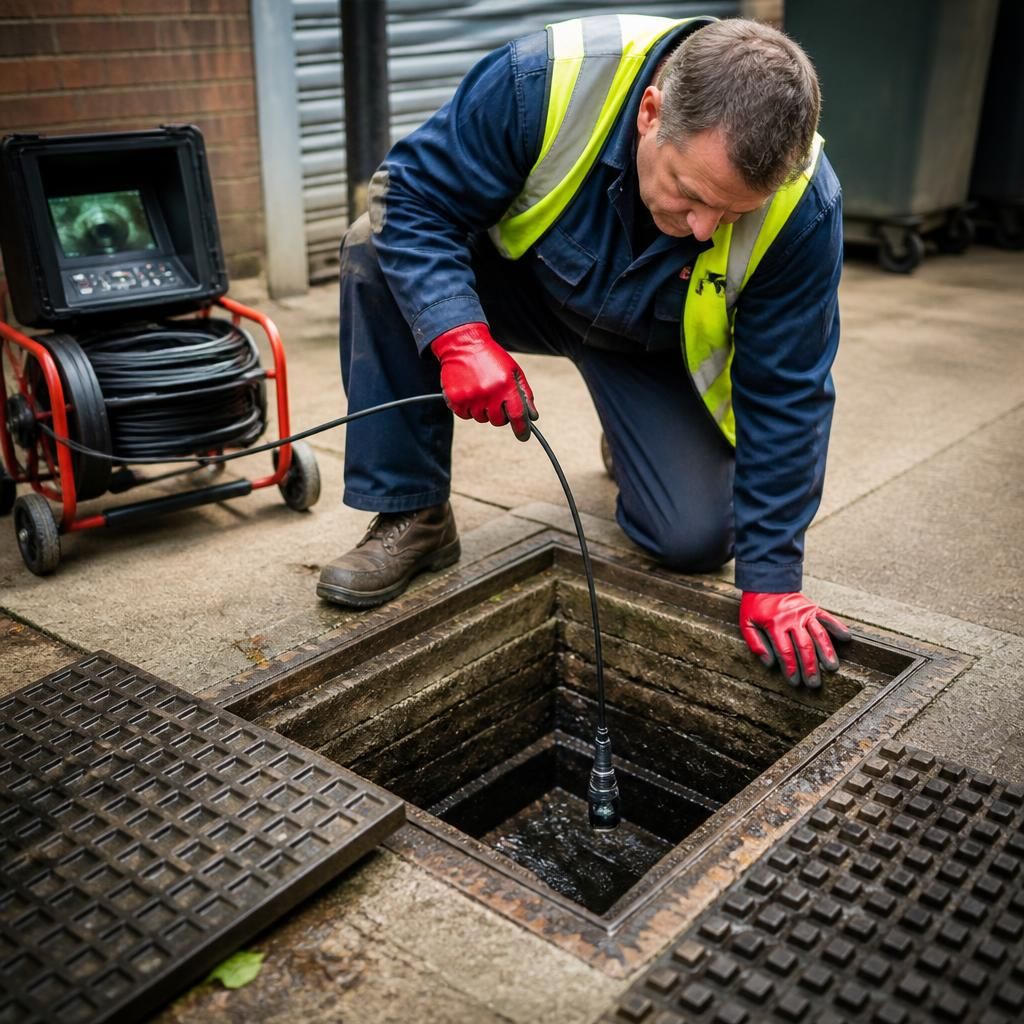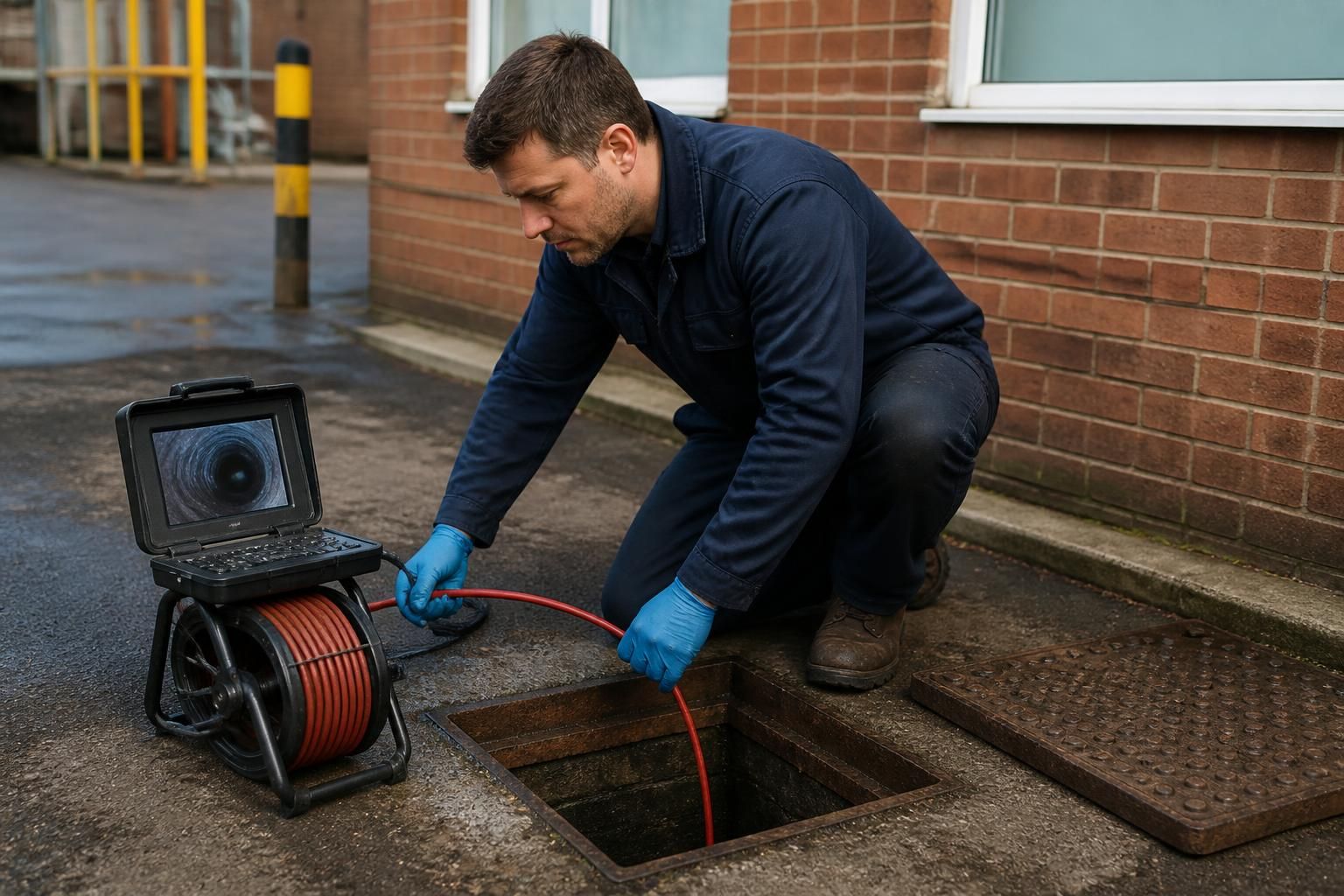
A commercial drain maintenance inspection is a structured assessment of a property's drainage system to establish its condition, identify developing risks and determine whether preventative work is needed. It normally combines a review of available drainage information with visual checks, flow observations and, where access and the suspected fault justify it, more detailed investigation.
The inspection usually begins with a review of the property and its drainage history. The inspector may discuss recurring blockages, slow discharge, odours, flooding, previous repairs and areas where drainage problems affect staff, customers, tenants or service areas. Existing drainage plans, maintenance records and reports can also help identify problem runs and access points that require closer attention.
Accessible drainage points are then examined. These may include inspection chambers, rodding points, gullies, floor drains, sinks, toilets, service yards and other connections serving the premises. The condition of covers, frames, grates and visible pipework is considered, along with signs of standing water, silt, grease, scale, debris, leakage or structural deterioration. The surrounding area is also checked for staining, dampness, subsidence or repeated surface flooding that could indicate a drainage defect below ground.
Flow and discharge behaviour provide useful information about how the system is operating. Water may be run through selected fixtures or observed as it passes through accessible sections. Poor or uneven flow, slow drainage, backing-up or unusual movement can suggest a partial obstruction, inadequate fall, restricted pipework or a problem further along the system. An inspection does not assume that a clear surface drain means the whole drainage run is free from defects.
Where a visual inspection cannot establish the cause of a concern, further checks may be appropriate. A CCTV drain survey can help examine the inside of underground pipework for blockages, displaced joints, cracks, root ingress, deformation or other damage. This is particularly useful when symptoms keep returning, when the drainage layout is unclear or when a repair needs to be located accurately. The method used should reflect the access available and the specific question the inspection needs to answer.
Commercial premises may have different drainage risks from residential properties. Kitchens can introduce fats, oils and grease; washrooms can contribute paper and other debris; warehouses and yards may allow silt or surface contaminants to enter gullies; and high-use facilities can place greater demand on fixtures and pipework. An inspection therefore considers how the building is used, which drainage points carry the greatest load and whether current maintenance arrangements match those conditions.
After the checks, the findings should be recorded clearly. A useful inspection report may set out:
- the areas and drainage assets examined;
- any restrictions on access or parts of the system that could not be assessed;
- observed blockages, deposits, leaks, damage or performance concerns;
- the likely significance of each issue and whether it requires attention;
- recommended cleaning, monitoring, investigation or repair work; and
- any suggested maintenance measures to reduce the chance of recurrence.
An inspection is not the same as a full clean or a repair. It establishes evidence about the condition of the system, whereas cleaning removes deposits or obstructions and repair work addresses a defect. In some cases, the inspection may show that no immediate remedial work is needed; in others, it may indicate that cleaning, a CCTV survey or a targeted repair should be arranged. Separating these stages helps the property owner or facilities manager make decisions based on the actual condition of the drainage system rather than relying solely on symptoms.
Before an inspection is arranged, the responsible person should identify known problem areas, provide available drainage plans and maintenance records, and make sure relevant chambers, plant areas and internal drainage points can be accessed safely. This gives the inspector a clearer picture of the system and helps ensure that the resulting recommendations are practical for the premises.