Specialist equipment is not required for every commercial toilet drainage issue. A straightforward, accessible obstruction may be resolved with standard professional tools, while complex drainage systems, repeated faults and suspected pipe damage require more specialised equipment to diagnose the cause and carry out the work safely.
The need for specialist equipment is usually established during an initial assessment. A plumber will consider the number of affected toilets, whether waste is draining slowly or not at all, the position of the blockage and whether other fixtures are showing similar symptoms. If several toilets or connected appliances are affected, the problem may be further along the shared drainage system rather than within one toilet.
Common equipment used for commercial toilet drainage includes:
- Drain rods and manual clearance tools: suitable for some accessible blockages where the obstruction can be reached without dismantling extensive pipework.
- Toilet augers: designed to work through a toilet trap and can help remove localised obstructions while reducing the risk of damaging the ceramic surface.
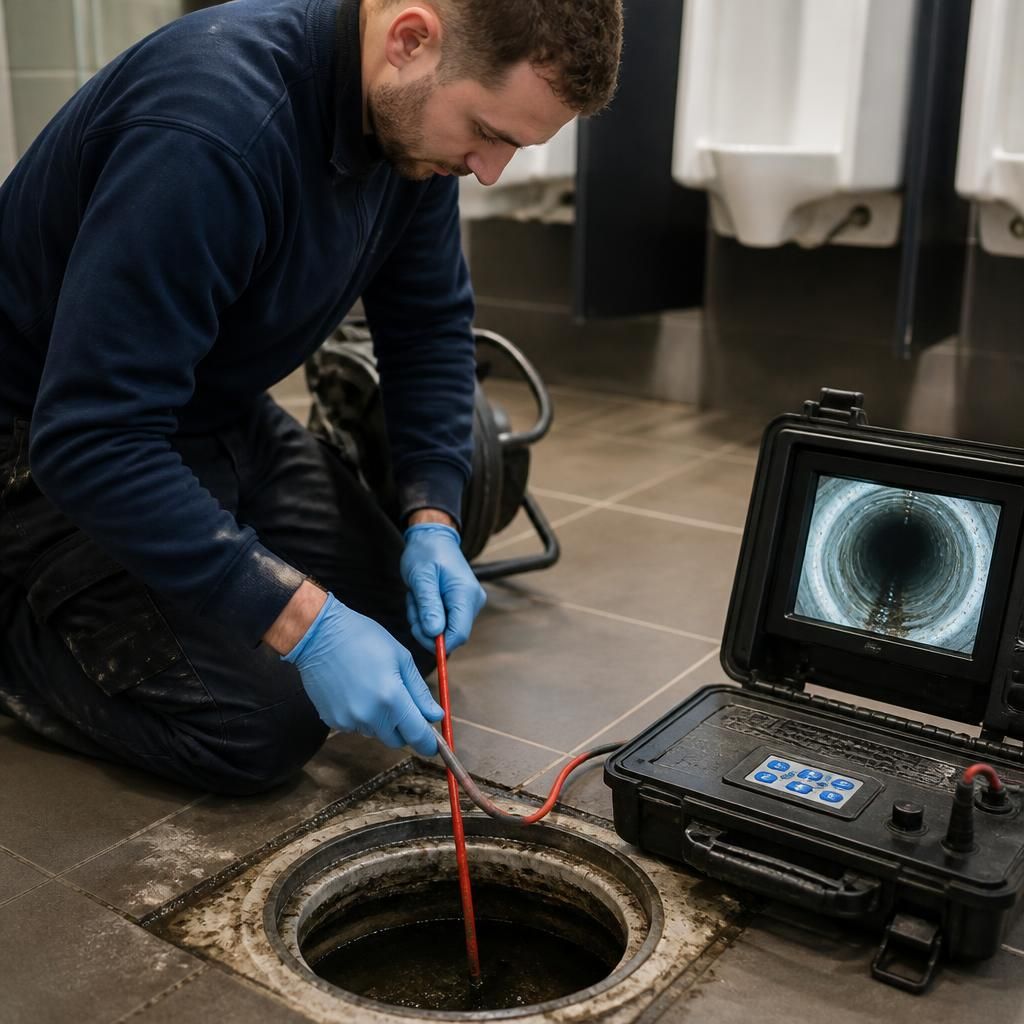
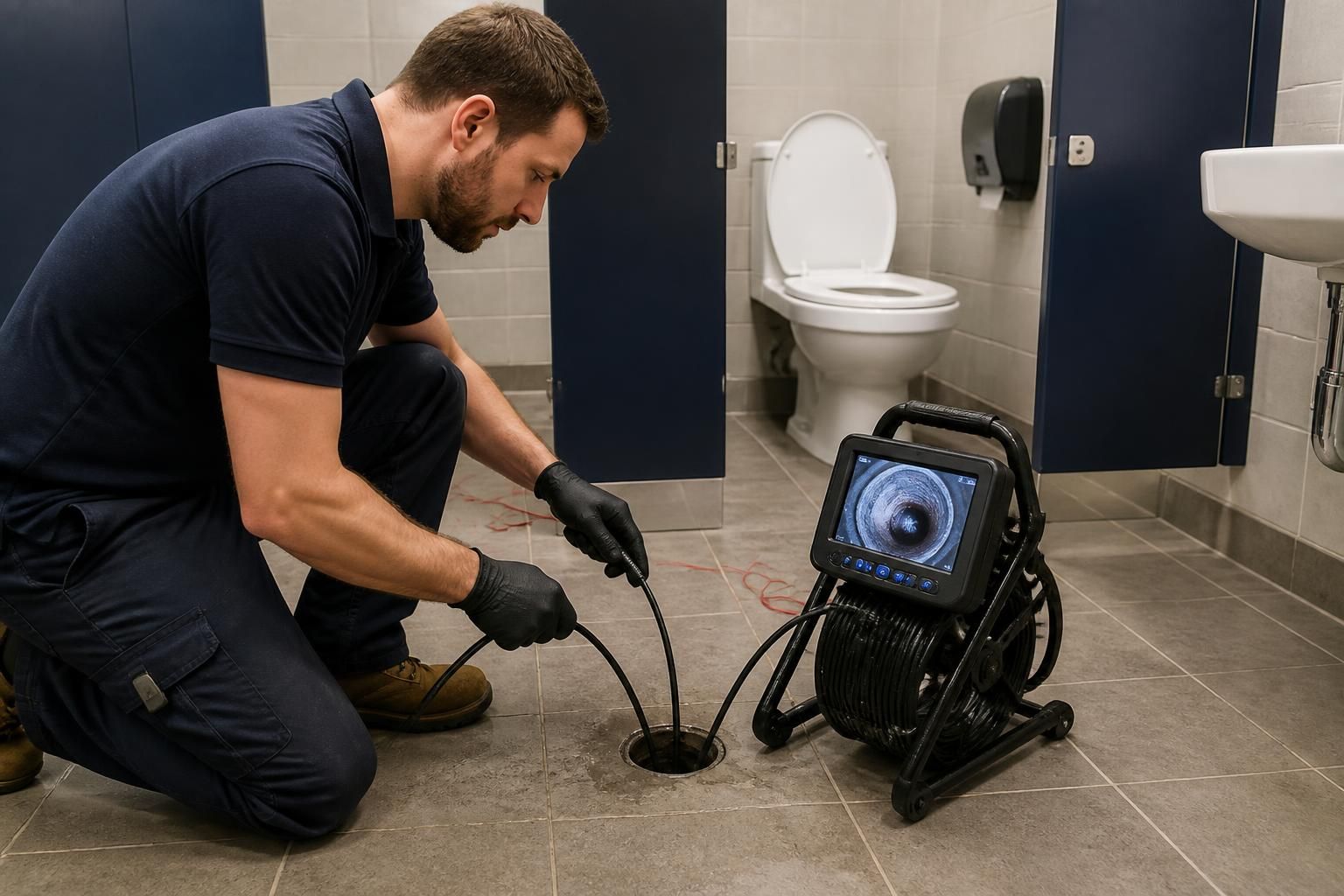
- Inspection equipment: used to examine internal pipe conditions, identify defects and establish whether a recurring problem has a structural cause.
- Pipe locating equipment: useful where the position of underground or concealed drainage needs to be established before excavation or repair.
- Access and safety equipment: commercial work may require suitable protective clothing, hygiene controls, lighting and safe access arrangements, particularly in service areas or restricted spaces.
Equipment should be selected for the drainage material and the type of obstruction. For example, an aggressive method may be unsuitable for older, fragile or poorly supported pipework. Using excessive force can worsen a joint failure, damage a pipe or push an obstruction further into the system. Professional assessment helps match the method to the condition of the installation rather than treating every blockage in the same way.
Specialist investigation is particularly useful when a toilet repeatedly blocks after being cleared, when foul odours or unusual noises persist, or when water levels change in more than one fixture. These symptoms can indicate a root intrusion, displaced joint, scale build-up, poor falls or another drainage defect. Clearing the immediate obstruction without identifying the underlying issue may only provide a temporary remedy.
Commercial drainage also has additional practical considerations. Toilets may connect to shared stacks, soil pipes or underground runs serving multiple facilities, so an apparently minor fault can affect a wider section of the building. Access covers may be concealed, restricted by fixtures or located in areas that require careful planning. A professional can identify the correct access point and avoid unnecessary removal of flooring, sanitaryware or other fittings.
Businesses should not use unapproved chemical drain cleaners as a substitute for proper equipment. These products may fail to remove the obstruction, create hazardous residues and complicate subsequent work. They can also be unsuitable for particular pipe materials or drainage treatment systems. Keep toilets out of use if wastewater is backing up, prevent further flushing and arrange an assessment before the problem spreads.
Ideal Plumbing Services can assess commercial toilet drainage problems and determine whether standard tools or specialist equipment are appropriate. The work should include identifying the cause, explaining the proposed method and checking that the drainage is functioning properly after clearance or repair. For landlords, facilities managers and commercial occupiers in Birmingham and the wider West Midlands, a professional assessment is the safest way to avoid unnecessary equipment use while ensuring a complex drainage fault is not overlooked.