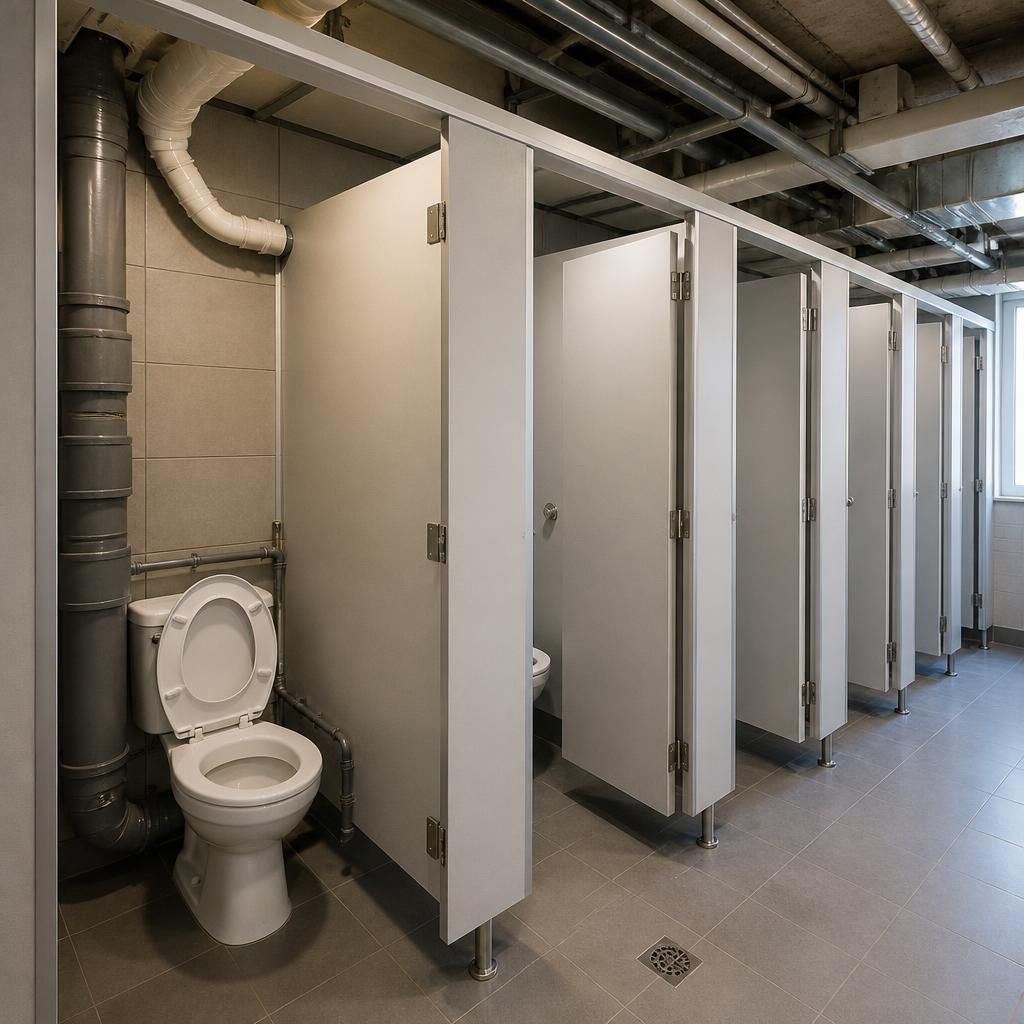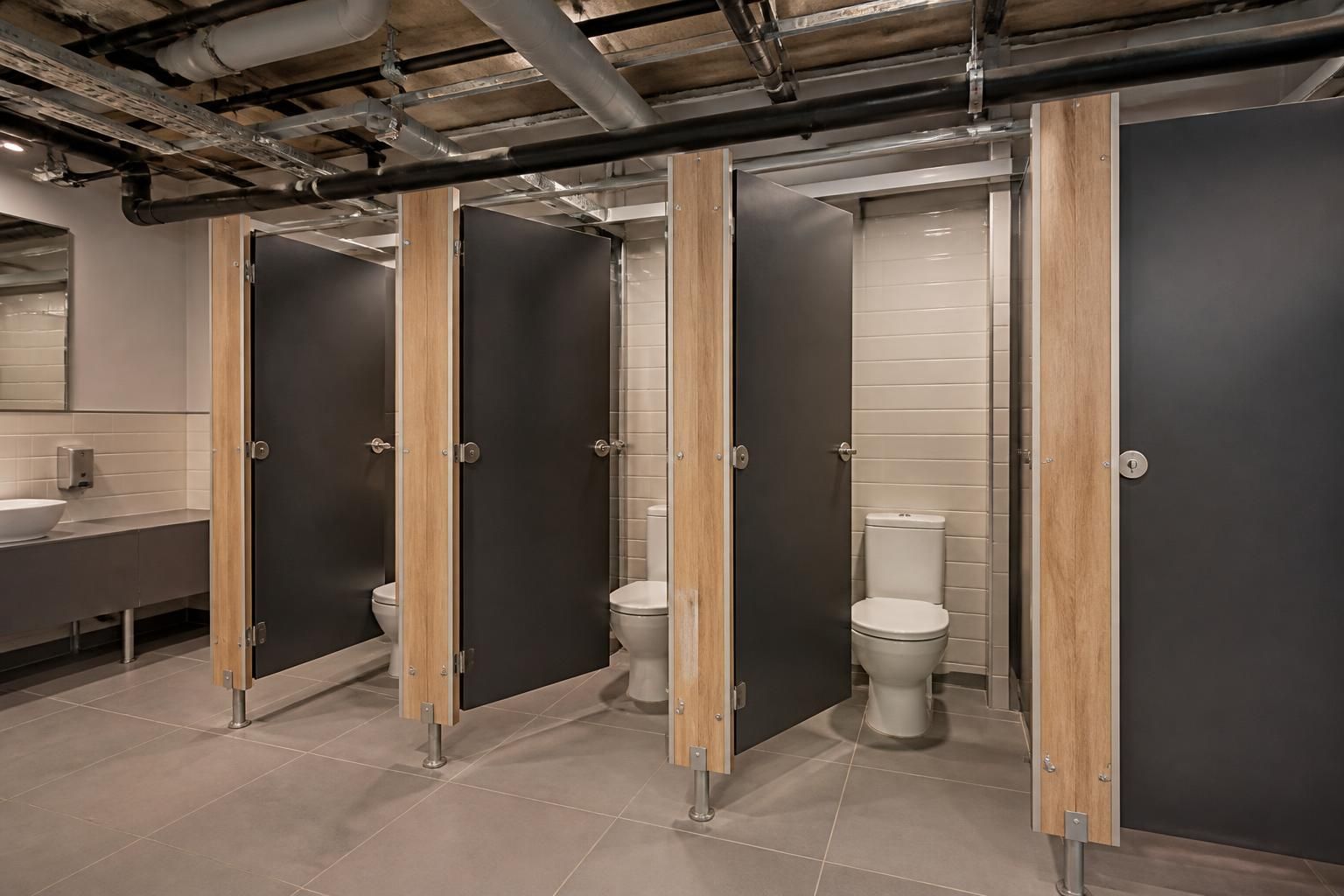
Specialist toilet drainage is needed by commercial properties where toilet use is frequent, facilities are shared by many occupants, or a drainage fault could affect hygiene, access and normal operations. The property type is only one factor; the layout, age, usage pattern and consequences of a blockage are equally important.
Some premises require more than a standard domestic approach because their toilets connect to longer or more complex drainage runs. This can include buildings with toilets on several floors, below-ground facilities, multiple branches feeding a common stack, or pipework that is difficult to access. In these settings, a recurring blockage may be caused by a deeper restriction, poor falls, root ingress, damaged pipework or a fault in the wider drainage system rather than by an isolated obstruction in one toilet.
Specialist drainage support is also appropriate for commercial premises with changing demand. A building may cope during quiet periods but develop problems when large numbers of people use the facilities within a short time. Properties with shift changes, scheduled events, visitor surges or shared facilities between different occupiers should consider whether their drainage capacity and maintenance arrangements match actual usage.
Industrial and operational sites can have particular requirements. Toilets may be located a long distance from the main building, connected to older underground drainage, or used alongside changing rooms and welfare facilities. Dirt, unsuitable materials, wipes and other non-flushable items can increase the likelihood of restrictions. A drainage assessment can help separate user-related blockages from defects in the pipework itself.
Specialist attention is particularly important where a failure would create a hygiene risk or restrict access for people who rely on the facilities. Premises serving children, older people, patients, employees working long shifts or members of the public may need a more structured approach to inspection, cleaning and repairs. Accessible toilets and facilities with specialist fittings should also be cleared and repaired carefully to avoid damage and unnecessary loss of use.
Commercial landlords and managing agents may need specialist drainage where several occupiers share the same soil stack or underground connection. In these buildings, a fault affecting one toilet can originate in a communal section of pipework. Identifying the responsible section before arranging repairs can prevent repeated call-outs and helps determine whether the issue is confined to one unit or affects the wider building.
Warning signs that a property may need this level of service include:
- Repeated blockages despite plunging or basic clearance.
- Several toilets, basins or urinals draining slowly at the same time.
- Gurgling sounds, foul odours or water rising in nearby fixtures.
- Backflow or wastewater appearing in low-level facilities.
- Problems that return after periods of heavy use.
- Toilets positioned below ground level or far from the main drainage connection.
- Unclear or outdated drainage plans, particularly after extensions or alterations.
A specialist assessment normally starts by establishing which fixtures are affected, when the problem occurs and whether other parts of the drainage system show similar symptoms. Depending on the findings, the drainage route may need to be traced, inspected internally or tested for restrictions and damage. This approach is more useful than repeatedly treating the visible symptom without checking the connected pipework.
Not every commercial toilet requires specialist intervention. A single, isolated blockage in a straightforward, well-maintained system may be suitable for a routine clearance. Specialist drainage becomes more justified when faults recur, several fixtures are involved, access is difficult, the system is shared or the consequences of failure are significant. A qualified assessment can establish the appropriate level of work without assuming that every problem requires extensive repairs.