Commercial toilet drainage does not always disrupt the rest of a premises. The extent of disruption depends on whether the fault is confined to one toilet, affects a shared drainage route, creates a hygiene risk or requires work in areas used by staff, customers or residents. A localised blockage may only require temporary restriction of one facility, whereas a serious drain fault can affect several toilets and associated parts of the building.
Issues that are more likely to affect the wider premises include:
- Multiple affected toilets: If several facilities drain slowly, back up or become unusable, the problem may be further along the drainage system rather than inside one pan or trap.
- Sanitary or hygiene risks: Sewage-contaminated water, persistent foul odours and overflowing waste require affected areas to be restricted until they can be made safe and hygienic.
- Shared facilities: Toilets serving different floors, units or departments may rely on the same branch or soil pipe. Restricting use in one area can therefore be necessary while the drainage route is assessed.
- Limited access: Inspection or repair may involve service cupboards, ceiling voids, risers, plant areas or flooring. The work can be more disruptive where drainage components are concealed.
- Structural defects: Cracked, displaced or collapsed pipes may require more extensive repair than a straightforward blockage clearance.
How disruption is normally controlled
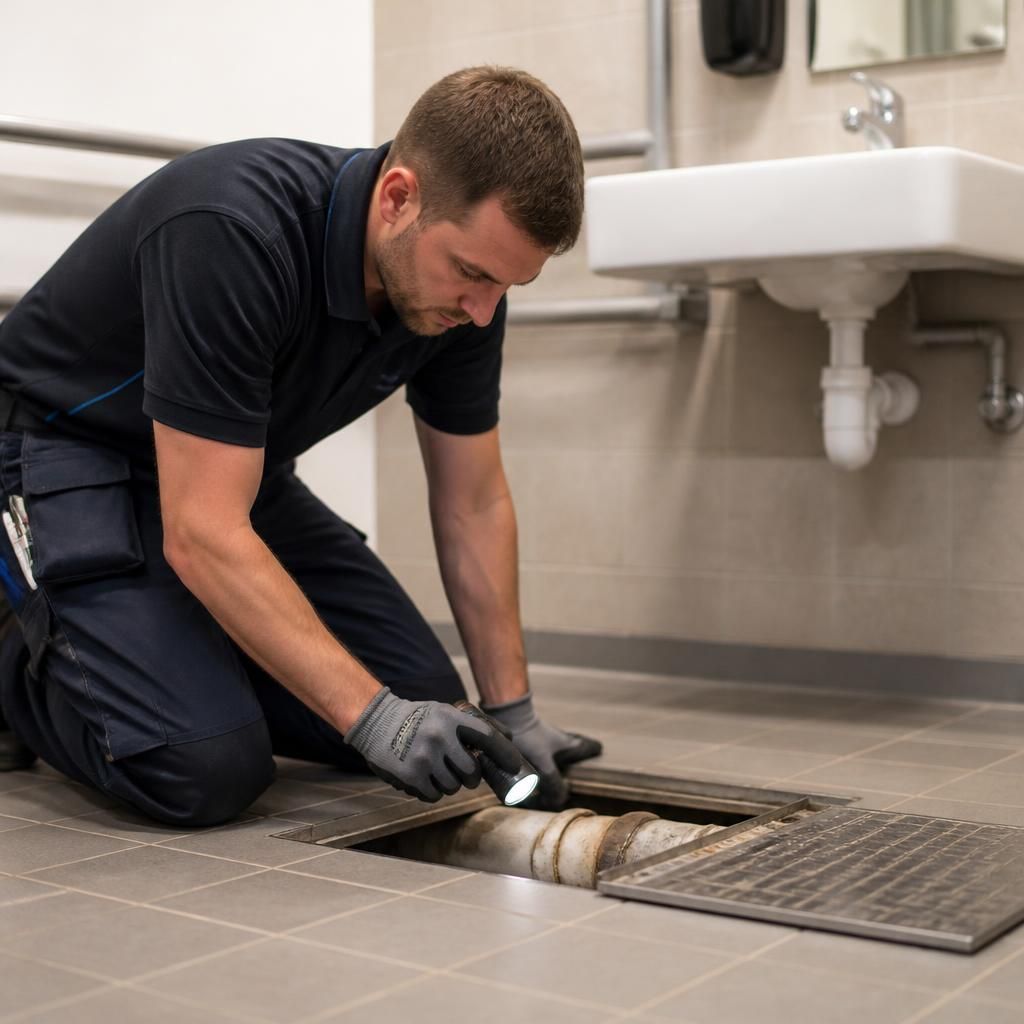
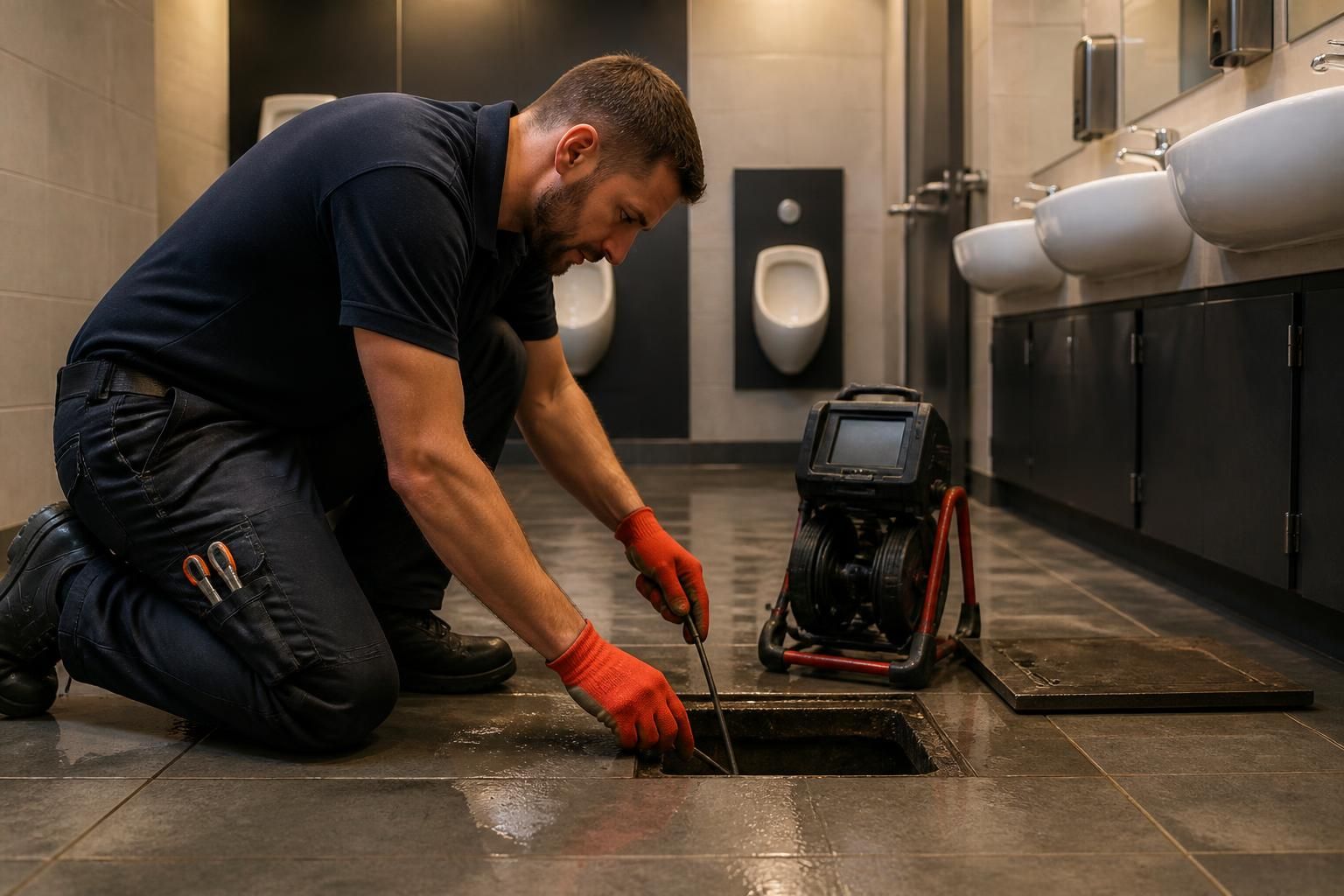
A suitable drainage response begins with identifying the location and nature of the fault before intrusive work is started. This can involve checking which fixtures are affected, observing how water drains elsewhere and inspecting accessible points in the system. Where the route is unclear, drain inspection equipment can help distinguish a local obstruction from a damaged or restricted pipe.
Once the affected section is understood, the work can be limited to the relevant facilities where possible. Nearby toilets do not necessarily need to be taken out of use if they discharge through a separate route, although this should be confirmed rather than assumed. Clear communication is also important: staff, visitors, tenants or contractors may need to know which facilities are unavailable and which areas must not be entered during the work.
For a blockage, targeted mechanical or water-based clearance may restore the drainage route without opening walls or floors. If the cause is scale, accumulated debris, unsuitable items or recurring restrictions, the underlying issue should be considered rather than treating the immediate symptom alone. A repair may be needed where inspection identifies a damaged pipe, defective joint or poor fall.
When wider restrictions may be necessary
Temporary restriction of a larger area is more likely where continued toilet use could cause further discharge, worsen contamination or overload an alternative route. This is particularly relevant in premises with high occupancy, shared welfare facilities, food preparation areas, healthcare settings or vulnerable users. The appropriate restriction should be based on the condition of the drainage system and the risk to people and property, not simply on the fact that one toilet is blocked.
Where access is needed in a customer-facing or operational area, the timing and work sequence can be planned to reduce interference with normal activities. Items stored around inspection points should be moved before the engineer starts, and access to service areas should be kept clear. For landlords and facilities managers, records of previous blockages, drainage layouts and any known defects can help avoid unnecessary investigation.
After clearance or repair
The affected fixtures should be tested to confirm that water flows correctly and that there is no further backing-up, leakage or unusual odour. Areas exposed to wastewater may require appropriate cleaning and disinfection before normal use resumes. If the problem has recurred, a repeat clearance without identifying the cause may only provide a temporary solution, so further inspection can be appropriate.
In practice, commercial toilet drainage is least disruptive when the affected facilities are identified early, use is controlled sensibly and the work is matched to the actual fault. A Birmingham commercial plumbing specialist such as Ideal Plumbing Services can assess the drainage problem, explain the likely effect on the premises and carry out the necessary clearance or repair with a focus on limiting unnecessary interruption.