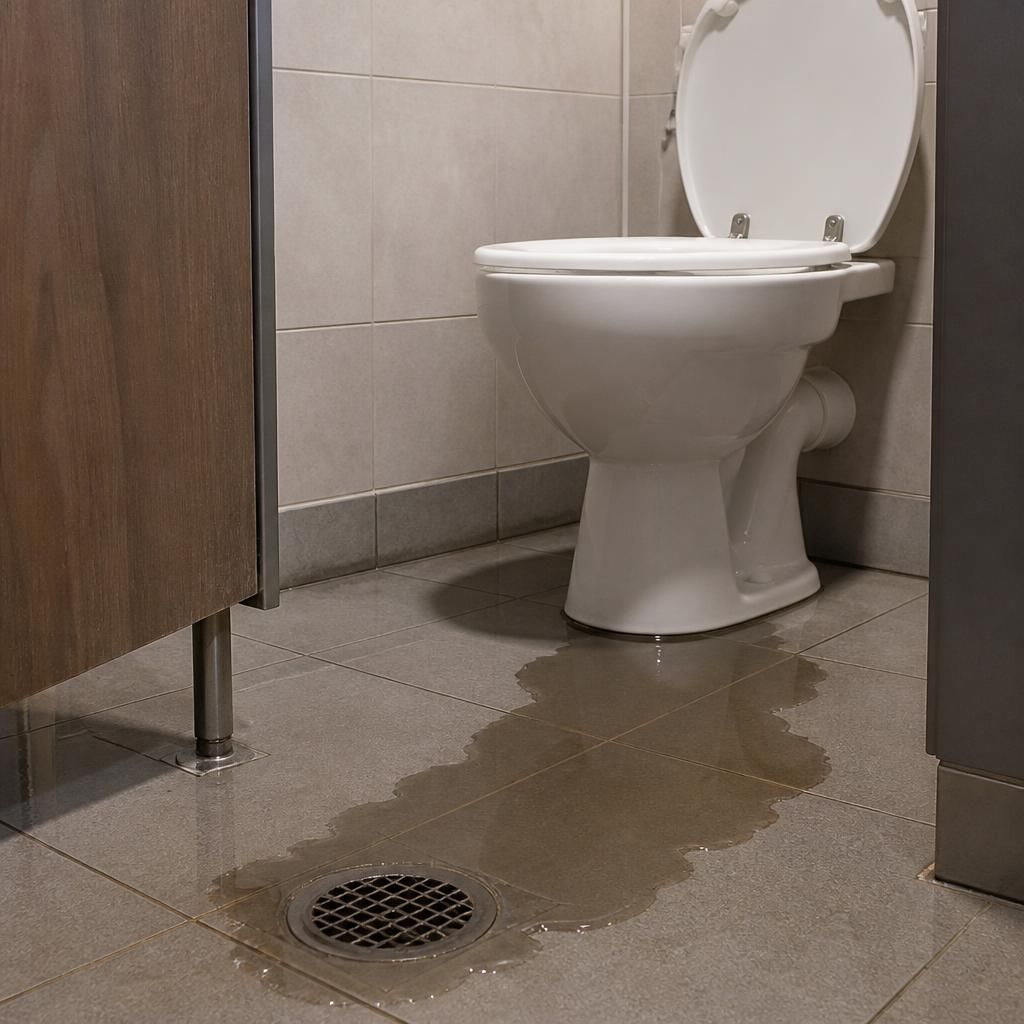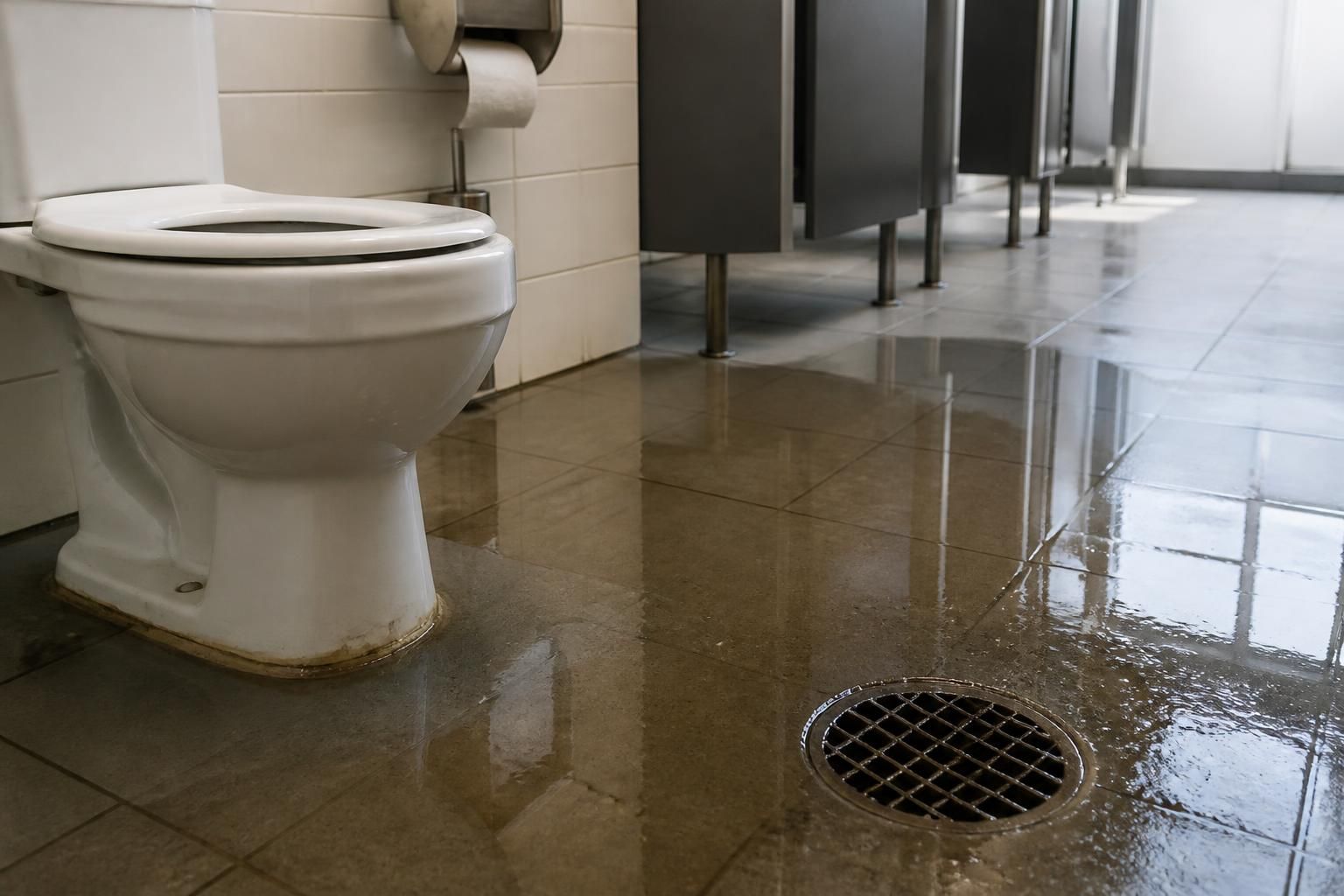
A commercial toilet drainage problem is usually indicated by a change in how one or more toilets discharge wastewater, or by evidence that waste is escaping from the drainage system. The most useful clues are patterns rather than a single isolated incident: problems affecting several cubicles, returning after basic clearing, or becoming more frequent point towards a restriction in a shared drain rather than a fault with one toilet.
Further warning signs to look for include:
- Repeated need to use a plunger or chemical unblocker: if staff or cleaning teams have to clear the same toilet regularly, the obstruction may still be present further along the pipe. Temporary improvement does not confirm that the underlying cause has been removed.
- Several toilets showing faults at the same time: simultaneous problems in different cubicles can indicate an issue in a branch drain, soil pipe or shared underground connection. This is more significant than a blockage confined to one pan.
- Leaks around the toilet base: dampness, staining, movement of the pan or moisture appearing after flushing may indicate a failed pan connector, damaged seal or a connection that is not carrying waste correctly. Leaking wastewater can damage flooring and create hygiene concerns.
- Visible residue or wastewater marks: deposits around inspection points, access covers or floor-level fittings may show that a drain has overflowed previously, even if it is dry when inspected.
- Unusual flush behaviour: a toilet that needs more than one flush, clears inconsistently or leaves waste behind may have a restricted outlet. However, a weak flush caused by a faulty cistern or supply valve is a plumbing fault rather than proof of a drainage blockage.
- Problems following building or drainage work: symptoms that begin after refurbishment, groundworks or alterations to sanitary facilities can result from displaced pipework, an incorrectly installed connection or debris entering the system.
- Issues that worsen during periods of heavy use: a toilet may appear functional when demand is low but fail when multiple facilities discharge into the same drainage route. This can indicate insufficient flow through a partially restricted pipe.
Why the pattern matters
A single poorly flushing toilet may have a local mechanical fault, whereas faults across multiple facilities suggest a shared drainage issue. The location of the affected toilets can help identify the likely section: cubicles close together may share a branch, while problems across separate washrooms may involve a larger soil or underground drain. This distinction affects the inspection method and the extent of repair required.
Businesses should also consider operational evidence. Cleaning records, maintenance reports and staff complaints can show whether the issue is isolated or progressively worsening. A sequence of minor incidents is important because recurring partial restrictions can develop into a complete loss of use, water damage or contamination of surrounding areas.
When professional investigation is appropriate
Arrange an inspection when symptoms recur, more than one toilet is affected, wastewater is escaping, or the cause is not clear after basic checks. A plumber can test individual fixtures, inspect accessible connections and assess whether the fault lies within the toilet, the branch pipe or the wider drainage system. Drain inspection equipment may be appropriate where the restriction is concealed or where a blockage has returned after clearing.
Until the cause is established, take affected facilities out of use if there is leakage or a risk of overflow, and do not rely on repeated chemical treatments. Record which toilets are affected and when the symptoms occur; this information can help distinguish a fixture fault from a shared commercial drainage problem. Ideal Plumbing Services provides commercial plumbing and drainage support for premises in Birmingham and across the West Midlands.