Commercial toilet drainage pricing is usually determined by the work required to identify, clear and, where necessary, repair the affected drainage. A straightforward blockage in an accessible internal pipe will generally involve less work than a restriction in shared underground pipework, a damaged drain or a problem that requires excavation and reinstatement.
Type and position of the blockage
The material causing the obstruction affects the method used to remove it. Paper and waste build-up may be cleared using conventional drain-cleaning equipment, while hardened deposits, foreign objects, scale or recurring grease-related contamination can require more involved work. The location also matters. A blockage in a visible toilet branch pipe is easier to reach than one in a concealed void, below a floor or in an external inspection chamber.
Where several toilets are affected, the issue may be further along a shared drainage run rather than within one individual pan or branch pipe. Tracing the route of the blockage and identifying which section serves the affected facilities can add to the assessment and clearance work.
Access to the drainage system
Access can affect both the time needed and the equipment that can be used. Costs may be influenced by:
- the distance between the affected toilet and the nearest suitable access point;
- whether inspection chambers, rodding points or clean-outs are present and accessible;
- restricted plant-room, basement or service-duct access;
- floor coverings, boxing-in or fixtures that obstruct the pipework; and
- the need to protect surrounding areas while drainage work is carried out.
If a suitable access point is blocked, buried or damaged, additional work may be needed before the drainage itself can be properly reached. A clear description of the premises, the affected facilities and any known access restrictions helps the plumber assess the likely scope more accurately.
Equipment and investigation
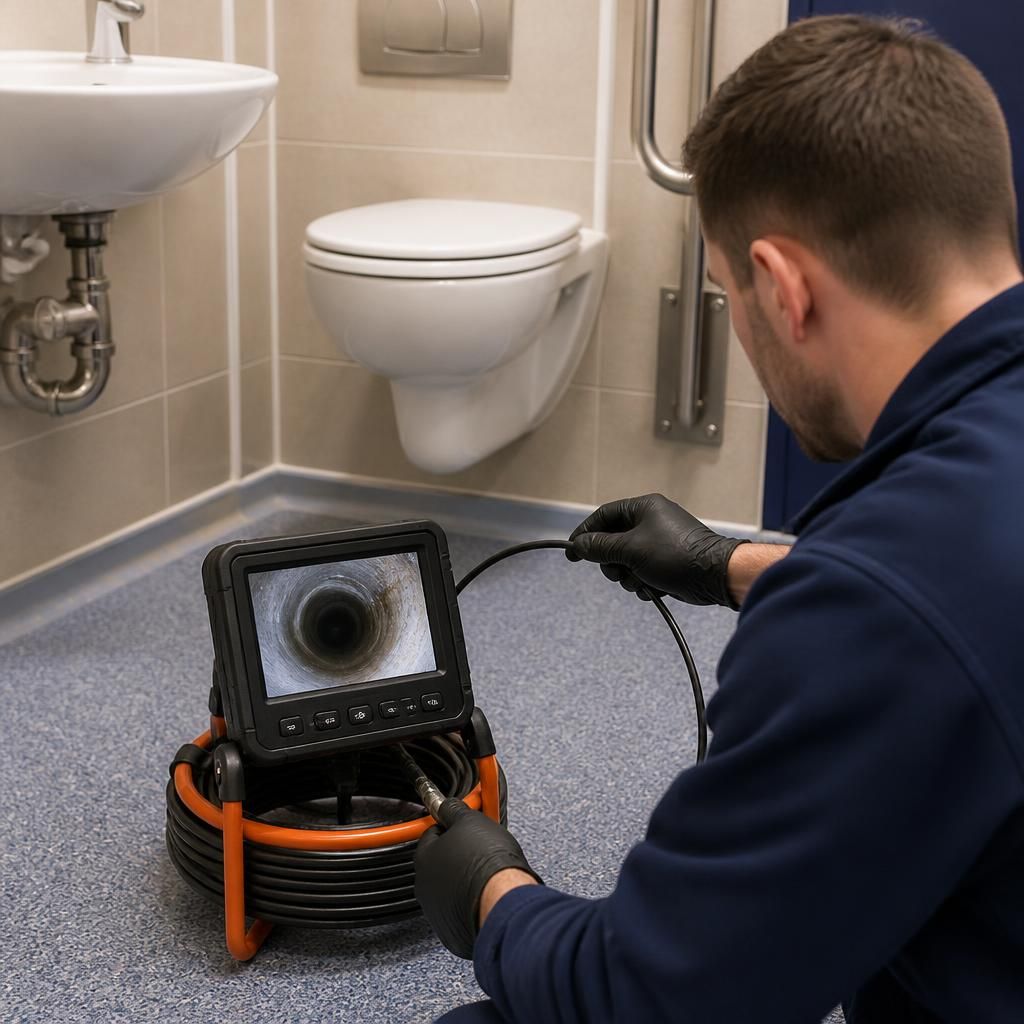
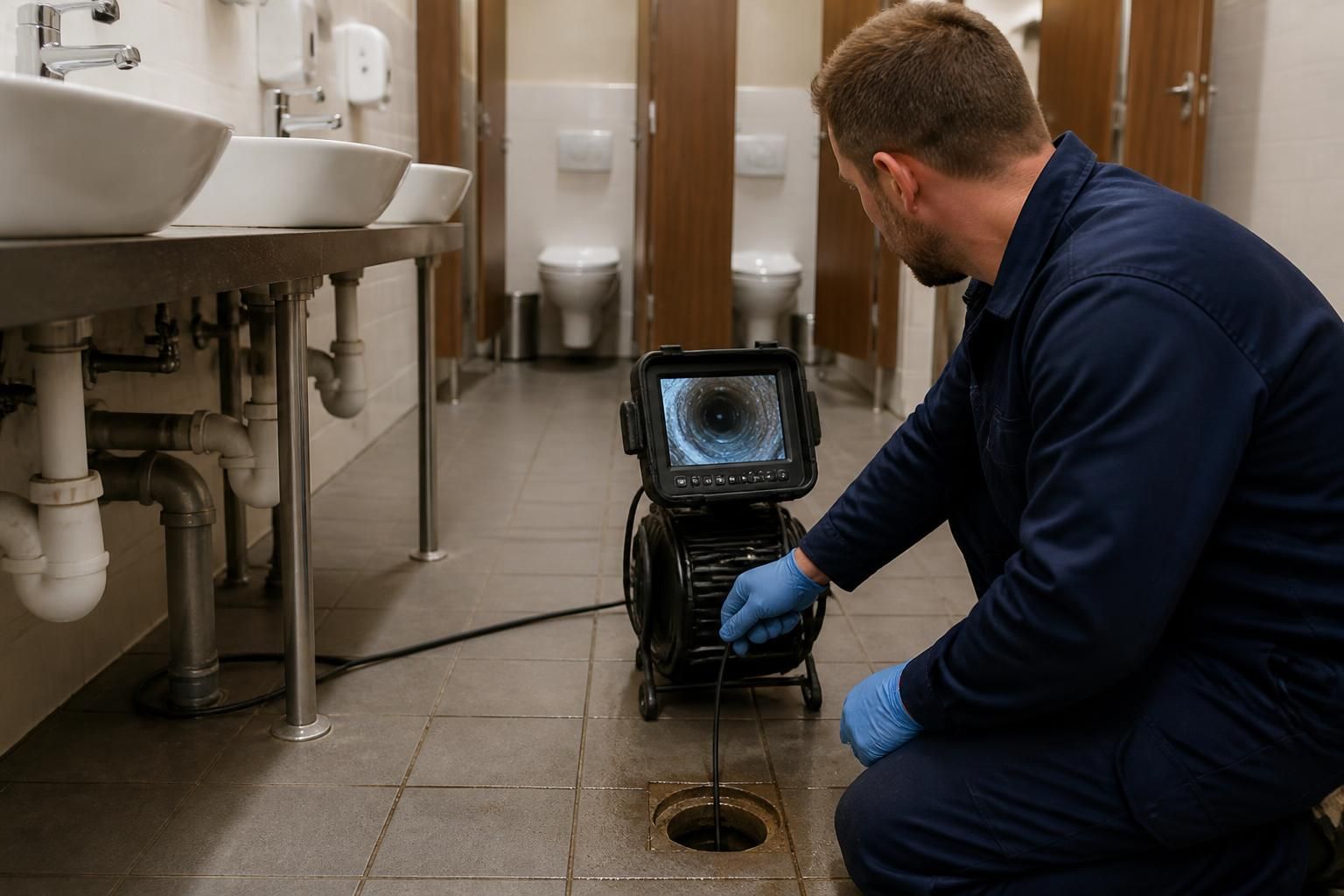
The equipment required depends on the condition and location of the drain. Mechanical drain-cleaning tools may be appropriate for some blockages, whereas high-pressure water jetting can be more suitable for extensive deposits or longer pipe runs. A drainage camera survey may be recommended where the blockage cannot be fully explained, returns after clearance or may be linked to a defect.
Investigation is not always necessary for an isolated, easily resolved obstruction. It becomes more relevant when there are repeated back-ups, unusual odours, slow drainage across multiple toilets, suspected root ingress, displaced joints or evidence that the pipe has collapsed. The cost of a survey should be clarified before it is undertaken and should be considered separately from any repair identified by the survey.
Whether repairs are needed
Clearing a blockage and repairing the drainage system are separate parts of the work. If the pipe is cracked, displaced, badly scaled or incorrectly connected, removing the immediate obstruction may only provide a temporary solution. Repair options can range from localised access and pipe replacement to more extensive excavation, depending on the defect and its position.
Reinstatement can also affect the total. Where floors, paving, walls or other finishes have to be opened to reach a damaged section, the drainage repair may involve additional preparation and making-good work. A drainage professional should explain which elements relate to the clearance, which relate to the repair and which are optional investigations.
Premises requirements and working conditions
Commercial premises can introduce practical requirements that do not arise in a domestic setting. The work may need to be coordinated around staff areas, customer facilities, food preparation zones, hygiene procedures or building management rules. Protecting surfaces, isolating affected facilities and cleaning the work area can all influence the labour involved.
The number of toilets affected and the consequences of taking facilities out of use are also useful information when discussing the job. They do not automatically determine the price, but they help establish the scale of the drainage problem and the access arrangements needed to resolve it.
What to check before agreeing to the work
Ask for a clear explanation of the proposed work and whether the price covers diagnosis, equipment, labour, waste handling and any necessary follow-up. If the final cost cannot be confirmed until the blockage has been inspected, request the basis on which further work will be priced. It is also sensible to establish whether a quotation covers only clearance or includes repairs if a defect is found.
For commercial properties in Birmingham and across the West Midlands, Ideal Plumbing Services can assess toilet drainage problems and explain the work involved before proceeding. A properly defined scope helps separate essential drainage work from additional investigation or remedial repairs and makes the cost easier to understand.