Commercial drains should generally be checked as part of a planned maintenance programme, with the exact frequency determined by the premises’ usage, the materials entering the system, the drainage layout and its history of blockages or defects. A low-risk office may need less frequent professional attention than a restaurant, school, care setting, retail unit or industrial premises with heavy daily use.
Use the following factors to set the maintenance interval:
- Volume of use: Toilets, sinks and floor drains serving large numbers of people accumulate deposits and debris more quickly than those in lightly used premises.
- Type of waste: Fats, oils, grease, food particles, sediment, paper products and chemical residues can all affect drainage performance. Catering and food-related premises usually require closer monitoring.
- Drainage design: Long runs, shared outlets, older pipework, restricted access points and systems with limited falls can make blockages more likely or more difficult to clear.
- Previous problems: Repeated blockages, foul smells, slow drainage or previous repair work indicate that the system may need more frequent inspection than a trouble-free installation.
- Seasonal exposure: External drains, gullies and surface water systems may require additional checks where leaves, silt, heavy rainfall or nearby vegetation create a risk of obstruction.
Routine checks should take place throughout the year. Staff or facilities teams can look for slow-flowing sinks, toilets that do not clear properly, standing water around gullies, unusual smells, overflowing drains, damp patches and recurring pest activity. These checks do not replace professional maintenance, but they can identify a developing fault before it affects more of the building.
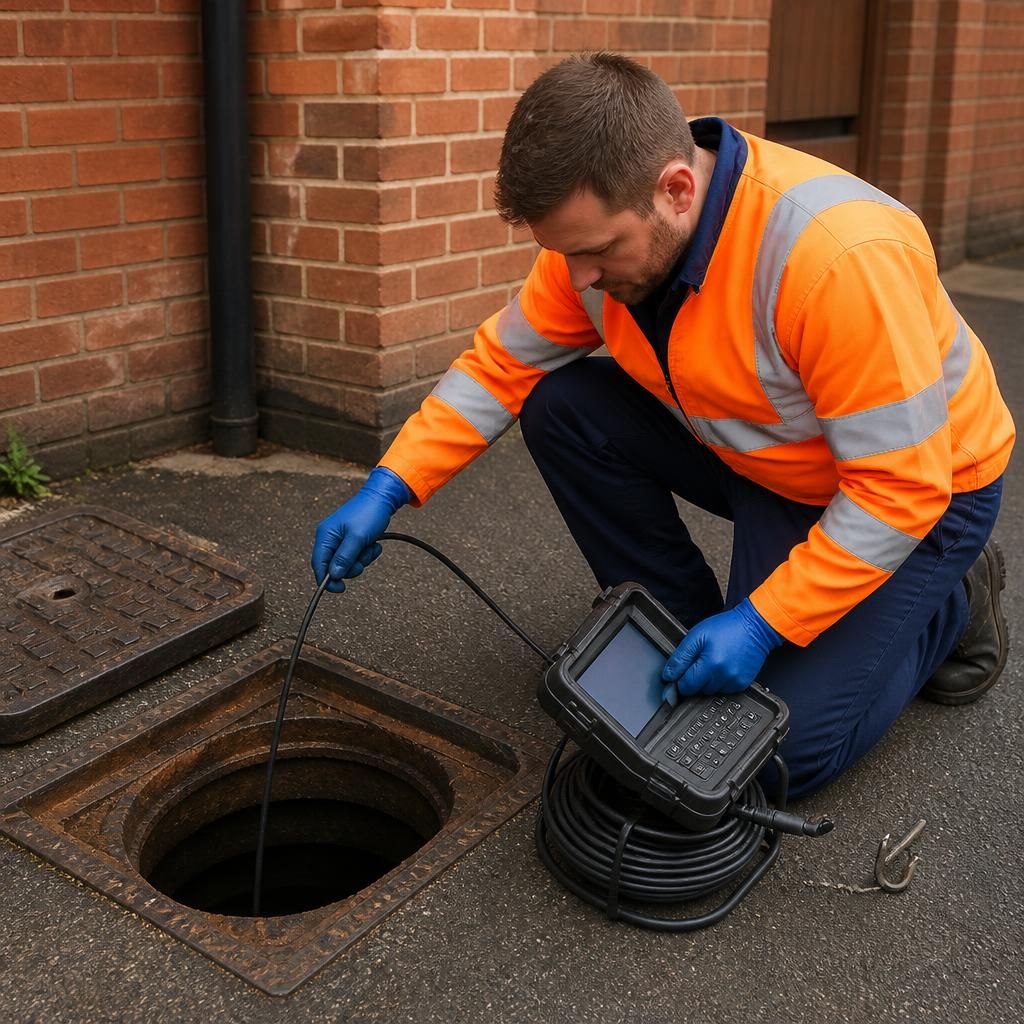
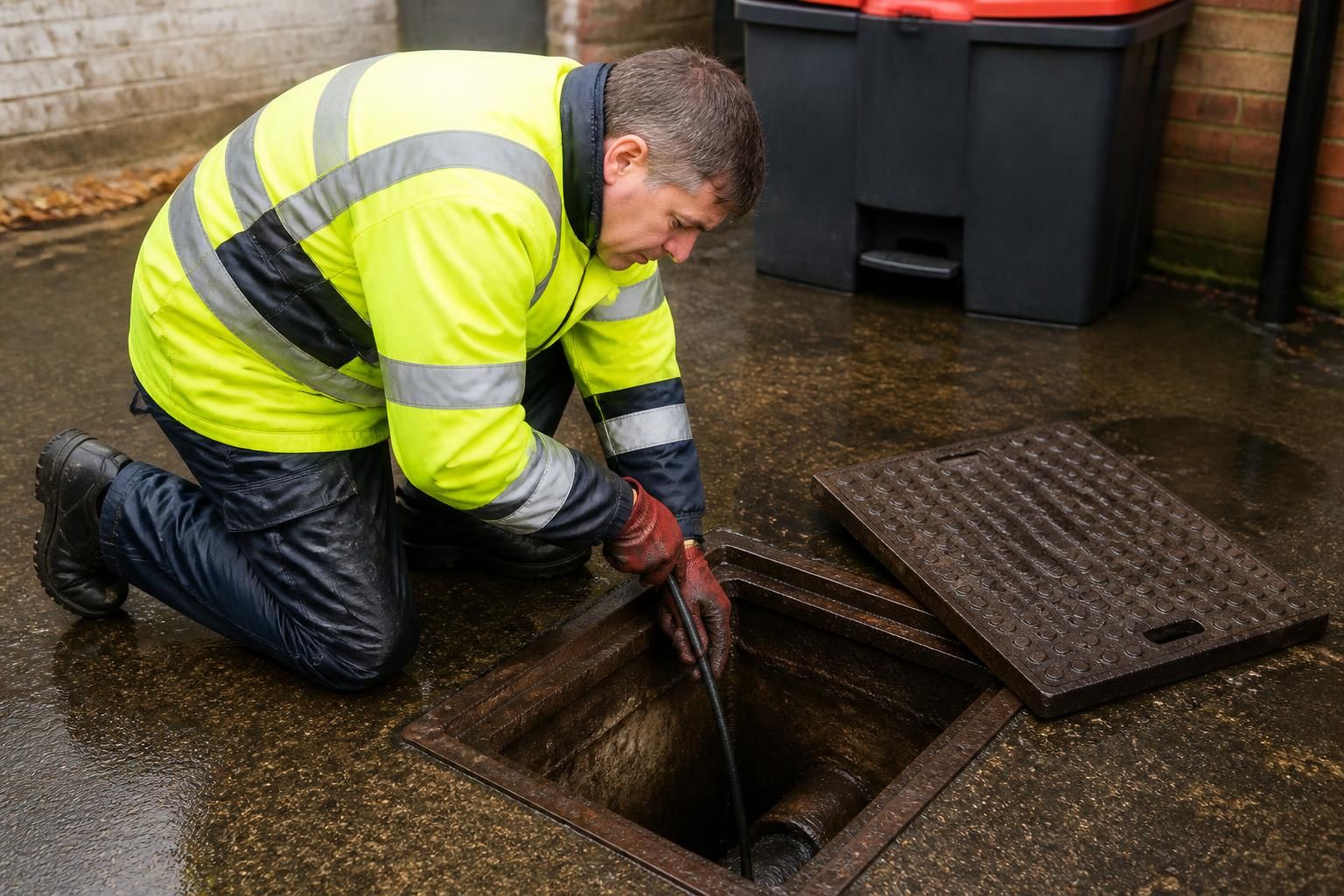
Professional maintenance should include an assessment of accessible drain points, gullies, traps, inspection chambers and relevant pipework. Depending on the system, the work may involve removing accumulated debris, clearing deposits, cleaning drainage channels, checking covers and identifying defects such as cracks, displaced joints, root ingress or inadequate flow. A CCTV drainage survey may be appropriate where the cause of repeated blockage is unclear or where the condition of underground pipework needs to be established.
High-risk premises should use a more structured schedule. Kitchens and food preparation areas may need regular removal of grease and food residues, while buildings with many occupants benefit from closer observation of toilet and washroom drainage. Properties with basements, underground drainage, external yards or a history of flooding should also have vulnerable areas included in the maintenance plan rather than relying only on reactive clearance.
Maintenance should be brought forward when warning signs appear. A single slow drain may indicate a local obstruction, but several affected fixtures, gurgling sounds, repeated odours or water backing up from a floor drain can suggest a restriction further along the system. Continuing to use the affected facilities without investigation can allow a partial blockage to become a larger failure and may increase the risk of contaminated water entering occupied areas.
After each inspection or clearance, keep a written record of the date, areas checked, findings, work completed and any recommended follow-up. These records help identify patterns, demonstrate that drainage risks are being managed and support decisions about whether the current interval is suitable. If the same defect appears repeatedly, increasing the frequency alone may not solve the problem; the underlying issue may require a repair, pipe replacement, improved access or a change in how waste enters the drainage system.
A practical commercial drainage plan therefore combines routine visual checks, scheduled professional inspections and prompt investigation of warning signs. The schedule should be reviewed after a blockage, building alteration, change of occupancy or change in the type of waste entering the drains. This risk-based approach is more effective than waiting for an emergency or applying the same interval to every commercial property.