Commercial drains should be professionally inspected when there are physical changes around the drainage system, defects within inspection chambers, signs of leakage into the ground or evidence that the pipework is no longer coping with the site’s use. These indicators can point to structural damage, displaced joints, root ingress, grease accumulation, a damaged manhole or a problem with the gradient that may not be visible from inside the building.
- Pooling or persistently wet ground: Water collecting around manholes, gullies, external walls or paved areas without an obvious surface-water cause may indicate a leaking or obstructed underground pipe.
- Subsidence and ground movement: Depressions, cracked paving, sinking tarmac or a developing hollow along a drain route can occur when escaping water washes soil away or when a buried pipe has failed.
- Changes inside inspection chambers: High water levels, sediment lines, grease deposits, displaced channel sections, damaged benching or visible cracks are reasons to arrange a closer assessment. Chamber covers that rock, sit below the surrounding surface or are surrounded by damaged frames should also be examined.
- Unusual pest activity: A sudden increase in flies, rats or other pests near gullies and manholes can be associated with damaged drainage infrastructure or accessible openings. It should be investigated alongside other evidence rather than treated as proof of a blocked pipe.
- Water appearing in unexpected places: Moisture beneath a paved service yard, dampness around an external wall or water entering a plant room may indicate a concealed drainage leak, particularly where plumbing fixtures inside the premises appear to be working normally.
- Changes after heavy rainfall: Flooding around a commercial property, contaminated surface water or water rising through low-level gullies suggests that the drainage network may have inadequate capacity, a damaged connection or an obstruction that needs assessment.
- Temporary improvement after clearance: If a drain appears usable after cleaning but the same area soon shows abnormal behaviour, the cause may be structural rather than a loose accumulation of waste. CCTV inspection can identify defects that routine cleaning cannot confirm.
Some operational changes also justify inspection even when there is no obvious visible damage. A business extension, kitchen installation, change of tenant, increase in occupancy or alteration to washroom and catering facilities can change the volume and type of discharge entering the system. Older pipework may require assessment before additional fixtures are connected, especially where the existing layout or pipe condition is unknown.
Drainage records can provide another warning. Missing inspection reports, unexplained repair invoices, repeated emergency clearances or uncertainty about where underground runs lead make a planned survey sensible. The same applies before purchasing or leasing commercial premises, carrying out major building work or accepting responsibility for drainage under a lease. Establishing the condition of the system can help distinguish an existing defect from damage caused by later work.
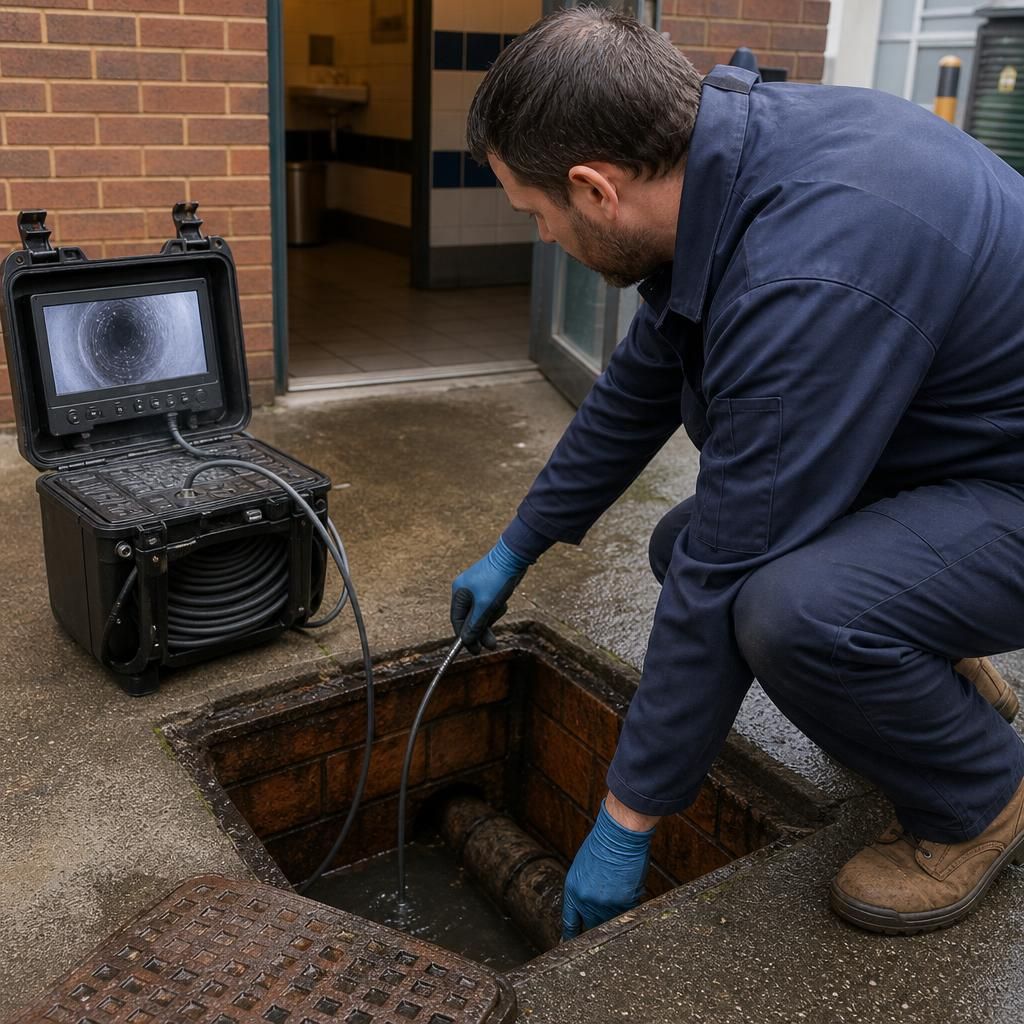
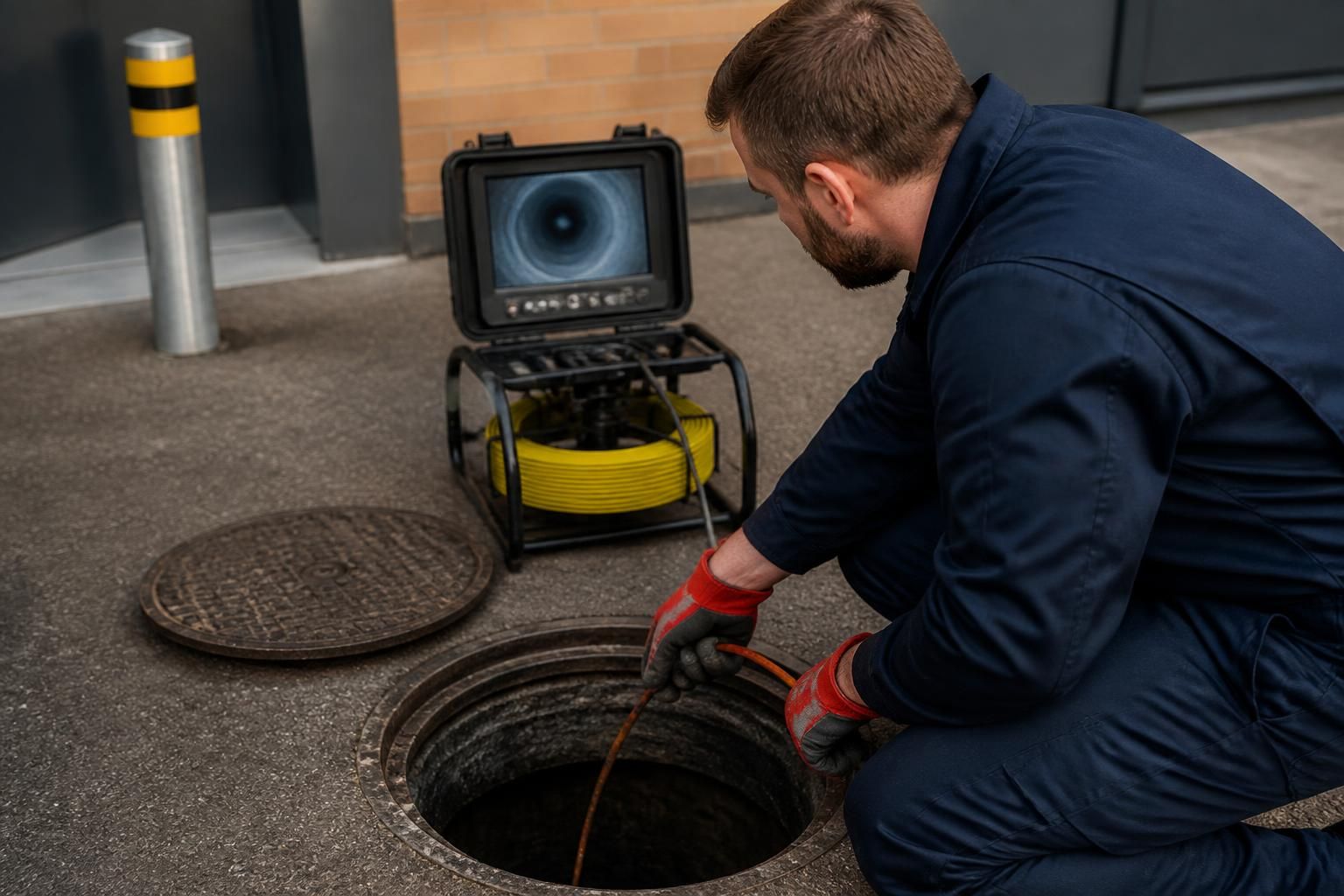
A professional inspection normally begins with a visual assessment of accessible chambers, gullies, pipe connections and surrounding ground. Depending on the findings, the drainage specialist may use a CCTV camera survey, water testing, dye testing or a level survey. CCTV can show cracks, displaced joints, root ingress, fractures, deposits and collapses, while a level survey can help identify problems with falls or standing water. The inspection should produce a clear explanation of the defect and indicate whether cleaning, repair, relining or excavation is appropriate.
Do not remove a heavy or damaged chamber cover without suitable equipment, and keep staff and visitors away from contaminated water or unstable ground. Record the location, timing and nature of any changes, including photographs where safe to take them. Providing this information to a drainage professional can help target the inspection and prevent an external defect from being overlooked.