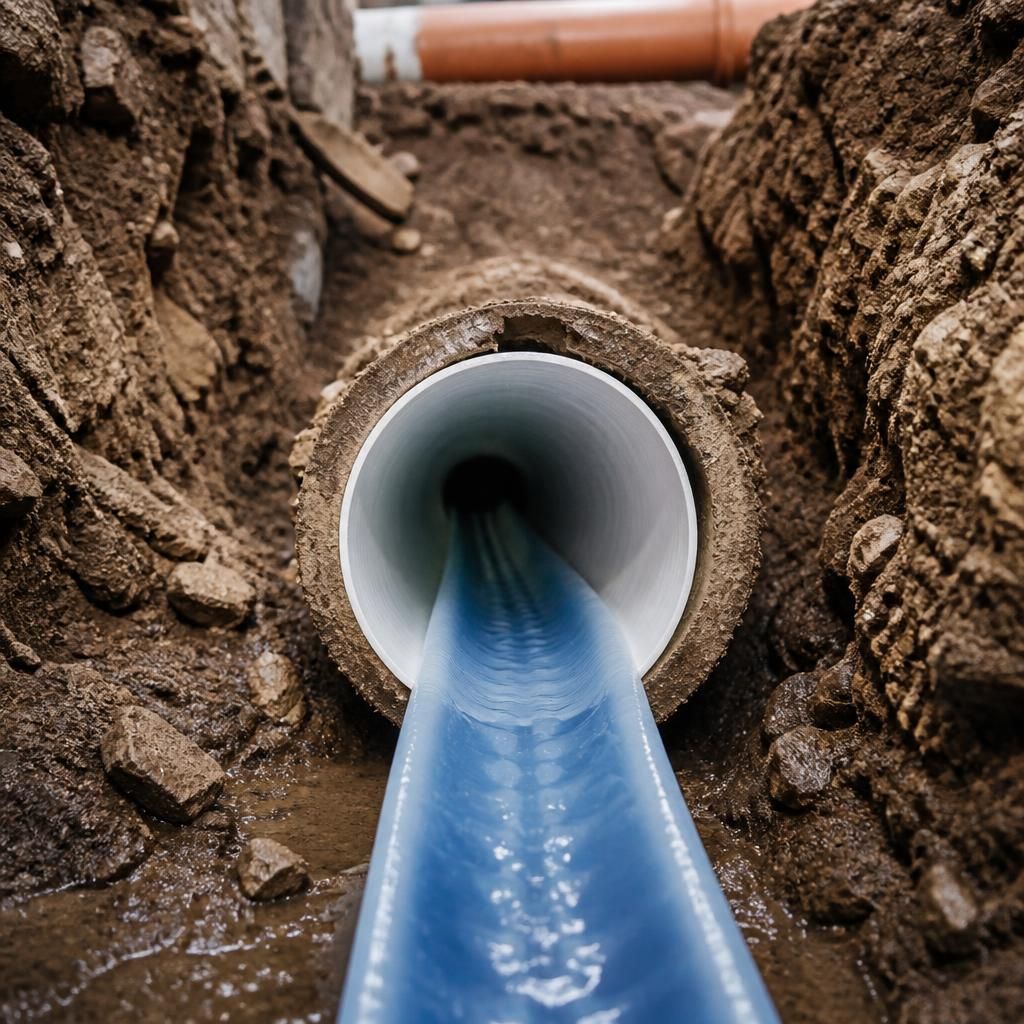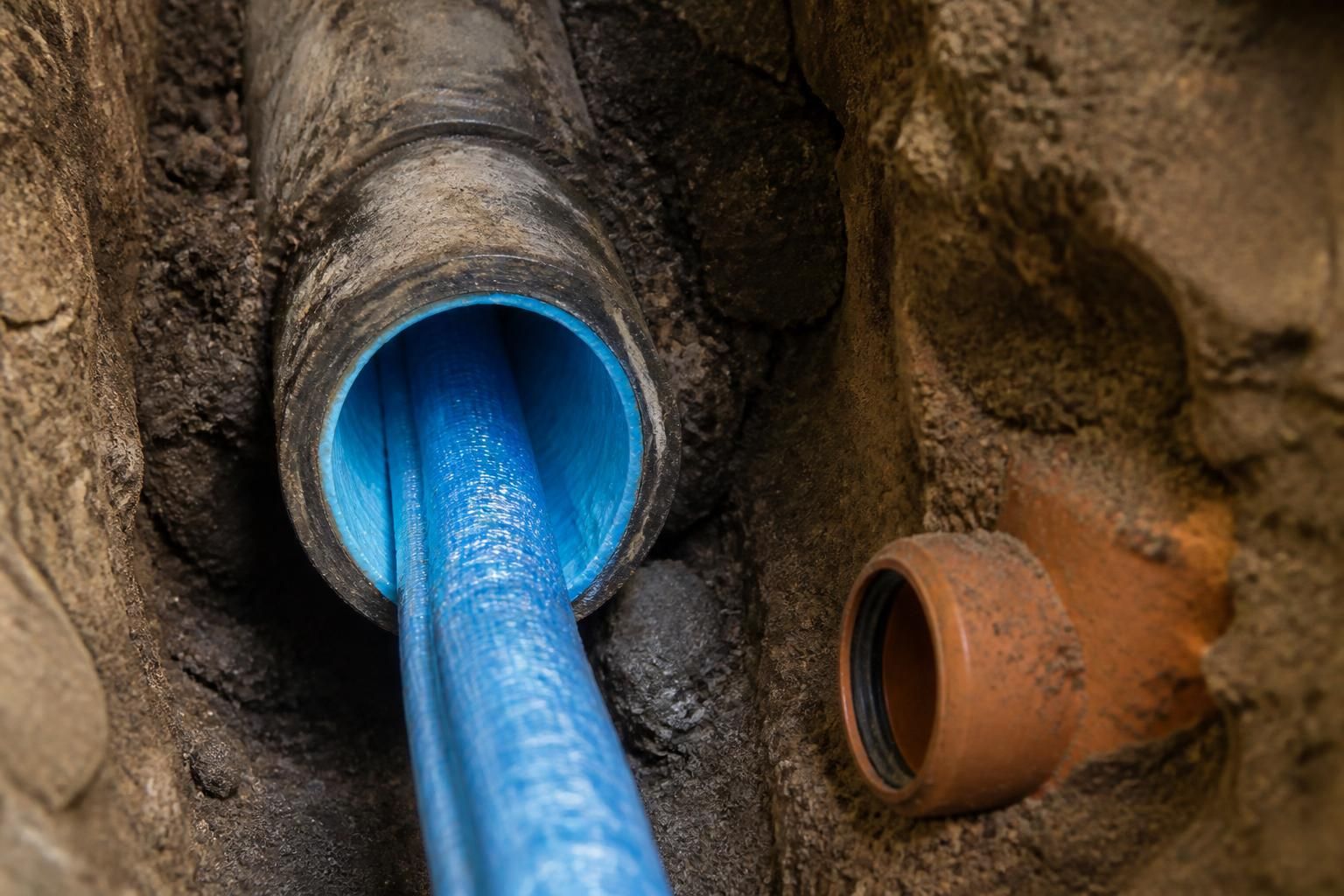
Drain relining is most effective where a damaged drain still has a continuous, reasonably stable host pipe. It can address certain cracks, leaking joints, corrosion and minor infiltration by installing a resin-based sleeve inside the existing pipe, but the condition, shape, material, diameter and accessibility of the original pipe all affect the result.
Relining may be considered for:
- Cracked or fractured sections that have not lost their original shape.
- Leaking joints where the surrounding pipe remains structurally sound.
- Localised corrosion or surface deterioration, particularly in older drainage systems.
- Minor root penetration after the roots and debris have been removed.
- Drains beneath buildings, paving or other obstructions where retaining the existing route is technically suitable.
The existing drain must usually be cleaned before relining. A CCTV survey can identify the location and extent of damage, while cleaning removes scale, silt, roots and other deposits that could prevent the liner from fitting correctly. Any bends, junctions, changes in diameter and connections to other pipework also need to be considered.
Relining is less suitable where the pipe is:
- Collapsed or severely crushed.
- Badly displaced, deformed or missing sections.
- Blocked in a way that cannot be cleared safely.
- Too narrow or irregular to accept the required liner.
- Structurally unstable, with insufficient material left to support installation.
- Arranged so that essential branch connections cannot be reinstated after lining.
A liner does not restore a drain that has completely lost its route or shape. In these circumstances, excavation and replacement may be more appropriate. Depending on the location and defect, other options can include a local patch repair, replacement of a short section, or a different trenchless repair method. The correct choice depends on whether the priority is restoring structural strength, stopping leakage, improving flow or replacing a failed section.
The pipe material also matters, although relining is not restricted to one type of drain. Clay, concrete, cast iron and other drainage materials may be candidates in some circumstances, but the liner must be compatible with the existing surface and the pipe must meet the installation requirements. Relining a drainage pipe should also be distinguished from repairing a pressurised water supply pipe; the techniques, materials and risks are different.
After installation, the finished liner should be checked to confirm that it is continuous, properly cured and free from folds or significant obstructions. Drain connections may need to be reopened, and a further CCTV inspection can verify the condition of the completed repair. This assessment-led approach is important because relining is not selected simply because a pipe is old or leaking: it is selected when the existing drain can safely and effectively act as the support for the new internal lining.