A high water bill alone does not usually prove that a concealed drain leak is present. A drain carries used water away from a property, whereas the household water meter records water entering the supply system. If the bill has increased without a clear change in consumption, the first suspicion is normally a leak on the incoming supply, a faulty toilet or another appliance that is allowing water to run continuously. A damaged drain may still be involved, but it needs to be assessed alongside the plumbing system rather than inferred from the bill alone.
Drain leaks are more likely to waste water indirectly than to register as a large increase on the water meter. For example, a leaking supply pipe may discharge into or near a defective drain, making the two faults appear connected. Alternatively, a concealed waste pipe may be allowing water from sinks, baths, showers or appliances to escape beneath floors or within walls. In that situation, the increased bill may reflect greater water use caused by a fault elsewhere, while the drain defect is responsible for the resulting property damage or drainage symptoms.
A useful first step is to compare the bill with the property's normal pattern of use. Consider whether there has been a change in occupancy, additional laundry, more frequent use of showers or baths, garden watering, or a new appliance. Check whether the bill is based on an actual meter reading or an estimate, and compare the current reading with the meter itself. An estimated reading can create an apparent increase that is unrelated to a leak.
Where there has been no reasonable change in consumption, a simple meter check can help narrow down the source:
- Make sure taps, showers and water-using appliances are not running.
- Check toilets for continued filling, movement in the pan or a faint running-water sound.
- Record the meter reading, avoid using water for a period, and check whether the reading has changed.
- If the meter continues to register usage, arrange for the supply pipe and internal plumbing to be investigated.
This check does not identify a concealed drain defect by itself. A drain leak can remain hidden beneath a concrete floor, within a wall, below paving or under landscaped ground. It may only become apparent when a waste pipe is used, when flow is restricted, or when a camera inspection reveals a displaced joint, fracture, open connection or failed section. A professional investigation may therefore involve separate tests for the pressurised water supply and the drainage system.
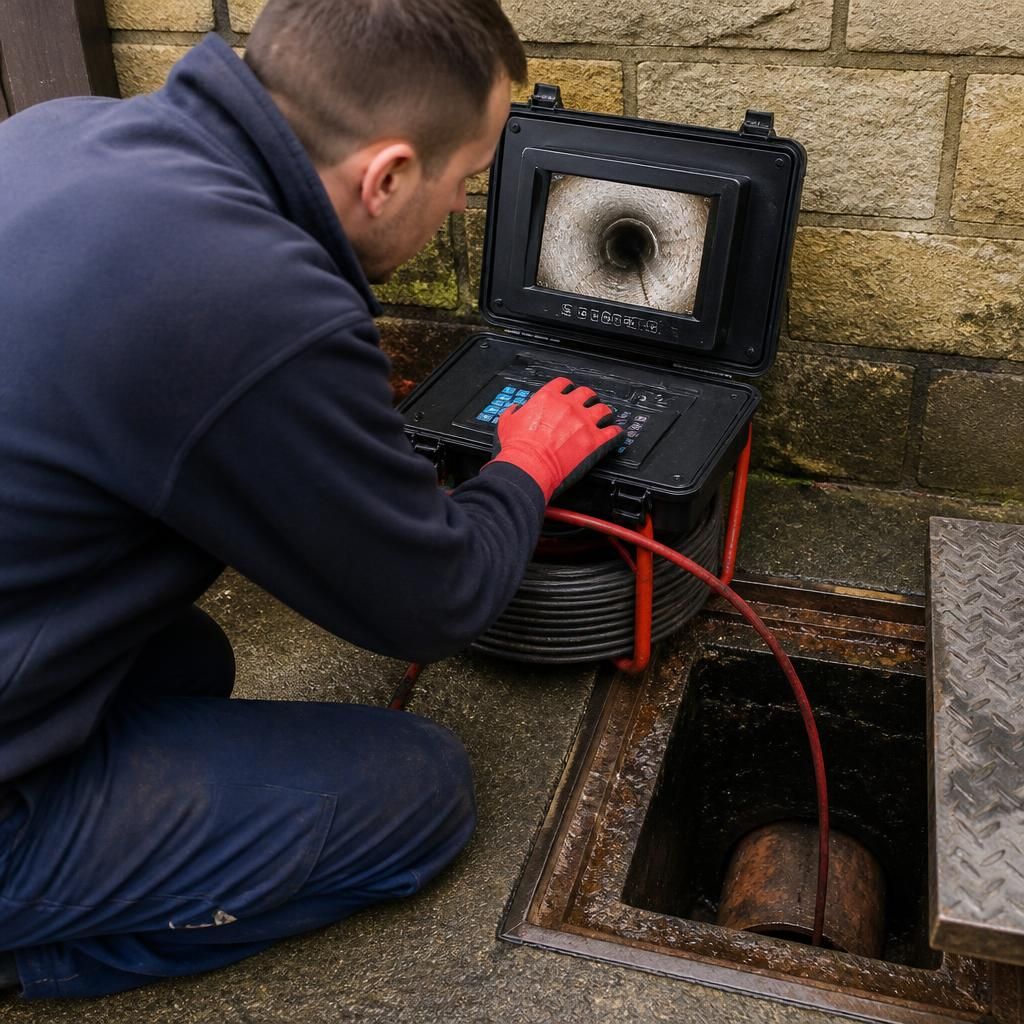
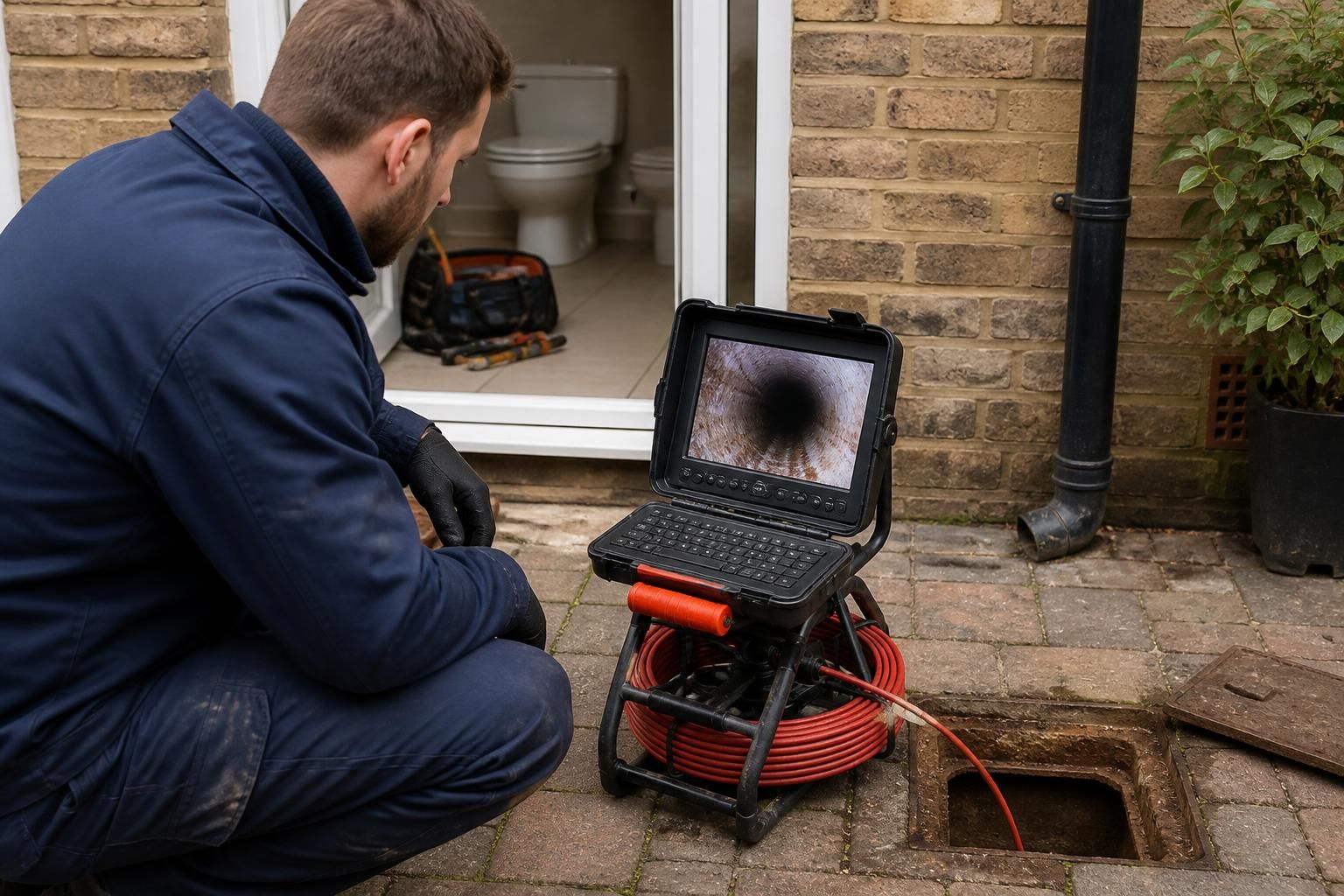
For the water supply, a plumber may use pressure testing, acoustic equipment or other non-invasive leak detection methods to trace escaping water without immediately opening floors or walls. For drainage, a CCTV survey can show the internal condition of the pipe and identify defects that are not visible from inspection chambers. Dye testing or controlled water-flow testing may also help establish whether water is entering the drainage system, escaping from it, or travelling through an unexpected route.
The location of the suspected leak matters. A meter reading that changes while all outlets are closed points towards the incoming supply or an internal pressurised fitting. A problem that occurs only when a bath, sink, washing machine or dishwasher discharges is more consistent with a waste or drain connection. If several fixtures drain slowly or back up, the issue may involve a shared section of pipe rather than an isolated leak. These distinctions help determine whether the appropriate repair is to a supply pipe, waste pipe, drain joint or larger underground section.
Leaving a concealed leak unresolved can increase the risk of damage to flooring, plaster, insulation, timber and nearby fittings. Escaping water can also undermine ground around an underground pipe or allow foul water to contaminate enclosed areas. The absence of an obvious surface defect does not confirm that the pipe is sound, particularly where the leak is below a slab or outside the building.
Keep copies of the affected bills and note when the increase began, which fixtures are involved and whether the issue changes when particular appliances are used. This information can make the investigation more targeted. Avoid excavating or removing flooring before the route of the leak has been established, as unnecessary access can increase the cost and disruption of the repair.
Ideal Plumbing Services can investigate suspected concealed leaks and drainage faults for homeowners, landlords and tenants in Birmingham and the wider West Midlands. The appropriate next step is a structured inspection that separates a genuine increase in incoming water use from a concealed drain defect, then identifies the repair method required.