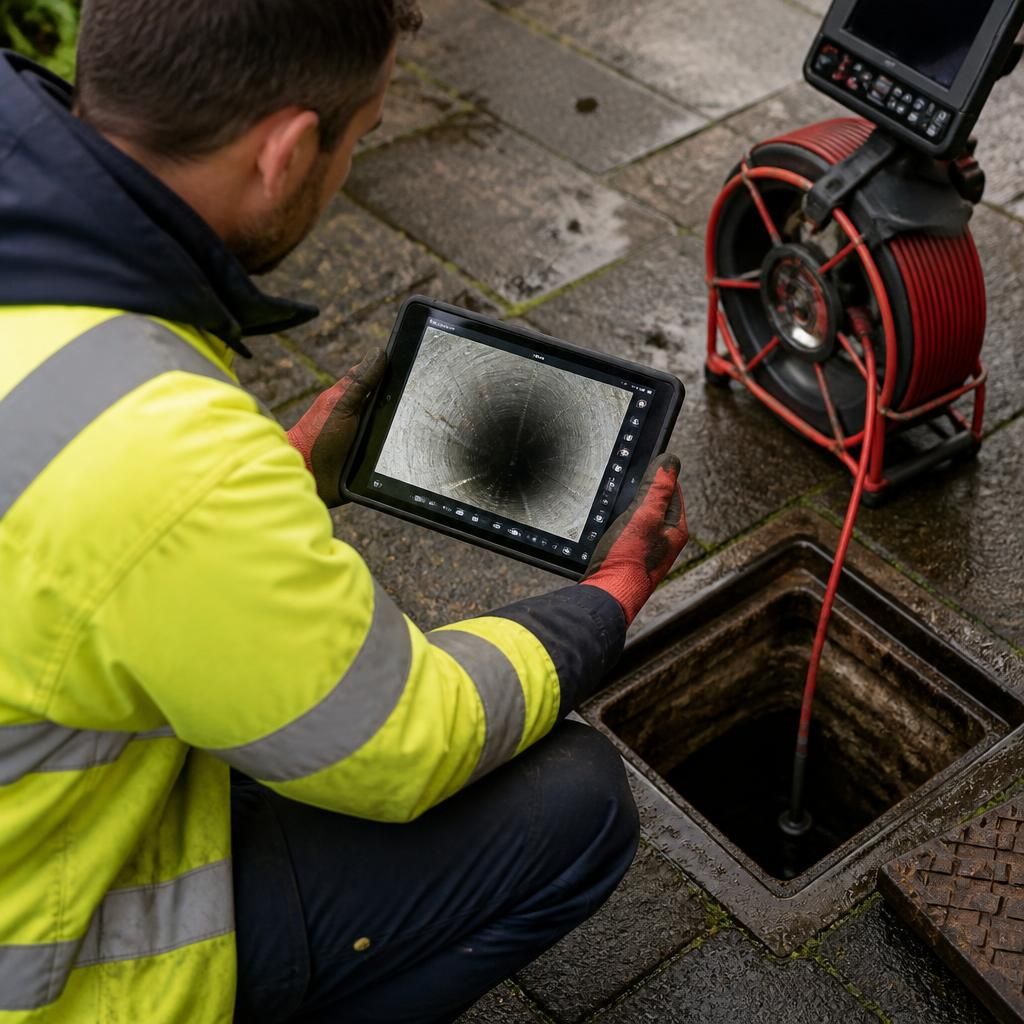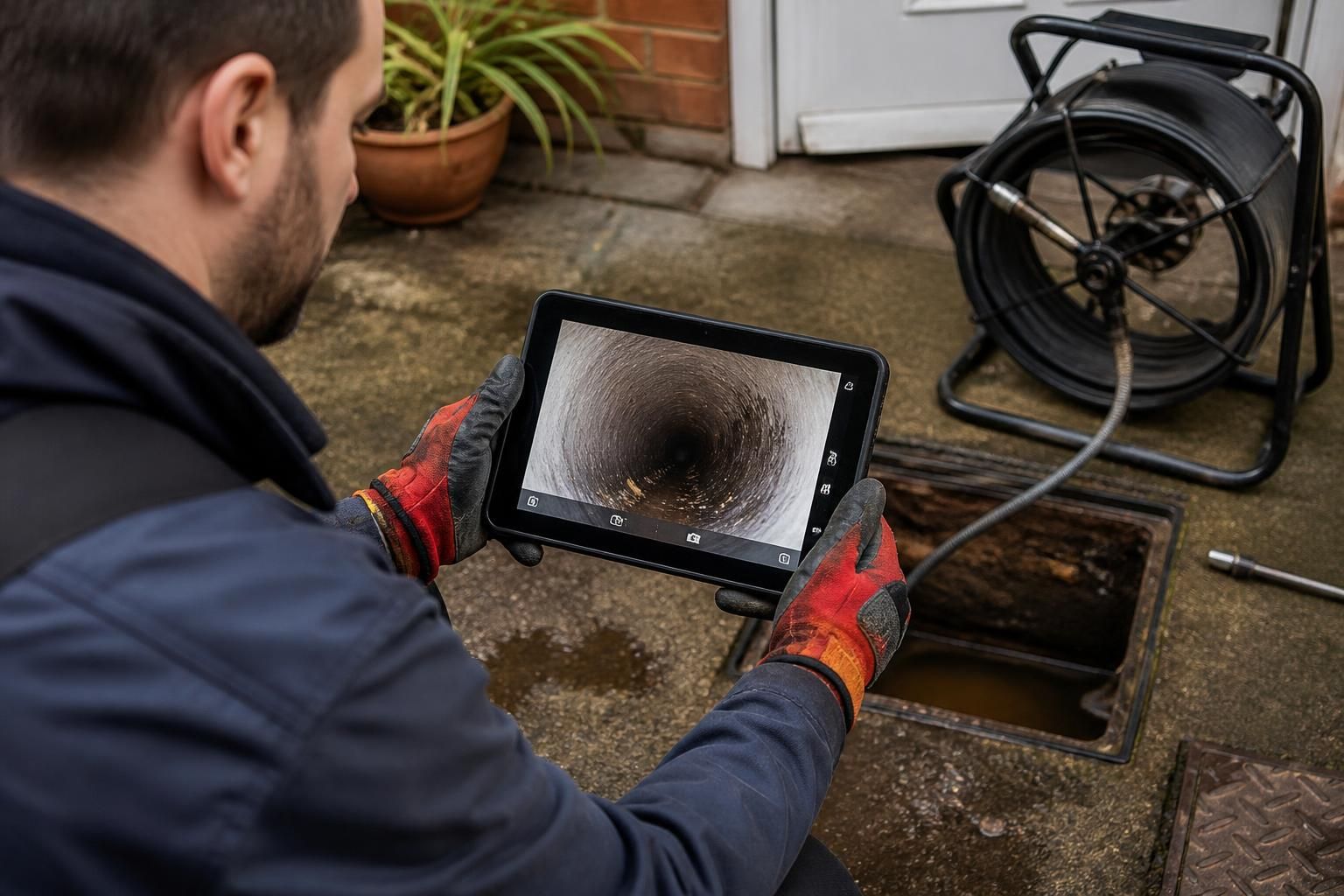
A useful drain inspection report is a clear, traceable record of what was examined, what could and could not be confirmed, and what action is appropriate next. It should allow a homeowner, landlord, tenant, contractor or insurer to understand the drainage issue without having to interpret technical footage alone.
Property and inspection details
- The property address and the person or organisation that requested the inspection.
- The date of the survey and the reason it was commissioned, such as repeated blockages, suspected damage, a proposed purchase or planned repair work.
- The drainage runs or access points examined, including any sections that were not reached.
- Relevant background information supplied before the inspection, such as previous repairs, flooding, odours or recurring maintenance problems.
Survey scope and limitations
The report should state whether the inspection covered a complete drainage run or only a selected section. It should also record restrictions that may affect confidence in the findings, including standing water, silt, roots, heavy deposits, collapsed sections, restricted access or an obstruction that prevented the camera from travelling further. A professional report should distinguish between a confirmed observation and an interpretation based on limited visibility.
Drainage layout and identification
Where the information can be established, the report should identify the relevant pipe run, connection points and direction of flow. It may also record the pipe material, approximate diameter, depth or distance from an access point. A marked-up plan, site sketch or measured reference can make a defect much easier to locate when a repair is arranged, particularly where several drainage runs serve the property.
Condition assessment
Findings should be described in practical terms rather than relying only on unexplained codes. The report may comment on displaced joints, cracks, fractures, deformation, blockages, root ingress, corrosion, open connections, leaks or poor falls where these are visible. It should explain the significance of each defect, such as whether it is likely to restrict flow, allow water into the surrounding ground or increase the risk of further damage.
If a grading system is used, the report should explain what the grades mean. There is no value in assigning a severity code without showing how it relates to safety, drainage performance or the need for remedial work.
Evidence and traceability
A strong report links each important conclusion to identifiable evidence. This can include:
- Time-stamped video or still images from the inspection.
- Distances measured from a named access point.
- A location plan or annotated sketch.
- Notes explaining areas where visibility was poor.
- A record of any flow testing, dye testing or other supporting checks carried out as part of the assessment.
The original footage should be retained where possible, rather than supplying only selected images. This gives the property owner and any contractor reviewing the work a fuller record of the inspection.
Interpretation and recommended action
The conclusion should bring the evidence together and explain whether the findings support monitoring, cleaning, a local repair, pipe replacement, relining or further investigation. Where more than one option is technically suitable, the report should set out the main differences, including the likely extent of access work and any limitations of each approach.
Recommendations should be prioritised. A report might separate defects requiring attention from lower-risk observations that can be monitored during future maintenance. It should avoid presenting a repair as necessary when the inspection has not established the cause or exact position of the problem.
What a report should not do
- Claim that an entire drainage system is sound when only one section was inspected.
- Give a precise defect position without explaining how it was measured.
- Describe a suspected cause as proven without supporting evidence.
- Recommend excavation or relining without considering whether the affected section and pipe condition are suitable for that method.
- Leave the reader unsure about what should happen next.
For a property owner or landlord, the most useful report combines technical evidence with a plain-English conclusion and a practical action plan. Ideal Plumbing Services can help interpret drain inspection findings and advise on suitable drain repairs or relining in Birmingham and across the West Midlands.