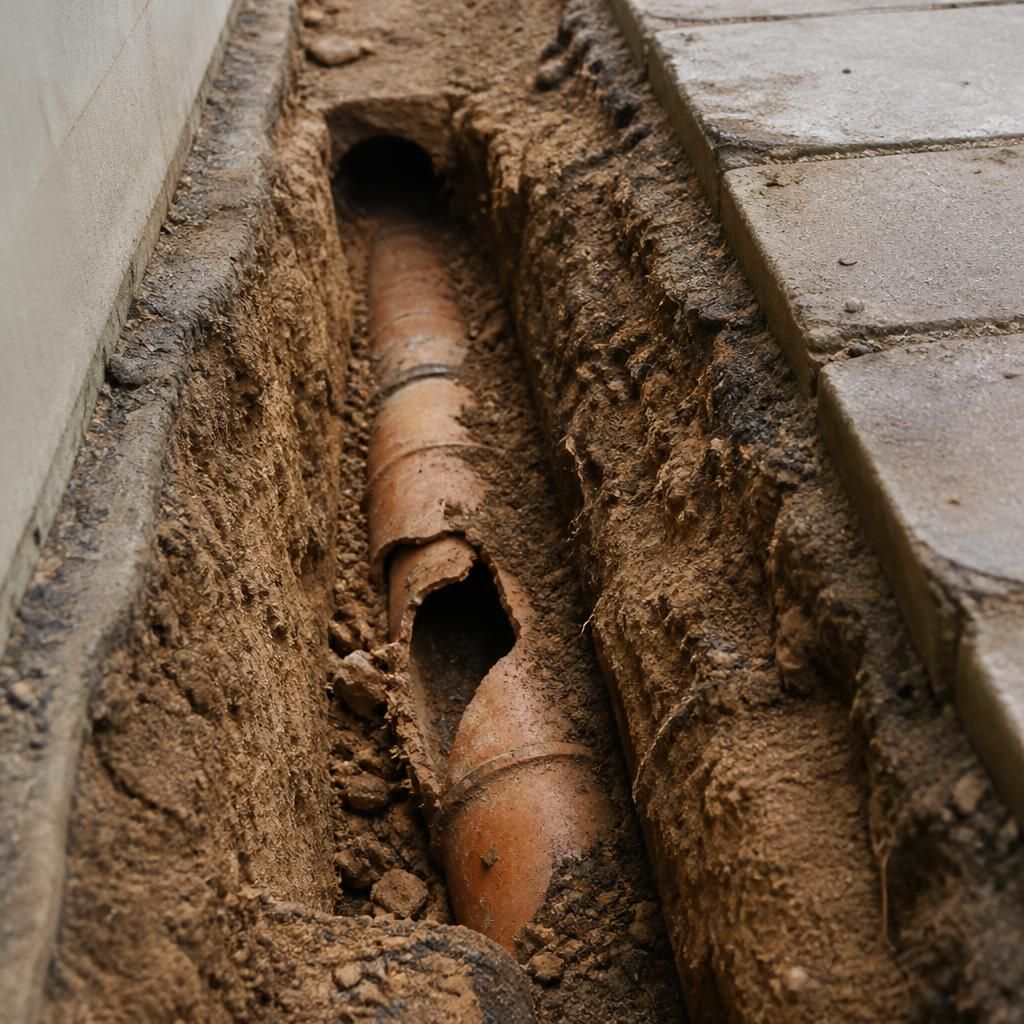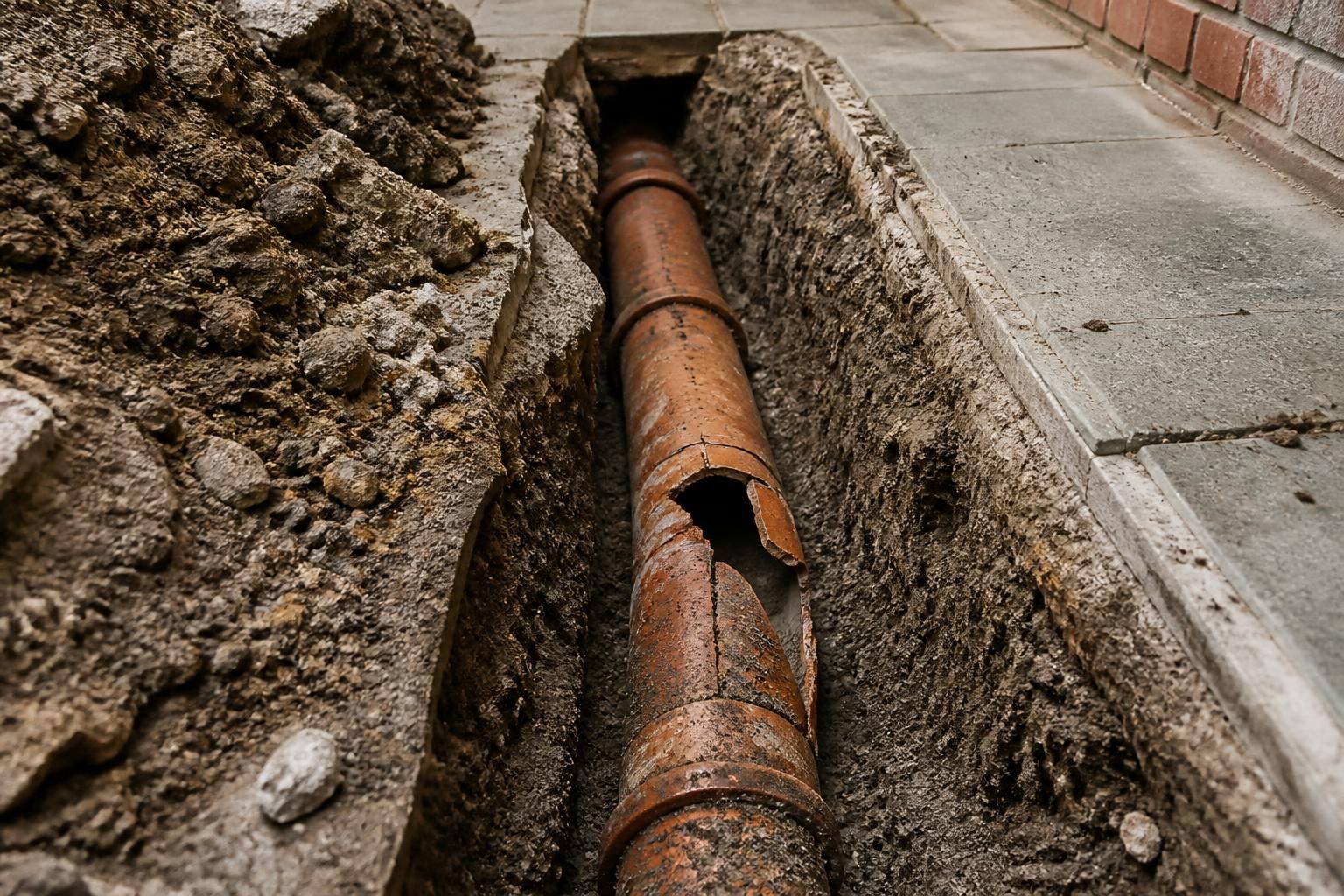
Excavation is a site-specific choice rather than an automatic part of repairing a drain. The deciding issue is whether the pipe can be restored from an existing access point, or whether the damaged section must be exposed and removed. A proper assessment considers the pipe’s condition, position, construction and relationship with the rest of the drainage system before a repair method is selected.
The condition of the pipe is the main consideration. A pipe with a limited crack, leaking joint, small hole or localised defect may be repairable internally. By contrast, a pipe that has lost its shape, collapsed, separated significantly or suffered extensive deterioration may no longer provide a stable base for an internal repair. In those circumstances, opening the ground may be necessary to remove the failed section and install a structurally sound replacement.
Access also affects the available options. Drain engineers may use inspection chambers, manholes or other suitable openings to reach the affected run. Internal repair techniques depend on being able to position equipment accurately and move it through the pipe. Long runs, sharp changes in direction, restricted diameters, blocked access points and complicated connections can prevent equipment from reaching the defect. An excavation may then be needed to create access, even where the pipe damage itself is relatively limited.
A CCTV drain survey is normally an important part of deciding between an excavation-based repair and a less disruptive alternative. The camera can help identify the defect, show the condition of nearby joints and reveal issues such as displaced sections, root penetration, deformation or standing water. It can also indicate whether the reported problem is confined to one point or forms part of a wider failure. Excavating before locating the actual defect can result in unnecessary disturbance, while avoiding excavation without understanding the pipe’s condition can leave a serious structural problem unresolved.
Internal repairs can take several forms. A short damaged area may be treated with a local patch or sectional repair, while a longer run with suitable dimensions and access may be restored using a lining system. Some repairs also involve clearing obstructions or preparing the inside of the pipe before the repair material is installed. These methods can preserve much of the existing route and reduce the need to disturb paving, flooring, driveways, gardens or other surfaces, but they are not appropriate for every pipe or defect.
Excavation is more likely to be recommended where:
- the pipe has collapsed or is severely deformed;
- a section has moved, broken apart or lost its correct fall;
- the damaged connection cannot be reached or repaired internally;
- the pipe is too heavily blocked or deteriorated for repair equipment to pass;
- the defect is located beneath a foundation or at a complex junction that requires direct access;
- repeated repairs would be less suitable than replacing a failed section; or
- the surrounding ground has been affected and needs to be opened for investigation and reinstatement.
Excavation does not necessarily mean that the entire drainage route must be dug up. In many cases, the work can be limited to a targeted section identified through investigation. The affected area is exposed, the pipe and surrounding bedding are assessed, and the failed portion is repaired or replaced. The excavation is then backfilled and the surface reinstated as appropriate. The extent of the work depends on the pipe’s depth, the ground conditions and what lies above it, including paving, concrete, landscaping or other services.
There are also situations where avoiding excavation may not produce the best long-term result. An internal lining can restore the inside of a pipe, but it will not correct every external problem, such as a badly displaced route, unstable bedding or a section that has collapsed completely. It may also be unsuitable where a connection needs to be rebuilt or where the pipe’s internal diameter and shape are no longer adequate. Choosing a method solely because it avoids digging can therefore leave the underlying cause unresolved.
A professional recommendation should explain the defect found, the repair options considered and why a particular method is suitable. It should distinguish between a repair that restores the pipe’s function and a replacement that addresses structural failure. Where the evidence is inconclusive, further investigation may be needed before committing to excavation or an internal repair. This approach helps ensure that the work is proportionate to the damage and that unnecessary disturbance is avoided without compromising the condition of the drainage system.