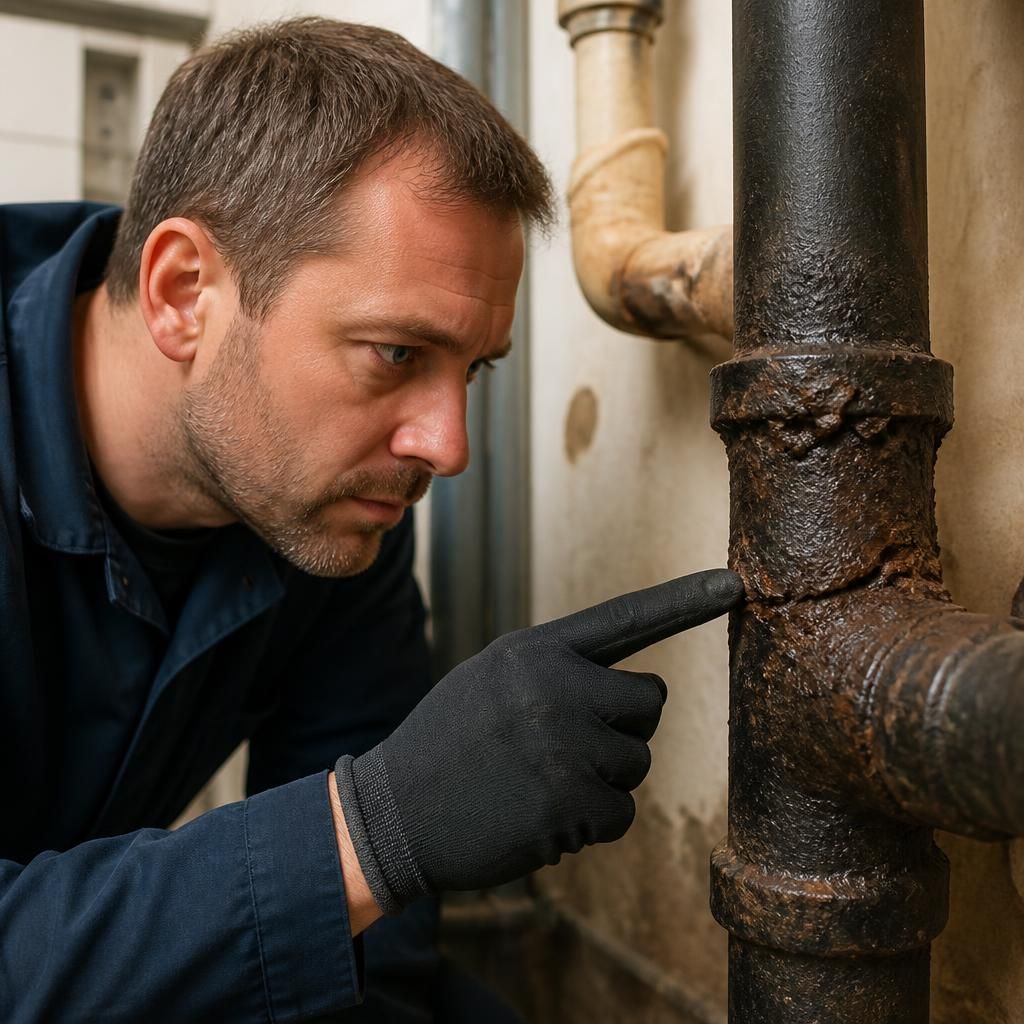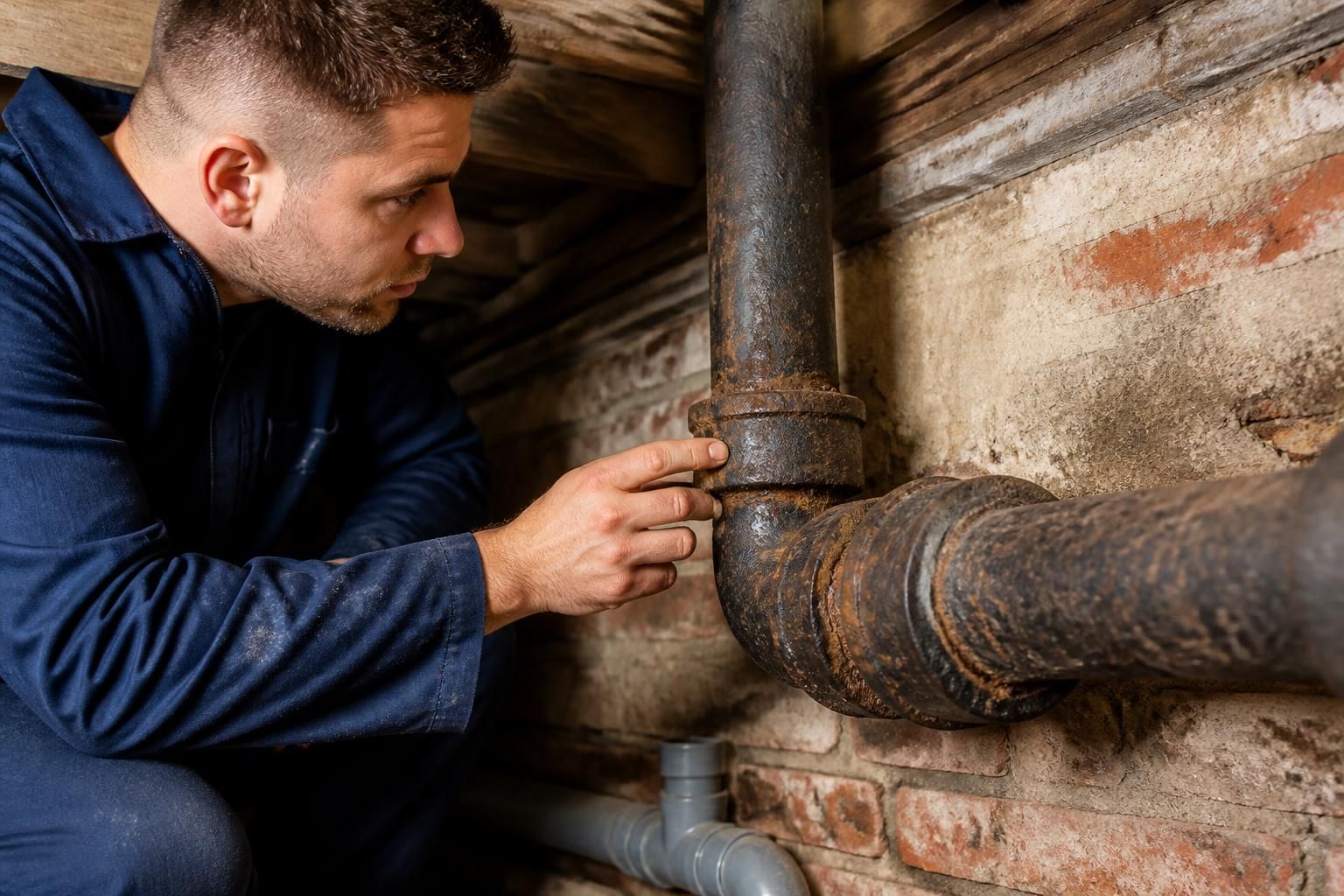
The suitable repair for cast iron drain pipework depends on the damage, the pipe’s remaining strength and its position within the drainage system. A sound section with a failed joint may only need the connection to be resealed, whereas deep corrosion, deformation or a structural crack usually calls for the damaged length to be removed and renewed.
Common repair options
- Joint repair: Older cast iron systems often fail at their joints as sealants harden, connections loosen or corrosion affects the socket. A plumber may clean and prepare the joint before resealing it, or replace the connection with a suitable flexible coupling.
- Localised patching: Small, accessible surface defects can sometimes be treated with a compatible repair compound or reinforced wrap. This is only appropriate where the surrounding metal remains strong and the defect is limited. Patching heavily corroded pipework does not restore its original structural strength.
- Section replacement: A damaged length can be cut out and replaced with a compatible modern pipe section. Correct supports, alignment, jointing and pipe diameter are important to prevent stress on the remaining cast iron.
- Internal repair or relining: In some systems, a specialist lining method may provide a way to seal defects from inside the pipe. Its suitability depends on the pipe’s internal condition, diameter, access points, bends and the type of drainage being carried.
Signs that cast iron pipework may need attention
Visible rusting alone does not always mean that a pipe has failed. More concerning signs include damp patches, staining, persistent drain odours, slow drainage, recurring blockages, water marks around joints and small flakes or fragments found near the pipe. A blistered, heavily pitted or distorted surface can indicate that corrosion has progressed beyond the outer layer. Cracks, movement at connections and repeated leaks are also reasons to arrange an inspection.
Cast iron can corrode from both the outside and inside. Moisture, condensation, leaking joints and contact with masonry may damage the exterior, while prolonged exposure to wastewater can wear the internal surface. Corrosion may narrow the effective bore of the pipe, making blockages more likely even when there is no visible leak.
How the condition is assessed
An inspection should establish whether the problem is limited to one point or affects a wider run. This may involve a visual examination, checking the joints and supports, testing the drainage system and, where access permits, using a drain camera. A camera survey can show internal corrosion, displaced joints, cracking, obstructions and the condition of connected sections. The visible symptom may not be at the same location as the underlying defect, particularly where water has travelled along the outside of the pipe.
The pipe’s location also affects the practical repair method. Exposed pipework is generally easier to examine and work on than a concealed run beneath floors, behind walls or below hard landscaping. Access may influence whether a short section can be changed, whether a lining system is feasible or whether a larger area must be opened to reach sound pipework.
When repair may not be the best option
A repair can be unsuitable where corrosion is widespread, the pipe wall has become fragile, several joints have failed or the system has lost its correct fall. Applying a seal over a broad area of weakened metal may hide the symptom without addressing the cause. Replacing isolated sections in a severely deteriorated run can also result in further failures nearby. In these circumstances, a planned renewal of a longer length may be more reliable than repeated local repairs.
Any replacement should preserve the drainage route and correct gradient, provide adequate support and make a durable transition between the existing cast iron and new pipework. Internal access points, ventilation arrangements and fire-stopping around penetrations may also need consideration, particularly where pipework passes through a property. Wastewater should not be discharged until joints have been checked and the repaired section has been tested.
Prompt investigation is sensible when a cast iron drain is leaking, because moisture can damage surrounding plaster, timber, flooring or masonry. Keeping the area accessible and avoiding attempts to strike, drill or heavily load a visibly weakened pipe can reduce the risk of causing further damage before it is assessed.