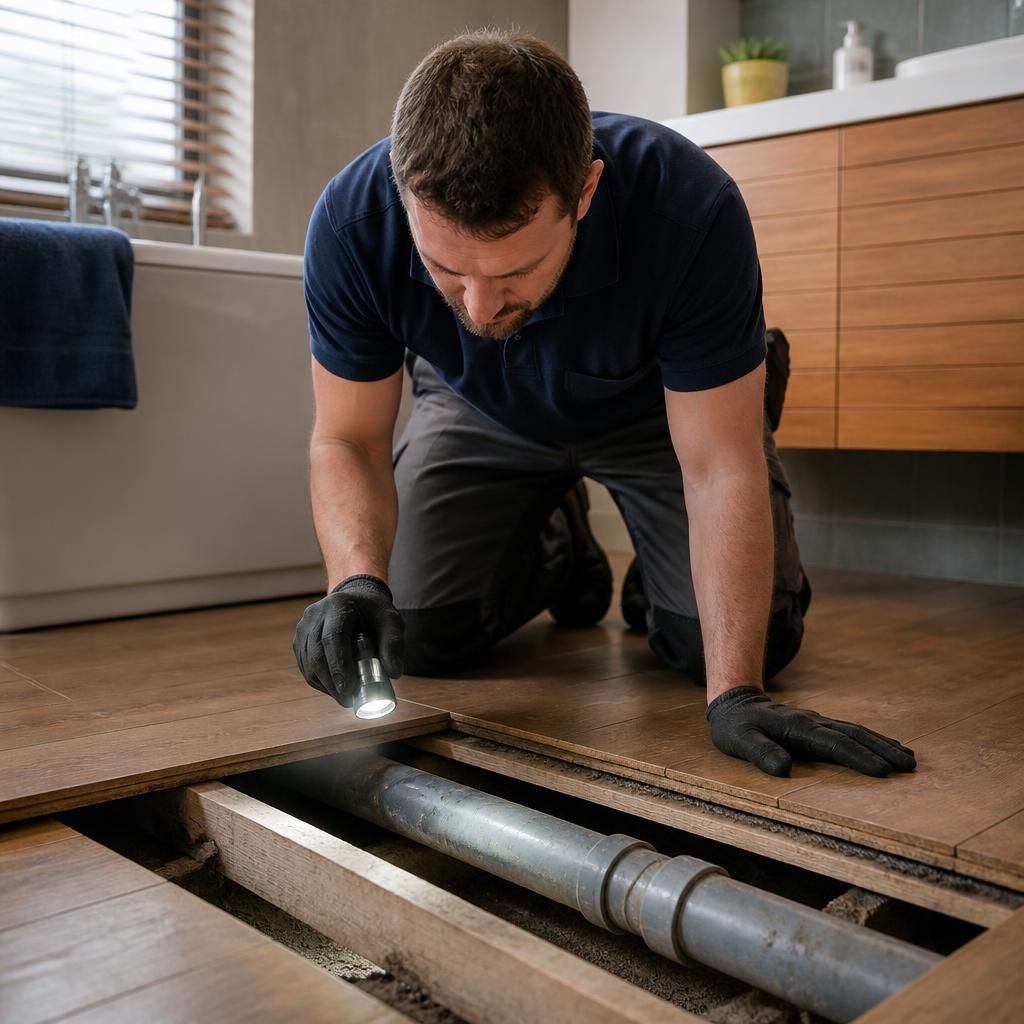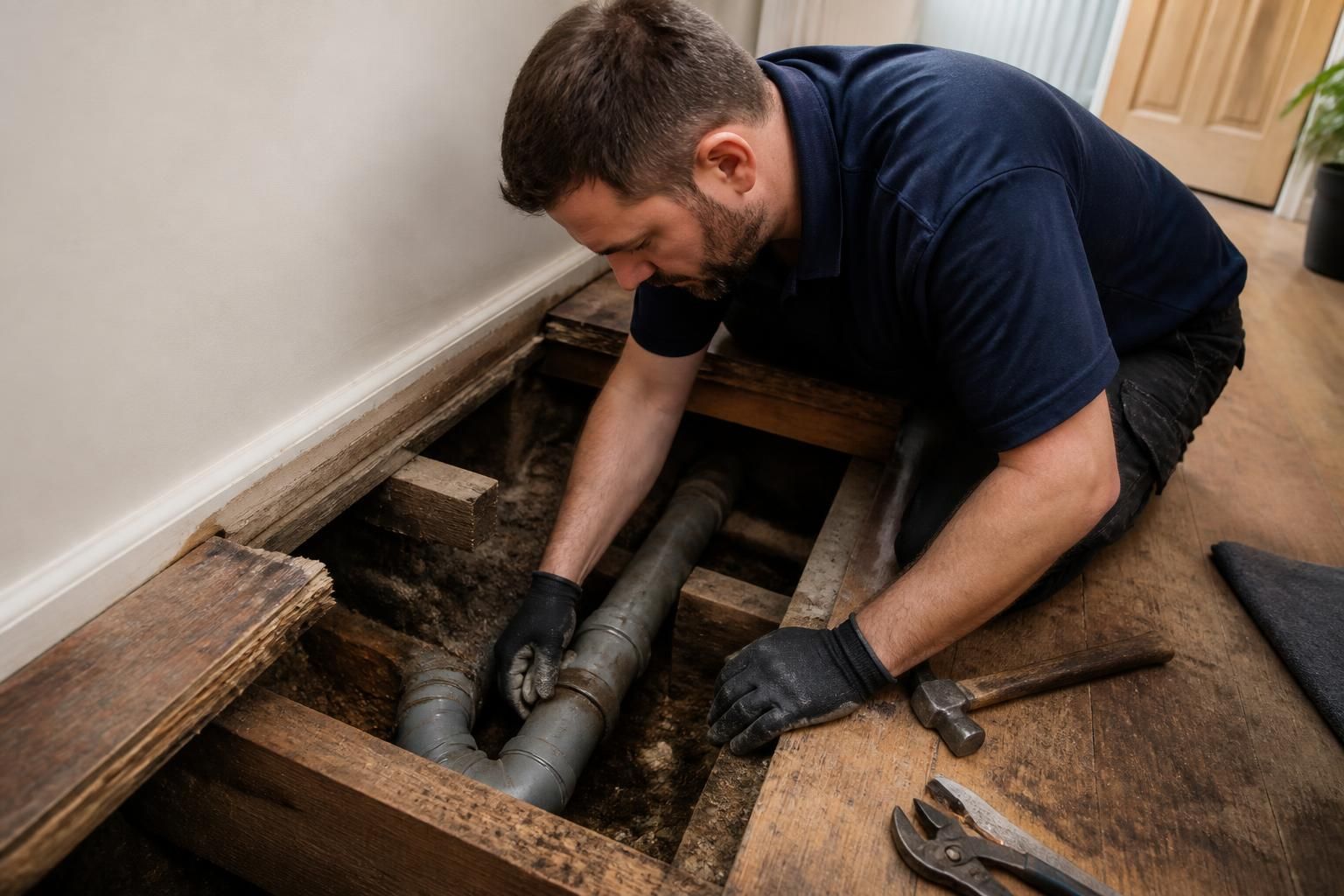
Disruption from drain pipe repairs inside a home is usually concentrated around the defective section and the route needed to reach it. The work commonly involves four stages: locating the fault, creating safe access, repairing or replacing the affected pipework, and checking the system before the opening is closed. The condition of the surrounding finishes and the position of the pipe will determine how much of the room is affected.
An internal drain repair may affect different parts of a property, including:
- Under-floor pipework: Floorboards, laminate, tiles or other finishes may need to be lifted to reach a drain beneath the room.
- Boxed-in pipes: A removable panel may provide access, but fixed boxing might need to be opened and later rebuilt.
- Walls and ceilings: Pipework concealed behind plasterboard or plaster can require a carefully sized access opening.
- Bathrooms and kitchens: Units, sanitaryware or appliances may restrict access and could need temporary removal.
- Soil and waste stacks: Work on larger vertical pipes can affect more than one floor or room if the stack passes through several parts of the building.
The first inspection is important because it can prevent unnecessary opening-up. A plumber may examine visible connections, check for signs of water escape or drainage failure, and use suitable diagnostic methods to identify the likely position of the defect. The aim is to establish whether the problem is localised or connected to a wider section of pipework before finishes are disturbed.
Once access has been created, the repair itself may be relatively contained. Depending on the pipe and its condition, this could involve replacing a damaged joint, renewing a short section, sealing a connection or installing a more extensive replacement. Where pipework has deteriorated over a longer section, additional access may be needed to remove unsound material and support the new installation correctly.
Drain repairs can create practical inconvenience while work is in progress. The affected room may need to remain clear, and the use of connected sinks, toilets, baths or showers may be restricted during isolation, removal, testing or curing of repair materials. If the fault is associated with a foul-water pipe, the area also needs suitable hygiene precautions. Furniture, stored items and soft furnishings should be moved away from the working area to protect them from dust, debris or accidental splashing.
The total timescale cannot be confirmed from the type of repair alone. A straightforward accessible joint is generally less involved than a buried or concealed section, while additional time may be needed where flooring, plaster, units or sanitary fittings have to be removed and reinstated. The condition of the pipe, the availability of suitable replacement parts and the extent of any secondary damage can also affect the programme. A proper assessment should identify which areas need to be opened and what reinstatement will be required.
Reinstatement is a separate consideration from the plumbing repair. A plumber may make the pipework sound and leave the opening ready for a builder, plasterer, tiler or flooring specialist, depending on the finish. Before work begins, it is sensible to establish whether the quotation includes only the plumbing or also includes replacing access panels, refitting units and restoring decorative surfaces. Matching older tiles, flooring or wall finishes may require specialist work and may not be possible if spare materials are unavailable.
Several steps can help keep disruption controlled:
- Clear access routes and remove belongings from the room before the inspection.
- Tell the plumber about concealed services, previous repairs and any areas that must remain accessible.
- Ask which fixtures or appliances may need to be disconnected and how long they are likely to be unavailable.
- Confirm how pipework will be tested before floors, walls or ceilings are closed.
- Agree how removed flooring, boxing, units or access panels will be handled after the repair.
- Keep children and pets away from the work area until tools, debris and any contaminated materials have been removed.
Where a drain leak has affected surrounding timber, plasterboard, insulation or flooring, repairing the pipe may not remove all of the disruption. Wet or contaminated materials may need to dry, be cleaned or be replaced, particularly if the leak has continued unnoticed. Prompt investigation can help limit the amount of secondary damage, but the condition of the surrounding structure still needs to be assessed rather than assumed.
For an occupied home, the most useful way to plan drain pipe repairs is to separate the work into access, plumbing, testing and reinstatement. This makes it clearer which part affects daily use of the property, which finishes may be disturbed and whether other trades are required. An inspection by a Birmingham plumbing professional can provide a more accurate assessment once the pipe route and condition have been established.