Yes. Drain pipe repairs can often be completed without excavating patios, driveways, gardens or other outside areas when the pipe remains structurally suitable for a trenchless repair. The main options are cured-in-place pipe lining, localised patch repairs and, in some cases, pipe bursting or other replacement methods carried out through existing access points.
Resin lining involves cleaning the affected section, inserting a resin-impregnated liner and curing it inside the existing pipe. Once cured, the liner forms a continuous pipe within the old one, sealing cracks, small fractures and joints without removing the surrounding ground. Branch connections are then reopened from inside the lined pipe so that connected appliances and drainage runs continue to function.
Localised patch repairs are suitable where damage is limited to a specific point. A short section of reinforced repair material is positioned over the defect and secured in place, rather than lining the entire length. This can be a practical option for an isolated crack, leaking joint or small area of deterioration, provided the remaining pipe is stable and clear enough for the equipment to pass through.
Whether excavation can be avoided depends on several technical factors:
- the size, material and route of the drain;
- the location and extent of the damage;
- whether the pipe has shifted, deformed or collapsed;
- the condition of joints and connections;
- the position of inspection chambers and other access points;
- the presence of roots, scale, silt or other obstructions; and
- whether the repaired pipe will provide sufficient flow and structural support.
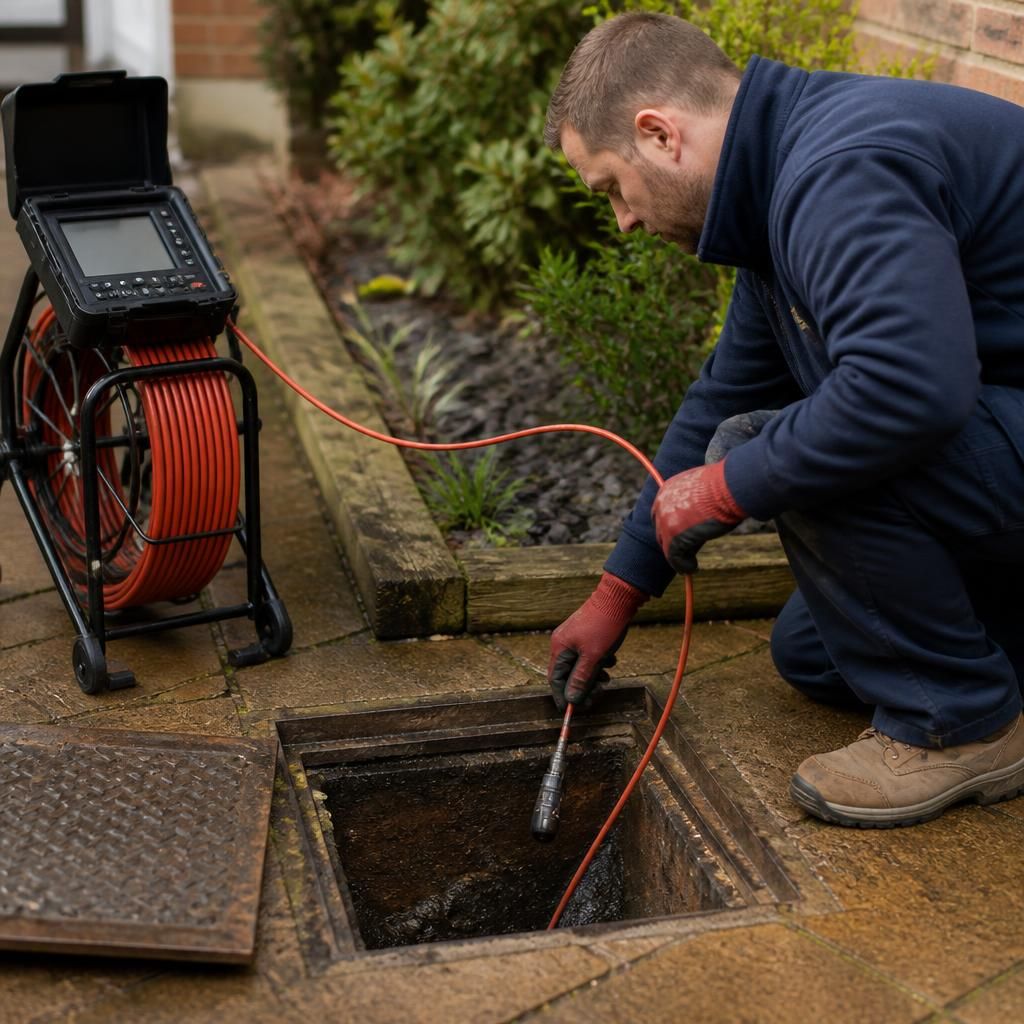
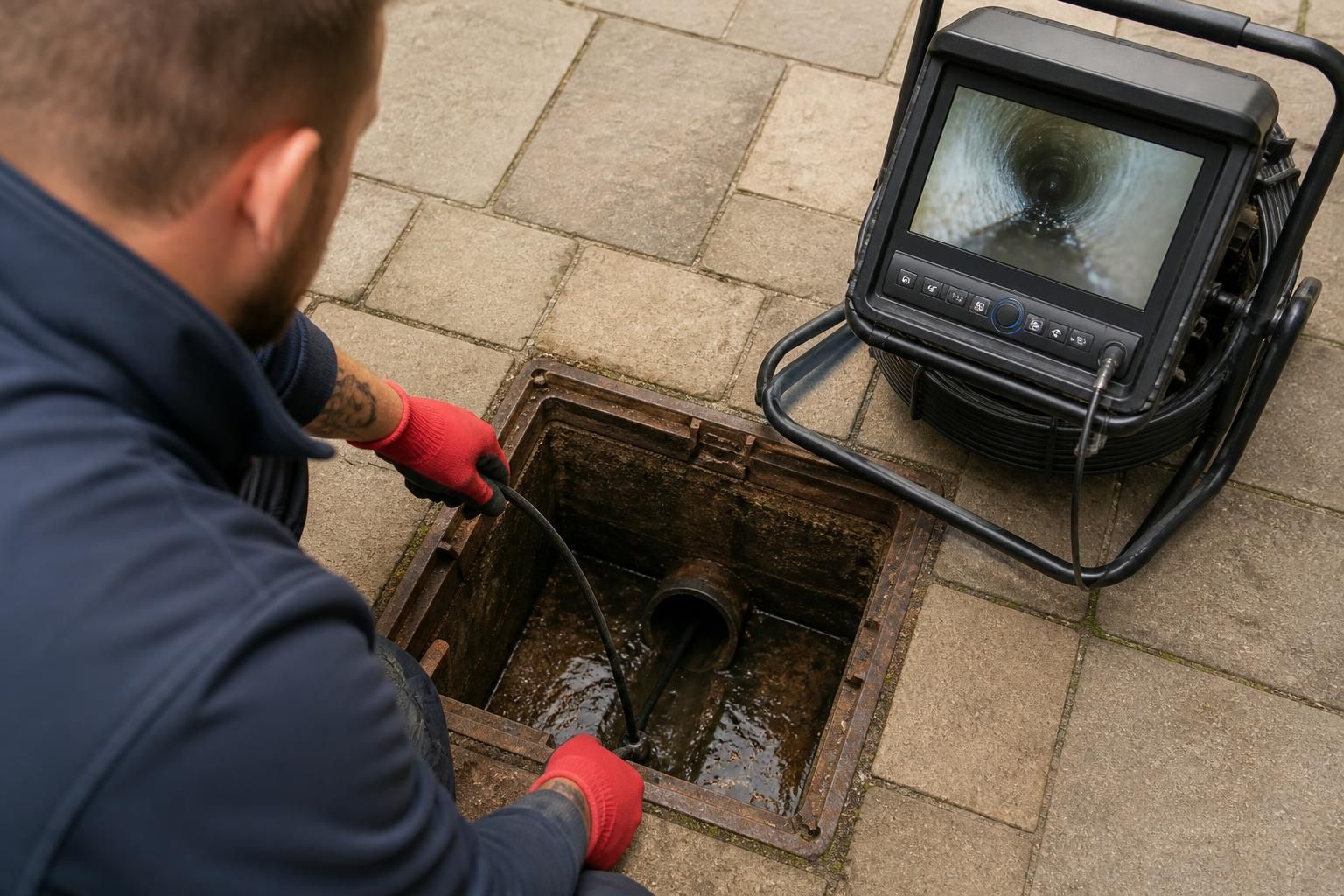
An inspection normally comes before any repair decision. A drainage specialist may use a camera survey to identify the defect from inside the pipe, establish its position and check for additional problems elsewhere in the run. Cleaning may be required before the survey or repair, as deposits and blockages can prevent the lining or patching equipment from reaching the affected section.
Trenchless repair is less suitable when a drain has collapsed completely, is severely displaced, has extensive deformation or cannot be reached with suitable equipment. In these circumstances, a section of excavation may still be necessary. However, the excavation can often be limited to the defective area rather than extending along the full length of the pipe. Excavation may also be required where a pipe needs to be replaced, its gradient corrected or an inaccessible connection rebuilt.
Existing inspection chambers can sometimes provide enough access for equipment, but their position does not by itself confirm that a no-dig repair is possible. The pipe must also be large enough, sufficiently clear and structurally appropriate for the chosen method. Above-ground access inside the property may be used instead where the drain route passes beneath an internal floor or connects to an accessible soil stack.
A suitable repair plan should explain which section will be treated, how access will be gained, whether cleaning is needed and what limitations apply. It should also distinguish between repairing the pipe and resolving related problems, such as damaged chamber covers, poor falls or defective connections. A CCTV survey and assessment of the surrounding drainage system provide the information needed to decide whether outside excavation can genuinely be avoided.