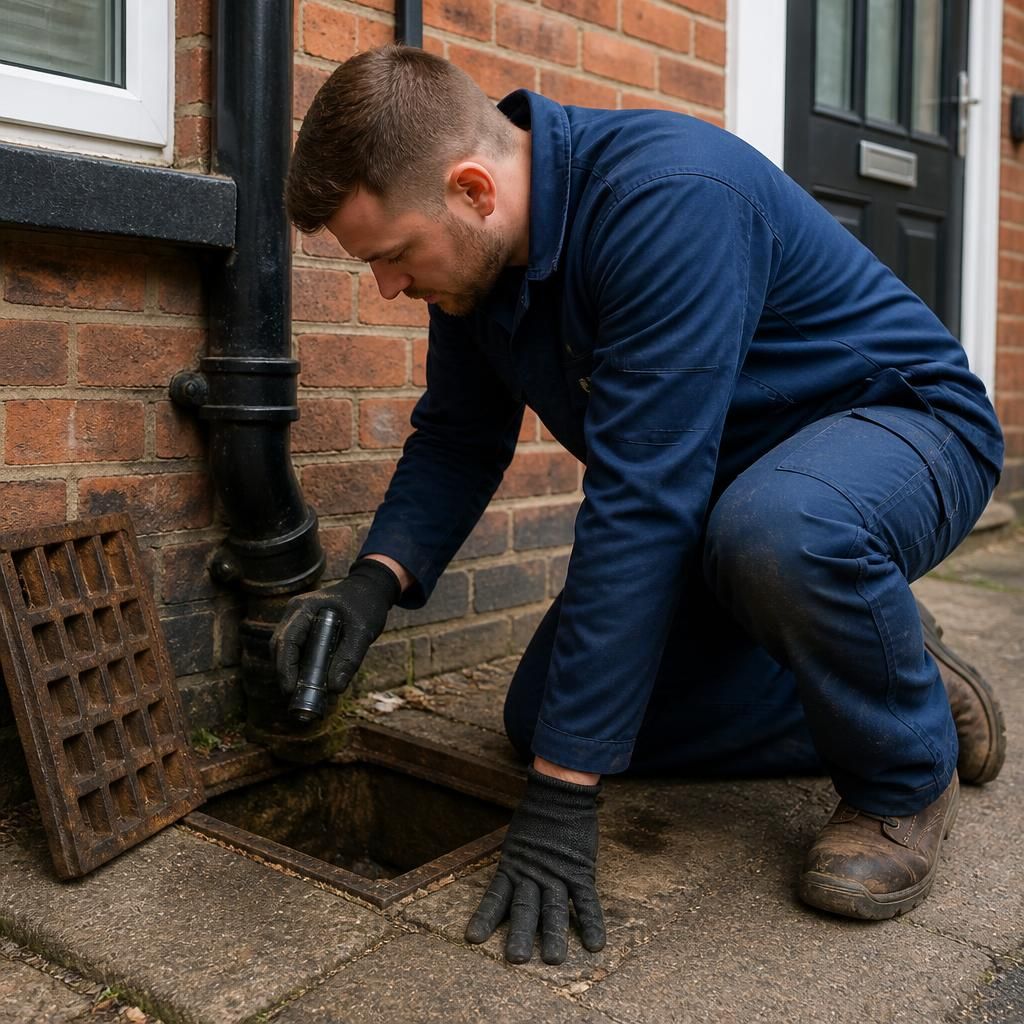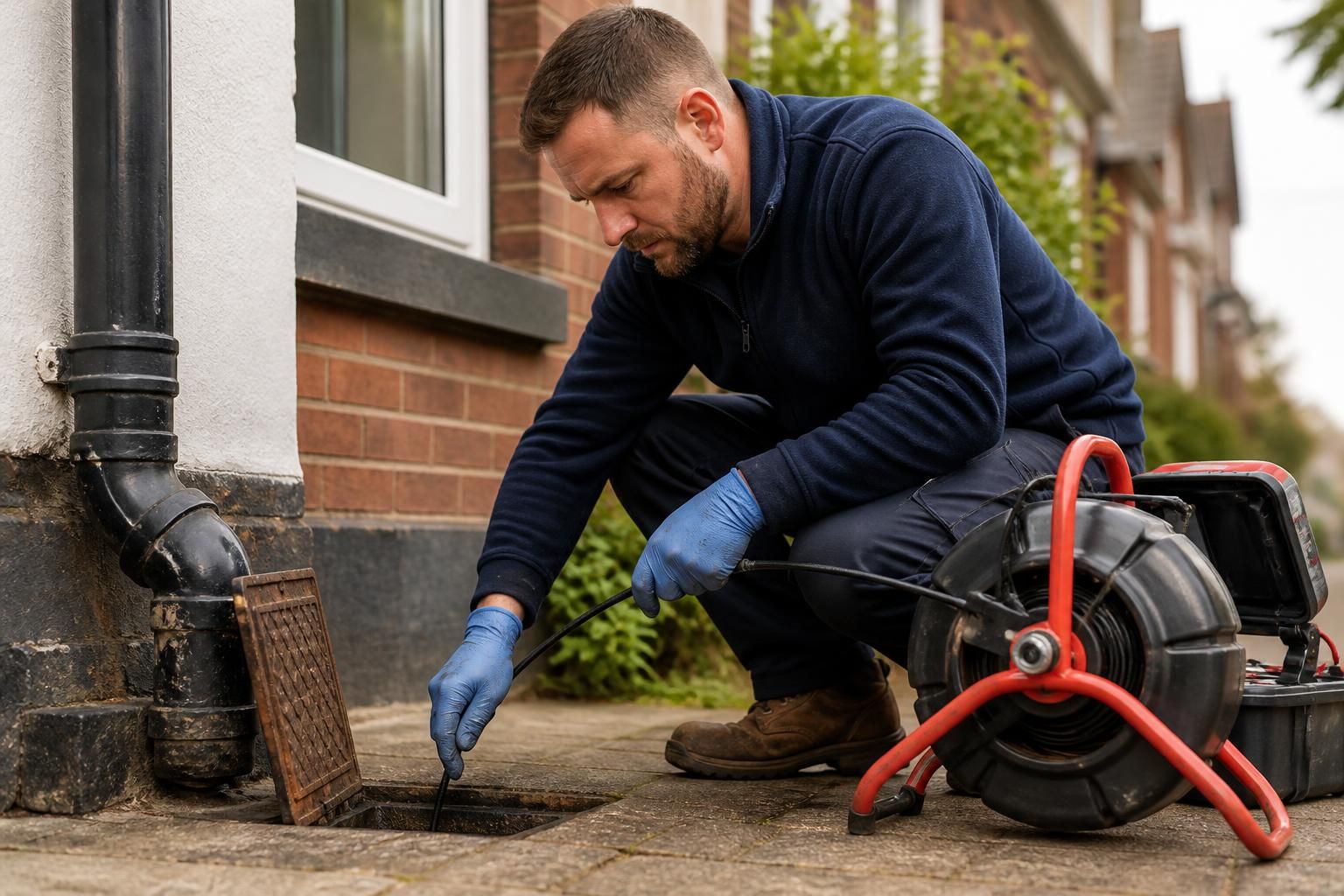
Drain repairs in a rented property are normally organised by the landlord or managing agent, although the tenant should report the problem promptly and provide relevant information about its location and symptoms. Responsibility depends on the tenancy agreement, the cause of the damage and whether the affected drain serves one property or several.
In many tenancies, the landlord is responsible for maintaining the property’s fixed drainage systems and arranging repairs caused by age, deterioration, defective installation or ordinary use. A tenant may be liable where an investigation shows that a blockage or damage resulted from misuse, such as flushing unsuitable items or allowing inappropriate materials to enter the drainage system. The tenancy agreement should be checked before work is authorised, particularly where responsibility is disputed.
A practical arrangement usually follows this process:
- Report the symptoms: The tenant should describe slow drainage, recurring blockages, unpleasant smells, wastewater backing up or visible damage, and identify which fixtures are affected.
- Establish responsibility: The landlord, agent or tenant can review the tenancy terms and determine who should instruct a contractor. If several homes are affected, the issue may involve shared drainage infrastructure rather than one individual property.
- Arrange an assessment: A plumber can investigate the cause and condition of the drain before recommending a repair. This helps distinguish between a simple blockage, damaged pipework, root intrusion, displaced joints or a more extensive defect.
- Approve the appropriate work: The person responsible for the property should receive details of the recommended repair and any conditions affecting the work, such as access requirements or the need to protect flooring and other finishes.
- Keep records: Landlords and agents should retain reports, photographs, invoices and details of the completed work. Tenants should keep copies of their original report and any correspondence about the problem.
Tenants should not arrange major repairs independently and then assume the landlord will reimburse the cost unless the landlord, agent or tenancy agreement allows this. If wastewater is entering the property, the tenant should take sensible steps to limit damage, avoid contact with contaminated water and notify the responsible party as soon as possible. The landlord or agent can then decide whether an emergency contractor, insurer or other authority also needs to be involved.
Ideal Plumbing Services can assess drain problems for rented homes and carry out suitable repair work once the responsible party has authorised it. Clear communication between the tenant, landlord and contractor helps prevent duplicated call-outs, delays caused by uncertain approval and disagreements over the final invoice. Where the cause is unclear, an impartial assessment is particularly useful because responsibility should be based on the condition and use of the drainage system rather than assumption alone.