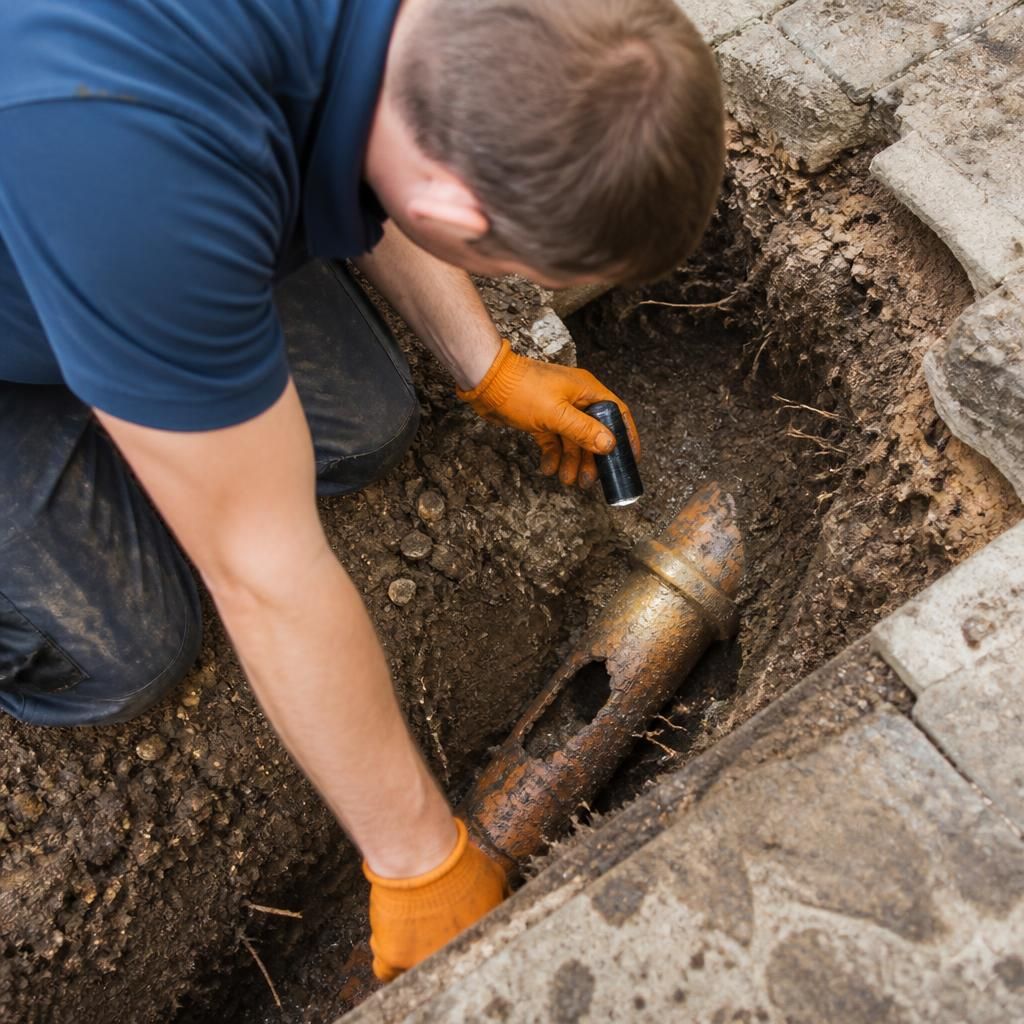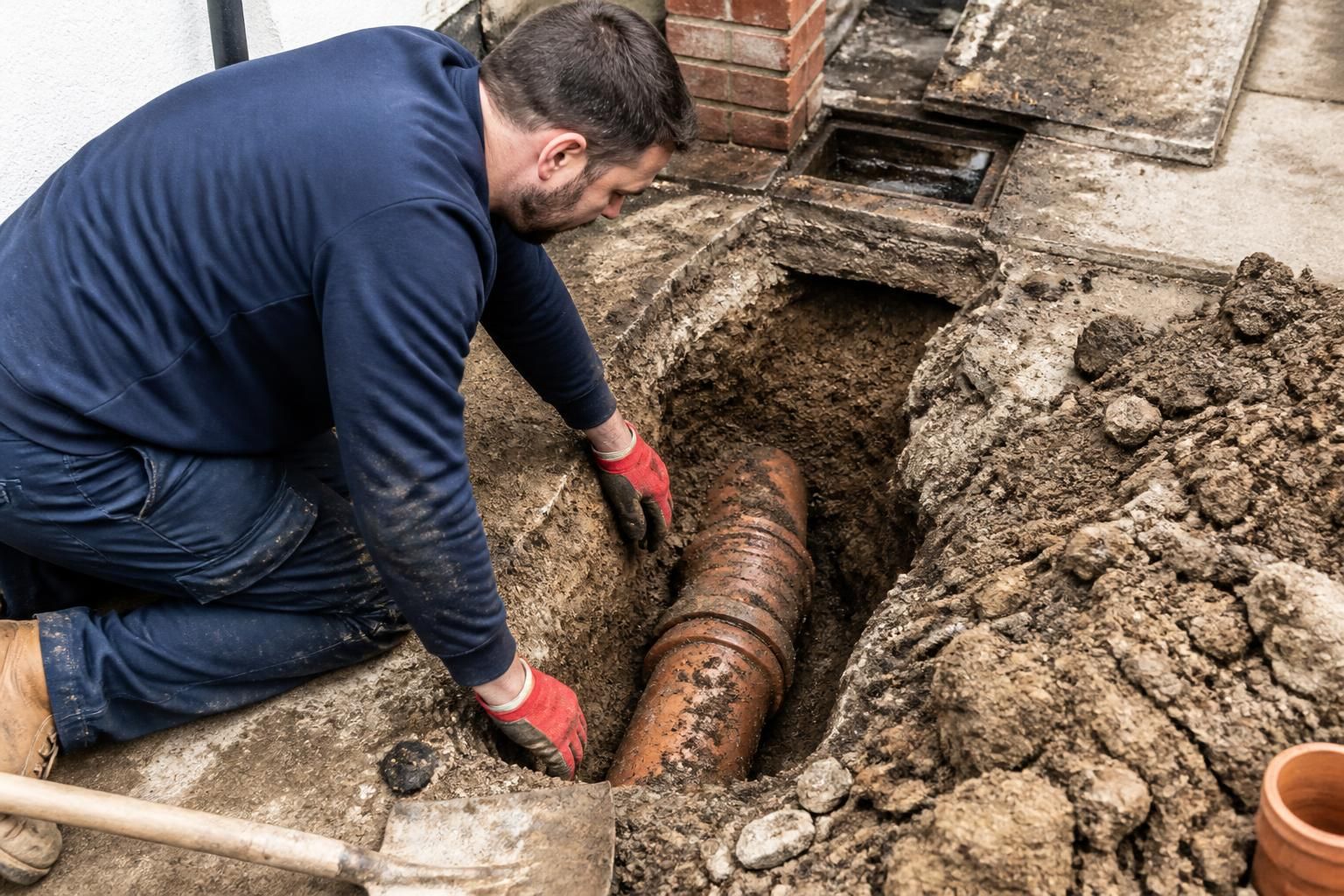
Drain repair pricing is normally made up of the work needed to identify the fault, access the damaged section and restore the drainage system. A straightforward repair to an exposed pipe will generally involve fewer costs than work requiring excavation, replacement of several components or specialist equipment.
What is included in the cost?
- Inspection and diagnosis: The initial assessment may involve checking accessible pipework, chambers, gullies and drainage connections to establish the cause of the problem.
- Access: Costs can increase where paving, concrete, flooring, soil or other structures need to be removed to reach the damaged pipe. Difficult access may also require additional labour or equipment.
- Repair materials: The price depends on whether the fault needs a joint, section of pipe, chamber component or another replacement part.
- Labour: This reflects the time required to prepare the area, carry out the repair, test the drainage and leave the site in a suitable condition.
- Making good: Where excavation is necessary, reinstating the surface may be included or priced separately. Ask for this to be confirmed before work starts.
Typical types of drain repair
A minor repair may involve resealing a joint, replacing a short damaged section or correcting a connection. These jobs are usually less involved than repairs to collapsed, displaced or badly cracked pipework. If the damage extends along the drain, replacing a larger section or using a less invasive repair method may be considered.
Blocked drains should not automatically be treated as a repair issue. Clearing an obstruction may resolve the immediate problem, but recurring blockages, foul smells, slow drainage or damp patches can indicate damaged or poorly aligned pipework. In those cases, further investigation may be needed before the correct repair is selected.
Why two drain repair quotes can differ
Prices can vary because contractors may be proposing different solutions. One quotation might cover a localised repair, while another may include replacing more pipework or addressing the underlying cause. The condition of the surrounding ground, the depth of the drain, access for equipment and whether the pipe is on private or shared property can all affect the scope of work.
A written quotation should explain the proposed repair, the materials involved, whether excavation is included, how waste will be removed and whether reinstatement is covered. It should also state whether further work would require approval before additional charges are incurred. Ideal Plumbing Services provides clear pricing with no hidden charges, so the customer can understand what is being recommended.
Who pays for a drain repair?
For homeowners, responsibility usually depends on where the damaged section is located and whether it serves only the property or is shared with another building. Tenants should report the issue to their landlord or managing agent before authorising chargeable work, unless there is an agreed arrangement for arranging repairs. Landlords should check the tenancy terms and establish whether the fault relates to the property’s private drainage or a shared connection.
The most reliable way to establish the final price is to arrange an assessment and request a detailed quotation for the recommended work. Ideal Plumbing Services provides drain repair support for homes, landlords and tenants in Birmingham and the wider West Midlands, with repairs planned around the condition and access requirements of the drainage system.