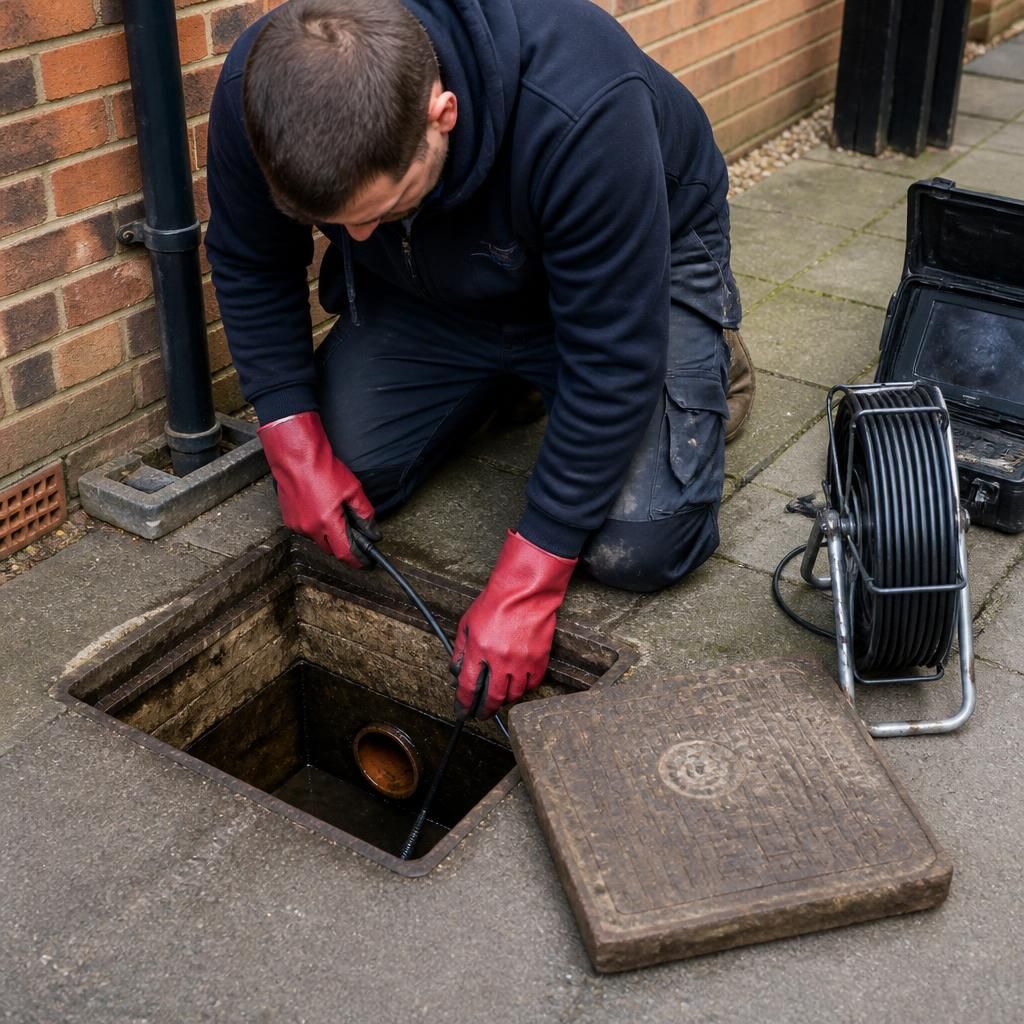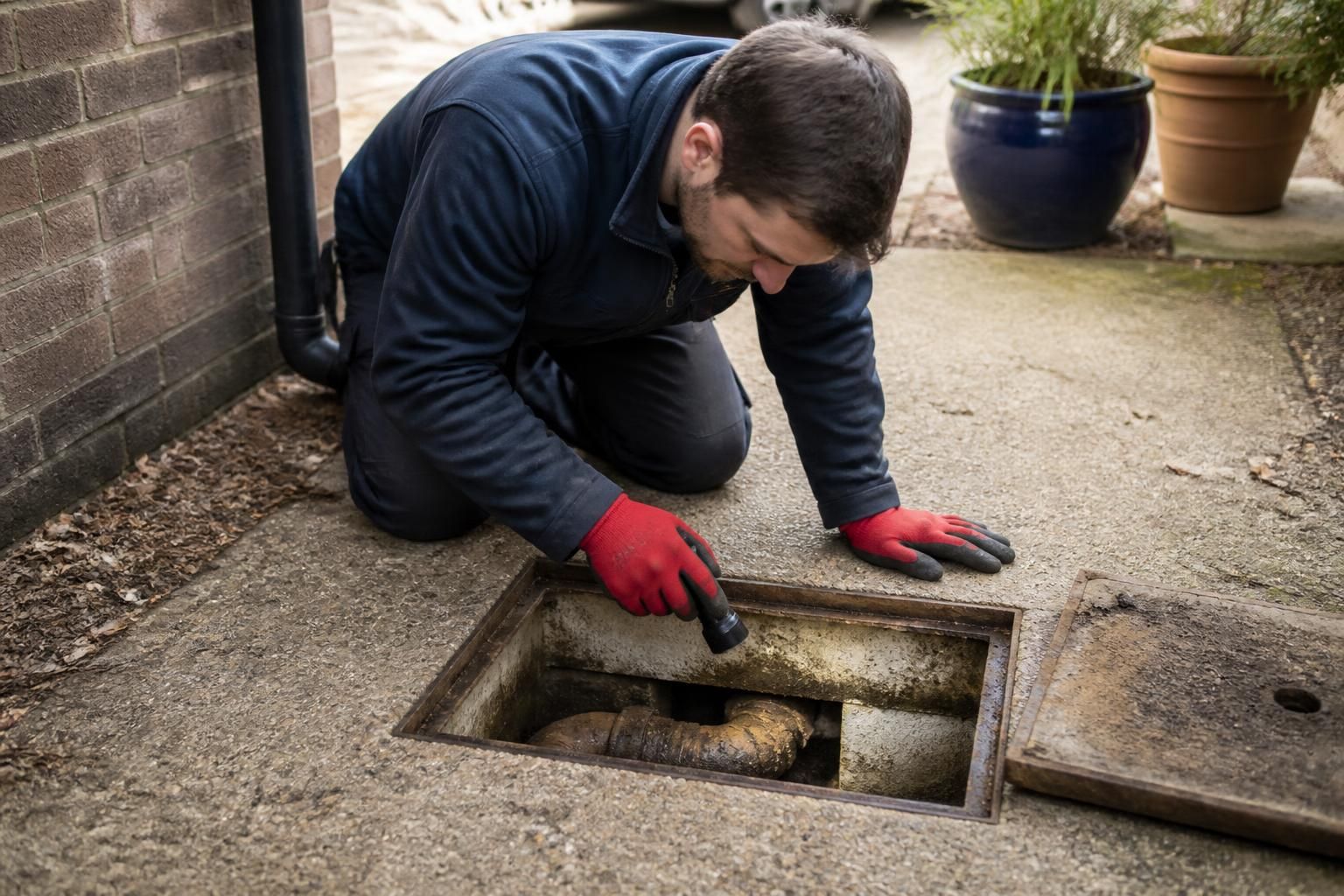
Drain repairs vary in disruption, but the main effect is usually limited to the area needed to reach, repair and test the damaged section. A local repair may affect only a small part of a room, driveway or garden, while a failed underground pipe can involve excavation, temporary loss of access and reinstatement afterwards.
What determines the level of disruption?
- Where the damage is located: A pipe beneath an accessible inspection chamber may be easier to reach than one beneath a floor, paved area, driveway or planted border.
- The type of fault: Cracks, displaced joints, collapsed sections, root ingress and persistent blockages each require different repair approaches.
- How much of the pipe is affected: A single damaged section may be repaired locally. Widespread deterioration can require more extensive work.
- Available access: Clear access for inspection and equipment can reduce the amount of opening-up needed. Restricted spaces may make the work more involved.
- Reinstatement: Once the pipe has been repaired, disturbed flooring, paving, soil or other surfaces may need to be restored.
What happens during a typical repair?
- The drainage system is assessed to identify the location and nature of the fault.
- The affected area is accessed using the least disruptive suitable method.
- The damaged section is repaired, cleared or replaced, depending on its condition.
- The system is tested to check that it is flowing correctly and that the repair is sound.
- Any opened surface is made safe, with permanent reinstatement considered as part of the work required.
For a repair inside the property, disruption can include lifting flooring, removing access panels or temporarily avoiding a bathroom, kitchen or utility area. Keeping the affected space clear and moving fragile items beforehand can make the work easier. Where the work is outside, the main inconvenience may be restricted use of a driveway, path or section of garden.
Excavation does not automatically mean that the whole garden or driveway must be opened. The extent of digging depends on the pipe's depth, position and condition, as well as the access available. In suitable cases, a targeted repair can limit the area disturbed. However, the surface above the pipe may still need to be removed and reinstated.
The duration of drain repairs cannot be judged accurately from the symptoms alone. A straightforward repair with accessible pipework may involve less work than a fault that is difficult to locate or lies beneath a finished surface. Additional time may be needed where damaged materials have to be removed, the excavation must be made safe, or surfaces require careful reinstatement.
Drain problems should be dealt with before wastewater damage spreads to floors, walls, foundations or outdoor areas. Signs that assessment is needed include repeated blockages, foul smells, slow drainage, sewage backing up, unexplained damp patches and sinking ground near a drain run. A professional inspection can establish the likely scope of work before unnecessary opening-up takes place.
For homeowners, landlords and tenants in Birmingham and the wider West Midlands, Ideal Plumbing Services can assess drainage faults and carry out suitable repairs with attention to access, safety and the condition of the surrounding property. The appropriate repair plan should explain which areas will be affected, what access is required and whether reinstatement is included.