Replacement is generally the better option when the sewer line cannot be restored to a structurally sound, watertight and adequately sized condition through a localised repair. The decision should be based on evidence from a drainage inspection, the pipe’s construction and layout, the extent of deterioration, and the likely reliability of the proposed repair.
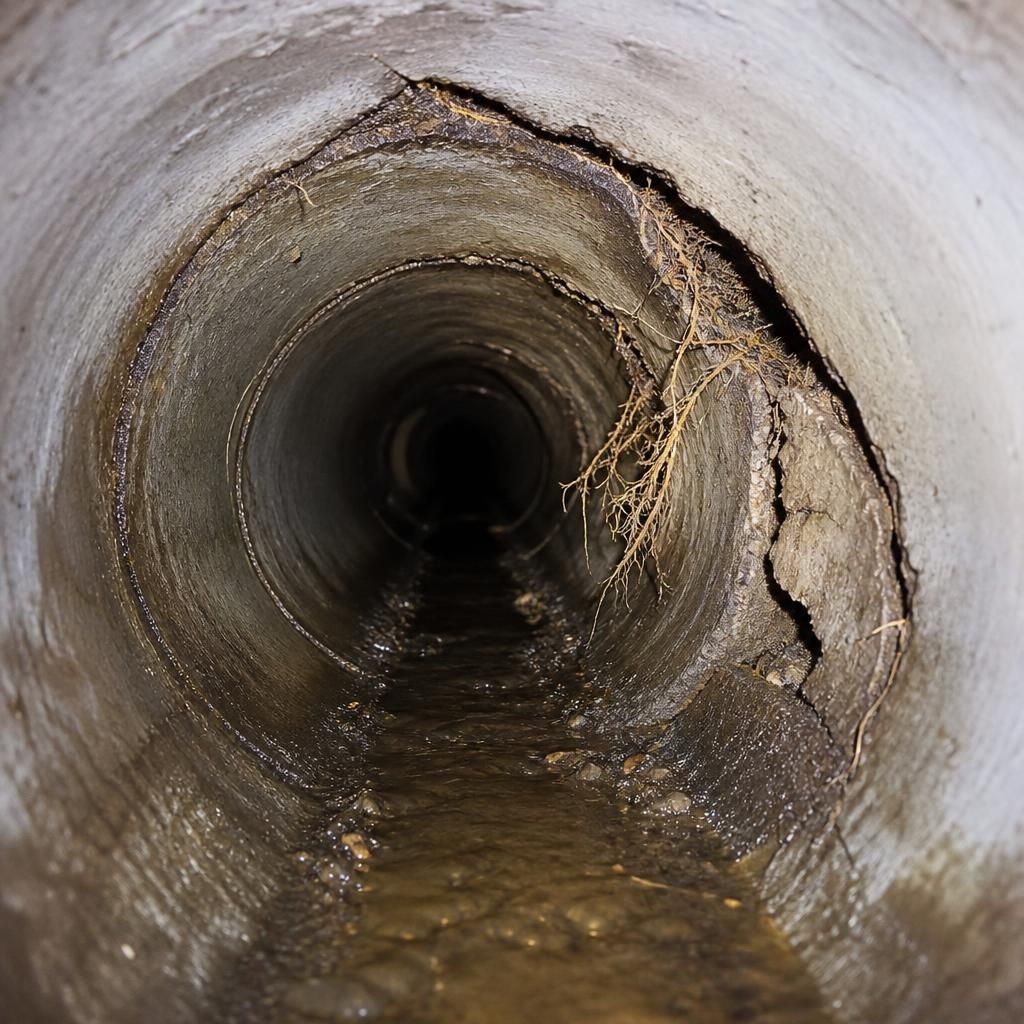
A CCTV survey is usually the starting point. It can identify displaced joints, fractures, deformation, infiltration, obstructions, defective connections and changes in the pipe’s internal diameter. However, camera footage should be interpreted alongside other findings. A visible defect may be isolated and suitable for repair, while a pipe that appears clear may still have inadequate falls, unstable bedding or surrounding ground movement that affects its long-term performance.
Replacement becomes more appropriate where the problem is part of the pipe’s wider condition rather than a single defect. Relevant considerations include:
- Structural integrity: If the pipe has lost its shape, support or load-bearing strength, a patch repair may not address the underlying weakness.
- Defect distribution: Several defects spread along the same run can make individual repairs impractical and leave the remaining sections vulnerable.
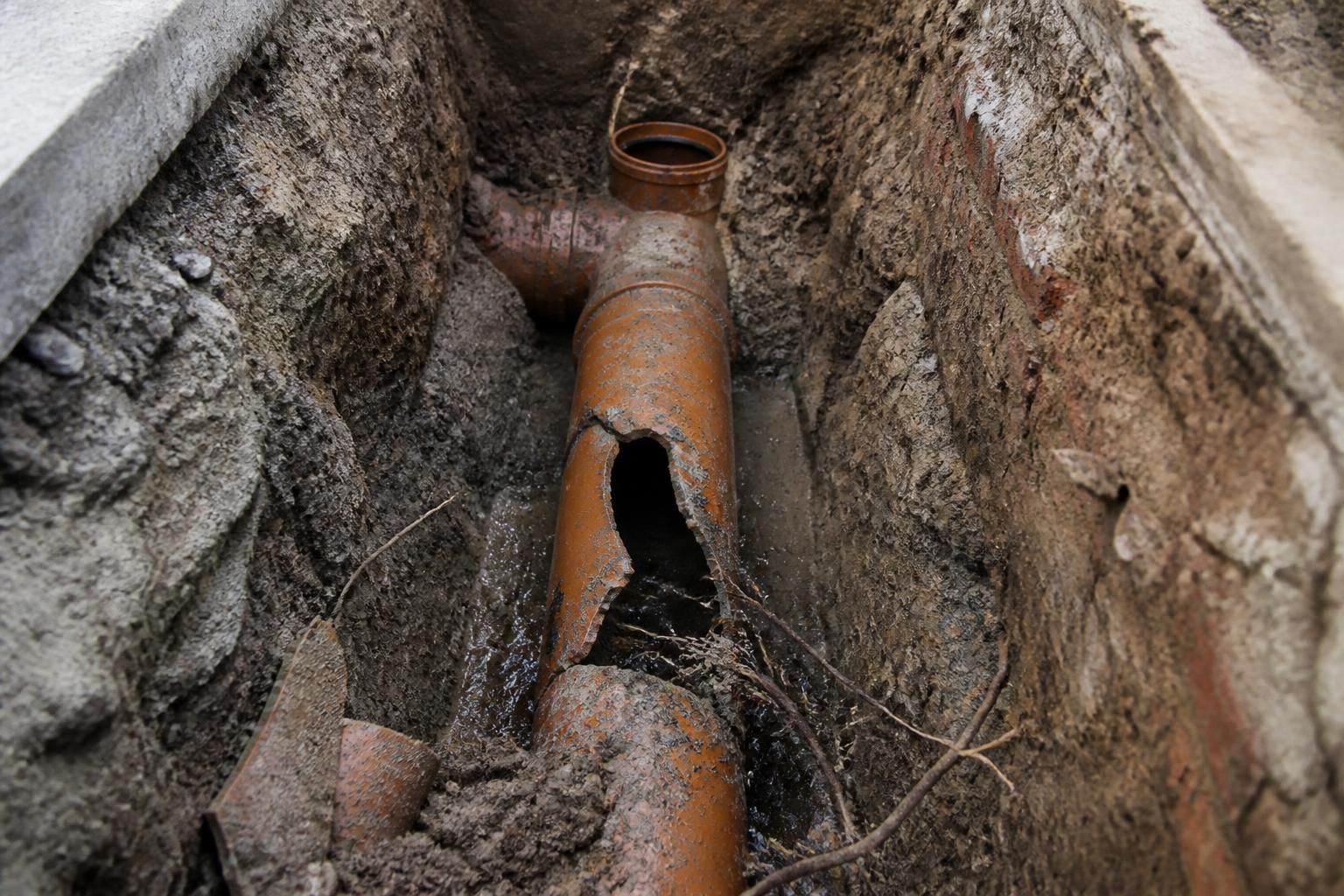
- Pipe material and joints: Older or brittle materials, deteriorated jointing and incompatible sections may make repeated local repairs unreliable.
- Hydraulic performance: A replacement can provide an opportunity to correct a restricted diameter, poor alignment or unsuitable gradient where these contribute to recurring blockages or surcharging.
- Future access: A line beneath a building, extension, driveway or other difficult-to-access area may justify a more comprehensive solution if repeated excavation would cause ongoing disruption.
A repair may still be preferable when the remaining pipe is sound and the defect is clearly confined to one point. Depending on the location and condition, options can include replacing a short section, sealing a joint, removing a local obstruction or using a suitable lining method. These approaches should only be recommended after confirming that the surrounding pipe can support them and that the finished line will remain serviceable.
Cost should be assessed over the expected service life of the work rather than by comparing the initial quotations alone. A lower-cost repair may become poor value if it leaves other known defects untreated or makes further access difficult. Conversely, full replacement may be unnecessary where a targeted intervention resolves a discrete problem without compromising the rest of the system. The comparison should include excavation, reinstatement, access requirements, temporary arrangements and any work needed to connect the new section correctly.
Property risk also matters. If a sewer runs close to foundations, beneath a floor or through an area where leakage could damage the building, the tolerance for an uncertain repair may be lower. Where contaminated water could enter the property or surrounding ground, restoring the line’s watertightness and stability becomes particularly important.
The usual assessment process is to inspect the line, map the affected section, determine the cause of the defect and compare technically suitable repair and replacement methods. The recommendation should explain which parts of the pipe are affected, whether the proposed work addresses the cause as well as the symptom, what access is required and how adjoining connections will be protected. Where the evidence is inconclusive, a further survey or exposed inspection may be needed before committing to excavation.
For homeowners, landlords and tenants, a written explanation of the findings helps distinguish a necessary replacement from an unnecessarily extensive repair. An experienced Birmingham plumbing and drainage professional can assess the available evidence and set out the practical options, including whether a partial replacement is sufficient or whether the condition of the line warrants renewing a longer run.